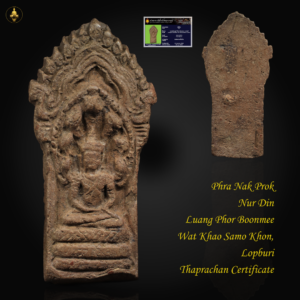
Luang Phor Boonmee Wat Khao Samo Khon, Lopburi
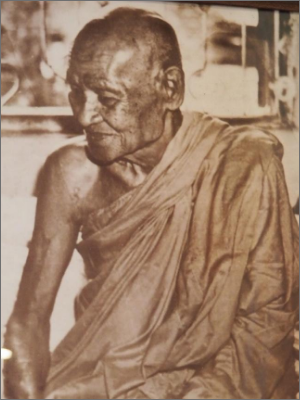
Who Was Phra Khru Athorn Sikkakij? Phra Khru Athorn Sikkakij (พระครูอาทรสิกขกิจ), widely respected as Luang Pho Bunmi Isaro (หลวงพ่อบุญมี อิสโร), was born as Bunmi Chanjaem (บุญมี จันทร์แจ่ม) on 8 February BE 2442 (AD 1899) in Khao Samokhon village, Tha Wung District, Lopburi Province, and later became the abbot of Wat Khao Samokhon (วัดเขาสมอคอน), Lopburi. He ... Read more ↓
Amulets by Luang Phor Boonmee Wat Khao Samo Khon, Lopburi 1 total · 1 available
Biography
Who Was Phra Khru Athorn Sikkakij?
Phra Khru Athorn Sikkakij (พระครูอาทรสิกขกิจ), widely respected as Luang Pho Bunmi Isaro (หลวงพ่อบุญมี อิสโร), was born as Bunmi Chanjaem (บุญมี จันทร์แจ่ม) on 8 February BE 2442 (AD 1899) in Khao Samokhon village, Tha Wung District, Lopburi Province, and later became the abbot of Wat Khao Samokhon (วัดเขาสมอคอน), Lopburi. He was a monk of strong meditation discipline, temple leadership, sacred wicha (วิชา), and ritual healing knowledge, with close training under Luang Pho Upachaya Kong (หลวงพ่ออุปัชฌาย์คง) and other respected masters of Lopburi. In Thai amulet history, Luang Pho Bunmi is best remembered for his powerful ritual doctor’s knives, protective amulets, commemorative coins, and Phra Somdej beeswax-powder amulets, which remain highly valued among devotees and collectors connected to Wat Khao Samokhon.
Early Life and Ordination
Luang Pho Bunmi Isaro (หลวงพ่อบุญมี อิสโร), originally named Bunmi Chanjaem (บุญมี จันทร์แจ่ม), was born on Thursday, 8 February BE 2442 (AD 1899), corresponding to the 9th waxing day of the 3rd lunar month in the Year of the Pig. He was born in Khao Samokhon village, Tha Wung District, Lopburi Province. His father was Village Headman Ton Chanjaem, and his mother was Mrs. Thongmuan Chanjaem. He was the second child among six siblings, growing up in a local community where temple education, Buddhist discipline, and traditional village leadership were closely connected.
In his early years, his parents sent him to study reading and Khmer script with Luang Pho Upachaya Kong (หลวงพ่ออุปัชฌาย์คง) at Wat Khao Samokhon (วัดเขาสมอคอน). At that time, Khmer script was important for monks and serious students because many old Buddhist texts, ritual manuals, protective formulas, and sacred inscriptions were preserved in Khmer characters. Wat Khao Samokhon was also known as a centre for the study of Buddhist scriptures, giving young Bunmi a strong religious foundation from childhood.
Later, Luang Pho Upachaya Kong ordained him as a novice monk and kept him close as a personal attendant and disciple. Through this close relationship, young Bunmi received instruction not only in literacy and religious discipline but also in meditation, ascetic practice, and traditional knowledge passed through the teacher-disciple line. He also accompanied Luang Pho Upachaya Kong on ascetic journeys to seek quiet places suitable for meditation. This early exposure to seclusion and practice shaped his lifelong devotion to discipline and spiritual training.
When he reached the age of 21, he was fully ordained as a monk on 4 July BE 2463 (AD 1920) at the ordination hall of Wat Muchalinda, also recorded as Wat Mujarin (วัดมุจลินท์ / วัดมุจรินทร์), in Kok Salut Subdistrict, Tha Wung District, Lopburi Province. His preceptor was Phra Khru Sangworasophon, also known as Luang Pho Sai (หลวงพ่อสาย), of Wat Phayakkharam or Wat Suea (วัดพยัคฆาราม / วัดเสือ). Phra Adhikan Phong of Wat Mujarin served as karma-vachariya, and Phra Adhikan Khaek of Wat Nong Mon served as anusasana-acharya. After ordination, he received the monastic name Isaro (อิสโร), meaning one connected with freedom or independence in the monastic sense.
Spiritual Development and Practice
After ordination in BE 2463 (AD 1920), Luang Pho Bunmi Isaro returned to Wat Khao Samokhon to serve his teacher, Luang Pho Upachaya Kong, with deep respect. He remained under his teacher for five years, receiving a complete transmission of conduct, discipline, practical virtues, and sacred knowledge. In traditional Thai Buddhist culture, such close service was not merely administrative; it was a way of absorbing the teacher’s character, methods, and wicha (วิชา), or specialised sacred knowledge, through daily life.
Luang Pho Bunmi practiced meditation regularly and was trained in the older rural monastic tradition, where Samatha (สมถะ), or concentration practice, and Vipassanā (วิปัสสนา), or insight meditation, were often developed alongside chanting, protective formulas, healing knowledge, and ascetic discipline. His early journeys with Luang Pho Upachaya Kong exposed him to the quiet discipline of seclusion, where a monk learns to calm the mind, strengthen mindfulness, and cultivate spiritual endurance.
After the passing of Luang Pho Upachaya Kong, Luang Pho Bunmi was appointed abbot of Wat Khao Samokhon. He continued to deepen his knowledge by studying magical arts and sacred disciplines with Luang Pho Sai of Wat Suea, who was also his ordination preceptor. He also studied with Luang Pho Upachaya of Wat Bang, described as a senior disciple, and with Luang Pho Khaek of Wat Nong Mon, one of his mentors. These connections place him within a respected Lopburi lineage of temple learning, protective wicha, ritual knowledge, and village service.
His training was not limited to monks. Among lay teachers, Luang Pho Bunmi studied with Boonrod Chanjaem, his elder brother. This detail is important for collectors because it shows that his knowledge came from both monastic and lay lineages, a common feature in older Thai sacred traditions. Some forms of protective wicha, ritual knife knowledge, herbal practice, and local formulas were preserved through family and village transmission. For this reason, Luang Pho Bunmi’s reputation rests on a broad foundation: meditation discipline, teacher lineage, ascetic practice, ritual healing, and service to villagers.
Major Amulet Consecrations and Ceremonies
Luang Pho Bunmi Isaro (หลวงพ่อบุญมี อิสโร) created many sacred objects that became cherished among his direct disciples and local devotees. The supplied biography states that those who possessed his amulets valued them highly, making many examples rarely seen outside circles of close students and local collectors. His works are especially remembered for protection against spirits, harmful forces, danger, wild animals, and unseen disturbances, reflecting the community needs of rural Lopburi during his lifetime.
- Circa BE 2480 (AD 1937) — Doctor’s Knife / Ritual Knife (มีดหมอ): His earliest known sacred objects were ritual doctor’s knives, known in Thai amulet culture as mit mor (มีดหมอ). He learned this art directly from Luang Pho Upachaya Kong, and the biography clearly notes that this was a different lineage from Luang Pho Derm of Wat Nong Pho. Luang Pho Bunmi began making these knives because villagers near the temple were frequently troubled by spirit possession and came to him for holy water and ritual treatment. As the number of illnesses and disturbances increased, he created ritual knives for villagers to keep as protective objects against ghosts, demons, and wild animals. When villagers reported positive experiences, his ritual knives became widely known.
- BE 2497 (AD 1954) — First Edition Stamped Amulet / First Coin: In BE 2497 (AD 1954), after Luang Pho Bunmi received the ecclesiastical rank of Phra Khru, he created his first amulet as a memento. The biography describes it as an antique-style stamped amulet with a concave back, raised front, integrated hanging loop, and traditional cut edge. It was made of copper plated with gold, with a shallow relief design. The front depicts a half-body image of Luang Pho Bunmi wearing the monk’s robe, with an inscription referring to Phra Khru Boonmee Chaiyatisaro of Wat Khao Samokhon. Collectors value this issue because it marks his first formal amulet creation after receiving rank.
- BE 2500 (AD 1957) — Second Edition Sema-Shaped Coin: The available evidence categorises a second edition coin in Sema shape, issued in BE 2500 (AD 1957). The Sema form is associated with boundary stones and sacred temple identity, making this shape meaningful in Thai amulet design. Detailed ceremony records and exact metal variations are not widely documented in English sources, but collectors recognise it as part of the early coin set connected to Luang Pho Bunmi.
- BE 2507 (AD 1964) — Stamped Image for Sub-District Monastic Appointment: In BE 2507 (AD 1964), Luang Pho Bunmi was appointed head of the sub-district monastic order. To commemorate this, a stamped image of himself was created in copper. It bears the inscription “Luang Pho Boonmee” at the base and includes a sacred Taw Yantra (ยันต์) on the monk’s robe. In the same year, disciples also created another stamped image in brass plated with gold. This issue has two known robe styles: straight robe and curved robe. The back features a raised Ma A U (มะ อะ อุ) mantra and a crescent moon mark below the base. These details are important authentication cues for collectors.
- BE 2509 (AD 1966) — Third Edition Oval Coin / Deputy Abbot of Tha Wung District: In BE 2509 (AD 1966), Luang Pho Bunmi was appointed Deputy Abbot of Tha Wung District, and a commemorative coin was created. It is described as a small oval-shaped stamped coin, produced in copper with fiery patina, gold-plated copper, and silver. The supplied categorisation also refers to this as the third edition oval coin, showing Luang Pho in draped robe form. Collectors often pay attention to metal type, surface patina, and stamping depth when evaluating this issue.
- BE 2512 (AD 1969) — Triangular Coin: A BE 2512 (AD 1969) coin is recorded in triangular form, showing Luang Pho seated in full lotus position. The material is described as gold-plated copper. The triangular format gives this issue a distinctive visual identity compared with the oval and Sema coins. For collectors, unusual shape, period production, and clear connection to Wat Khao Samokhon increase its reference value.
- BE 2513 (AD 1970) — Buddha Consecration Coin: In BE 2513 (AD 1970), a Buddha consecration coin was created in an arm-shaped format, with two versions: frontal and side-facing. The metals include nickel-plated examples, gold, silver, gold-plated silver, and alpaca. This wider range of materials makes the issue important for collectors because metal hierarchy, scarcity, and condition can strongly affect market value. The exact ceremony details are not widely documented in English sources, but the issue is recognised within the available evidence list.
- BE 2517 (AD 1974) — 77th Birthday Somdej Beeswax-Powder Amulets: In BE 2517 (AD 1974), disciples organised a merit-making ceremony to celebrate Luang Pho Bunmi’s 77th birthday. They created Phra Somdej (พระสมเด็จ) amulets made of powdered oil mixed with beeswax. The front features Luang Pho Samrit, a sacred Buddha image in the temple, shown in Chiang Saen style. There are two main types: large face and small face. The back features Luang Pho Bunmi’s image with the inscription commemorating the 77th Birthday Merit-Making Ceremony, and below the image, “Luang Pho Mee, Wat Khao Samor Khon.” The small face version shows Luang Pho facing right, while the large face version shows him facing left. Villagers commonly called these “Somdej amulets with miraculous powers” due to many reported experiences, and they are regarded as his first Phra Somdej edition.
- BE 2517 (AD 1974) — Limited Oval Coin: The available evidence also records a limited-production oval coin from BE 2517 (AD 1974), made in blackened copper. This issue is separate from the Somdej beeswax-powder amulets of the same year and is valued for its limited nature and connection to his later-life merit-making period.
- BE 2519 (AD 1976) — Oval Coin: A BE 2519 (AD 1976) oval coin is recorded in copper with fiery patina and gold-plated copper. Collectors normally assess such coins by comparing rim shape, portrait detail, letter formation, and natural aging of the metal surface.
- BE 2520 (AD 1977) — “Funny Lettering” Large Oval Side-Facing Coin: A BE 2520 (AD 1977) coin is commonly known as the “funny lettering” edition. It is described as a large oval coin, side-facing, made of copper. Nicknamed editions can become memorable in collector culture because a distinctive inscription style, unusual lettering, or production feature makes the piece easier to identify and discuss.
- BE 2521 (AD 1978) — “Ta Ching Ying Dek” / Child Shooting Model: A BE 2521 (AD 1978) coin is commonly known as the “Ta Ching Ying Dek” model. It is shaped like a sake leaf, shows Luang Pho in side-facing form, and is made of copper. This issue is notable for its distinctive nickname and shape, both of which help collectors identify it within the wider group of Luang Pho Bunmi coin issues.
Known amulets at Thai Amulets Collection: Not widely documented in English sources. If TAC has specific Luang Pho Bunmi Isaro pieces available, each listing should be linked individually with its BE year, material, condition note, and provenance details.
Legacy and Temple Significance
Luang Pho Bunmi Isaro’s legacy is closely tied to Wat Khao Samokhon (วัดเขาสมอคอน) in Tha Wung District, Lopburi Province. After serving under Luang Pho Upachaya Kong for five years, he was appointed abbot following the passing of his predecessor. This placed him in a position of both spiritual and community responsibility. As abbot, he preserved the temple’s religious discipline while continuing the teacher-disciple lineage he had inherited from his own master.
His significance comes not only from amulets but from the way his sacred objects answered the needs of the local people. His ritual knives were created when villagers sought protection from spirit disturbances, illness, and danger. His later coins and amulets marked important milestones in his monastic career, including ecclesiastical recognition, district appointments, and birthday merit-making ceremonies. For collectors, this gives his amulets a strong documentary structure: many were connected to real events in his life rather than being ordinary decorative issues.
Wat Khao Samokhon is important in this biography because it was the centre of his education, ordination lineage, teaching life, and sacred production. The temple was where he studied Khmer script, served his teacher, practiced meditation, became abbot, and developed the protective wicha associated with his name. Devotees continue to respect him as a monk of metta (เมตตา), protection, and practical compassion, while collectors value his amulets for their connection to old Lopburi temple culture and direct local testimony.
Luang Pho Bunmi passed away on 6 October BE 2524 (AD 1981), at the age of 84, with 61 years in the monkhood. His long life as a monk, abbot, ritual master, and creator of sacred objects continues to shape how his amulets are remembered in Thai collector circles.