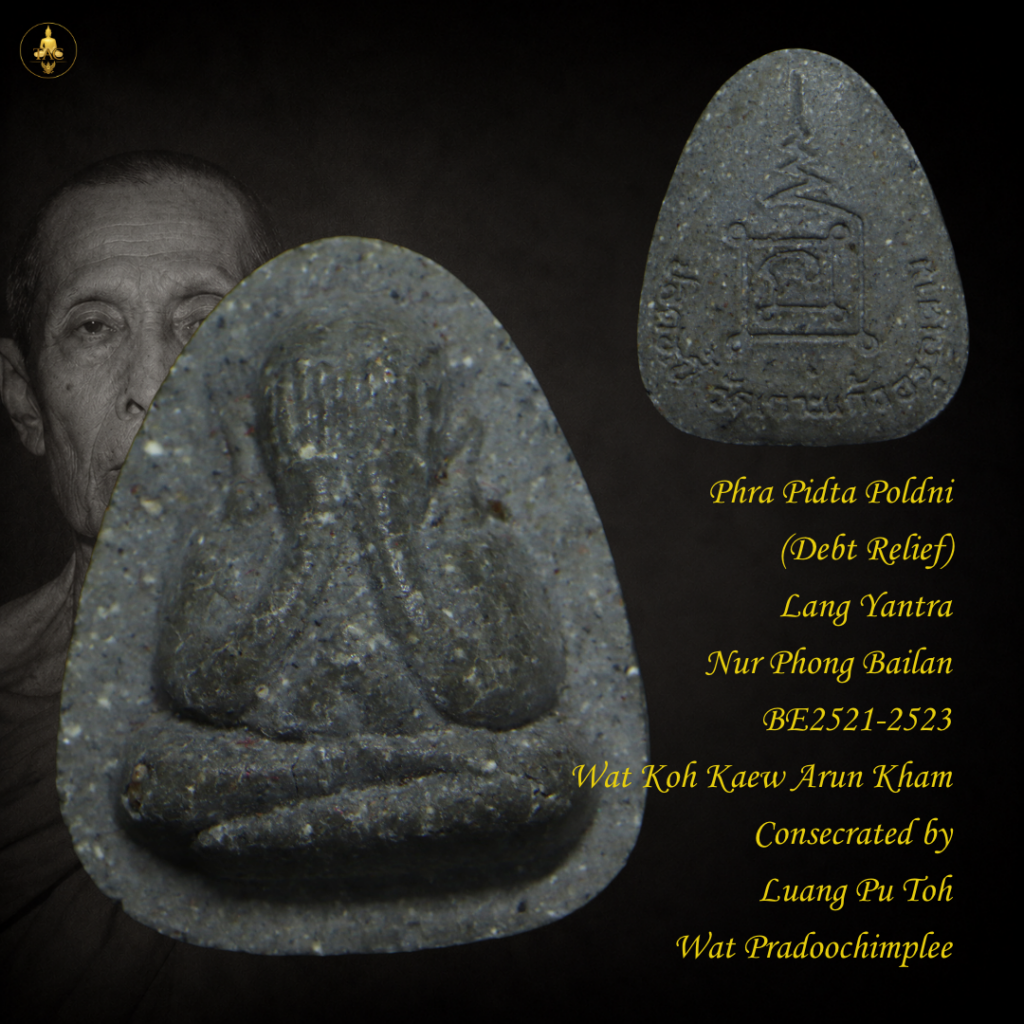
Phra Pidta Poldni (Debt Relief) Lang Yantra Nur Phong Bailan BE2521-2523 Wat Koh Kaew Arun Kham Consecrated by Luang Pu Toh Wat Pradoochimplee
| Type | Phra Pidta Poldni (Debt Relief) Lang Yantra |
| Monk | Luang Pu Toh (Lp Toh) Wat Pradoochimplee |
| Temple | Wat Koh Kaew Arun Kham |
| B.E. Year | 2521-2523 |
| Material | Nur Phong Bailan |
| Condition | Good |
| SKU | TAC-PhraPidtaPoldni(DebtRelief)LangYantra-LpTohWatPradoochimplee-001 |
Authentic Phra Pidta Poldni (Debt Relief) Lang Yantra Luang Pu Toh Wat Pradoochimplee, Wat Koh Kaew Arun Kham, BE Nur Phong Bailan 2521-2523. Trusted Singapore dealer.
What is the Phra Pidta Poldni (Debt Relief) Lang Yantra amulet by Luang Pu Toh Wat Pradoochimplee?
The Phra Pidta Poldni (Debt Relief) Lang Yantra Luang Pu Toh Wat Pradoochimplee is a sacred Thai amulet produced at Wat Koh Kaew Arun Kham during BE Nur Phong Bailan, crafted from the hallowed material known as 2521–2523. It features the iconic closed-eyed Phra Pidta form on the front and a sacred Yantra inscription on the reverse, and is traditionally venerated for its association with debt relief and financial obstacle removal.
Luang Pu Toh Wat Pradoochimplee is regarded among devotees as one of the most spiritually accomplished monks of his era, known for his mastery of sacred Yantra inscription and his deep commitment to Vipassana meditation practice. Collectors associate his consecrated amulets with especially potent protective energy, rooted in decades of rigorous monastic discipline.
The Phra Pidta Poldni (Debt Relief) Lang Yantra Luang Pu Toh Wat Pradoochimplee stands as a prized example of his sacred craft. The combination of the Poldni (Debt Relief) intention with the Lang Yantra reverse places this piece among the more specialised and purpose-driven amulets associated with his legacy.
Collectors in Singapore, Malaysia, and across Greater China have long sought this piece for both its spiritual resonance and its historical significance as an authentic Thai amulet from a distinguished monastic lineage.
Phra Pidta Poldni (Debt Relief) Lang Yantra and Wat Koh Kaew Arun Kham Heritage
Wat Koh Kaew Arun Kham is the sacred temple at which the Phra Pidta Poldni (Debt Relief) Lang Yantra Luang Pu Toh Wat Pradoochimplee was consecrated, lending the piece a firmly established provenance within the Thai Buddhist amulet tradition. The temple’s name, which evokes imagery of a jewelled island bathed in the light of dawn, reflects its revered spiritual standing.
Temples of this standing within Thailand’s monastic landscape have historically served as centres of sacred powder and amulet production, upholding centuries-old consecration rituals. The Phra Pidta Poldni (Debt Relief) Lang Yantra Wat Koh Kaew Arun Kham edition is understood by collectors to have been produced under conditions of strict ceremonial observance, consistent with the high standards associated with Luang Pu Toh’s name.
For collectors seeking to understand the broader context of Thai amulet consecration practices and temple traditions, the Thai Buddhist amulet tradition provides valuable scholarly background on how monastic institutions have shaped sacred object production across Thailand’s history.
2521-2523 Phra Pidta Poldni (Debt Relief) Lang Yantra — Composition and Craftsmanship
The 2521–2523 Phra Pidta Poldni (Debt Relief) Lang Yantra is identified by its material designation of Nur Phong Bailan, a sacred powder compound traditionally composed of refined holy powders that carry deep ceremonial significance in Thai Buddhist practice. Nur Phong Bailan translates broadly to “palm-leaf manuscript powder,” referring to the incorporation of powdered sacred scripture into the amulet’s material body.
This material composition is considered particularly auspicious by devotees, as it is believed to imbue the amulet with the textual power of ancient Dhamma teachings. The use of Bailan-derived sacred powder connects the physical object directly to the written wisdom of the Buddhist canon, a practice long upheld in traditional Thai amulet-making.
The reverse of the amulet bears a sacred Yantra design — a geometric and scriptural diagram inscribed to focus spiritual energy toward a specific intention, in this case the relief of financial burdens and the clearing of debt obstacles. The precision of Yantra inscription is regarded by collectors as a hallmark of the master monk’s expertise and meditative concentration during the production period of BE 2521–2523.
Spiritual Benefits of Phra Pidta Poldni (Debt Relief) Lang Yantra by Luang Pu Toh Wat Pradoochimplee
The Phra Pidta Poldni (Debt Relief) Lang Yantra Luang Pu Toh Wat Pradoochimplee is traditionally venerated for its association with the removal of financial obstacles, and collectors widely regard it as a spiritually purposeful piece for those navigating debt or monetary hardship. The Phra Pidta form — depicting a meditating figure with eyes closed and hands covering the face — is classically associated with self-containment, karmic protection, and the sealing out of negative fortune.
Devotees across Singapore, Malaysia, Taiwan, and Hong Kong are known to wear or enshrine this amulet with the intention of inviting financial clarity and relief from burdensome obligations.
- Debt Relief and Financial Obstacle Removal: Collectors associate the Poldni designation with the specific spiritual intention of dissolving karmic and material debt burdens.
- Protective Blessing: The Phra Pidta form is traditionally regarded as a shield against misfortune, negative energies, and harmful influences in daily life.
- Wealth Accumulation Support: Devotees venerate this piece as an aid in stabilising finances and creating conditions more conducive to long-term wealth accumulation.
Phra Pidta Poldni (Debt Relief) Lang Yantra BE Nur Phong Bailan — Authentication and Collector Value
The Phra Pidta Poldni (Debt Relief) Lang Yantra BE Nur Phong Bailan edition, produced across the period 2521–2523, is considered a classical-era piece by experienced collectors, placing it within a generation of Thai amulets now regarded as historically significant. Amulets from this production window are increasingly difficult to source in verified condition, contributing to their standing among serious collectors in Singapore and the wider Southeast Asian market.
Authentication of this amulet relies on careful examination of the Nur Phong Bailan powder composition, the quality and detail of the Phra Pidta mould, and the precision of the Lang Yantra inscription on the reverse. Collectors are advised to source pieces through established and reputable Thai amulet Singapore dealers with documented provenance and transparent descriptions.
The Luang Pu Toh Wat Pradoochimplee amulet range from this era commands consistent collector interest due to the monk’s revered status and the limited production quantities associated with Wat Koh Kaew Arun Kham. Pieces in well-preserved condition with clear mould definition and intact Yantra inscription are particularly valued within the collector community.
Attributes reflect Thai Buddhist devotional tradition and are not measurable claims.

![[SOLD] Roop Lor Thep Phra Chao (Cai Shen) Nur Ngern BE2520 Wat Mangkon Kamalawat (Leng Neiy Yi) Luang Pu Toh Wat Pradoochimplee Consecrated](https://tac-media.sgp1.digitaloceanspaces.com/2026/05/Roop-Lor-Thep-Phra-Chao-Cai-Shen-Nur-Ngern-BE2520-Wat-Mangkon-Kamalawat-Leng-Neiy-Yi-Luang-Pu-Toh-Wat-Pradoochimplee-Consecrated-Samakon-Certificate-150x150.png)
![[SOLD] Phra Nang Phaya Nur Din BE2472 Luang Pu Toh (Lp Toh) Wat Pradoochimplee](https://tac-media.sgp1.digitaloceanspaces.com/2026/03/phra-nang-phaya-nur-din-be2472-luang-pu-toh-lp-toh-wat-pradoochimplee-150x150.webp)