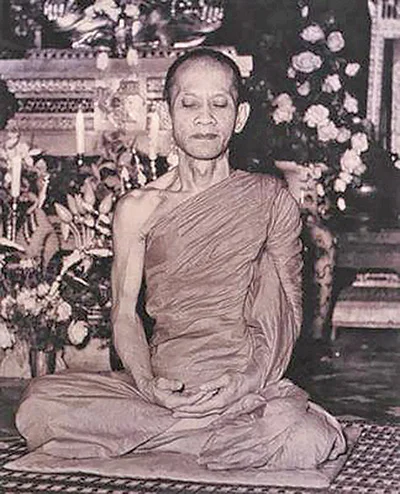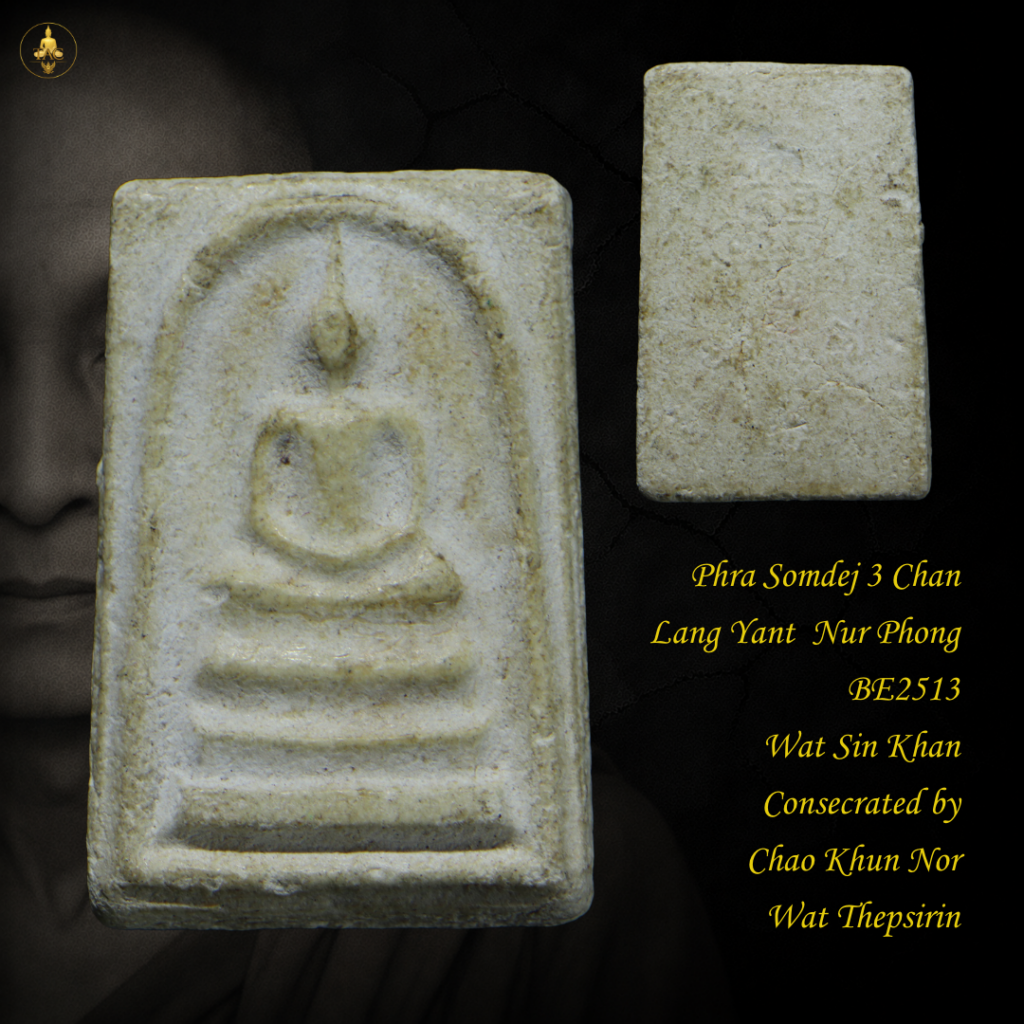
Phra Somdej 3 Chan Lang Yant Nur Phong BE2513 Wat Sin Khan Consecrated by Chao Khun Nor Wat Thepsirin
| Type | Phra Somdej 3 Chan Lang Yant |
| Monk | Chao Khun Nor Wat Thepsirin |
| Temple | Wat Sin Khan |
| B.E. Year | 2513 |
| Material | Nur Phong |
| Condition | Very Good |
| SKU | TAC-PhraSomdej3ChanLangYant-ChaoKhunNorWatThepsirin-001 |

Adds this amulet and the offer at the bundle price — ready at checkout. Or mention it when you enquire on WhatsApp.
Authentic Phra Somdej 3 Chan Lang Yant by Chao Khun Nor Wat Thepsirin, Wat Sin Khan BE 2513. Nur Phong, no cert. Available from TAC Singapore.
What is the Phra Somdej 3 Chan Lang Yant by Chao Khun Nor Wat Thepsirin?
The Phra Somdej 3 Chan Lang Yant Chao Khun Nor Wat Thepsirin is an authentic Thai amulet produced at Wat Sin Khan in BE 2513, pressed from nur phong (sacred powder blend). The front carries a three-tiered Phra Somdej image; the reverse bears a yant (sacred geometric inscription). No certification paper accompanies this piece.
Chao Khun Nor and the weight his name carries on a piece like this
Chao Khun Nor Wat Thepsirin held the Chao Khun ecclesiastical rank — a title conferred by the Thai royal court on monks of demonstrated virtue and seniority. That rank is not ceremonial window dressing. It signals a monk whose authority was recognised at the highest level of the Thai sangha, and whose supervision of a consecration carried real institutional weight.
For collectors, the presiding monk matters as much as the temple or the material. A phutthaphisek (consecration ceremony) conducted under a senior Chao Khun draws a different level of collective monastic participation than a routine blessing. That is part of what the BE 2513 batch represents — a consecration carried out under proper traditional conditions, at a time when those methods were still rigorously observed.
What Wat Sin Khan provided, and why the yant on the reverse matters
Wat Sin Khan supplied the ceremonial ground for this batch — the space, the monks, and the ritual continuity that a proper consecration requires. Within the broader Thai Buddhist amulet tradition, the temple’s role is not passive. It sets the conditions under which phong materials are accumulated, stored, and eventually pressed and blessed.
The three-tiered (3 Chan) front face follows the classical Somdej architectural form, referencing the triple gem of the Buddha, Dhamma, and Sangha. What distinguishes this pim (mould impression) is the Lang Yant — the yant pressed into the reverse. That combination, devotional image on one face and sacred geometry on the other, is a specific design choice. Collectors who focus on Somdej variants treat it as a separate category from plain-back examples, and rightly so.
The muan sarn used here is nur phong — a powder-based nuea (material/substance) built from consecrated chalk, dried floral offerings, herbal compounds, and other accumulated temple ingredients. The composition develops a surface texture and colour oxidation over decades that experienced collectors read as a primary authentication signal.
What to look for when authenticating this piece — and the certificate question
No certificate accompanies this piece. That is a fact of the batch, not a defect unique to any single example. Many mid-century amulets from the BE 2510s were never issued with paperwork; authentication relies on the object itself and on sourcing from a dealer who can provide comparative reference material.
When examining a Phra Somdej 3 Chan Lang Yant Chao Khun Nor Wat Thepsirin, focus on the following:
- Phong texture: Genuine nur phong from this era has a particular density and surface feel — not chalky-loose, not artificially smooth.
- Oxidation and colour: Over sixty years, the powder develops a tonal shift consistent with natural aging. Uniform artificial whitening is a red flag.
- Mould sharpness: Both the front image and the rear yant should show crisp, consistent lines. Blurring or misalignment across the piece points to a later copy pressed from a worn or inferior mould.
- Yant geometry: The sacred inscription on the reverse should be legible and correctly formed. Distorted or incomplete yant lines are a common tell on fakes targeting casual buyers.
Collectors without direct experience of this batch should cross-reference against documented examples held by specialist dealers. Buying through a reputable Thai amulet dealer — one who can show comparative pieces and explain the provenance — is the practical substitute for a missing certificate.
We at TAC sourced this Phra Somdej 3 Chan Lang Yant Chao Khun Nor Wat Thepsirin from the BE 2513 batch at Wat Sin Khan — a piece that appeals to collectors who understand the significance of the Chao Khun rank in monastic lineage. No certificate accompanies this batch, which is standard for mid-century Somdej from this temple, and we recommend it for collectors comfortable authenticating through physical examination and reference comparison.
Attributes reflect Thai Buddhist devotional tradition and are not measurable claims.