Luang Pu Onsi Sumetho Wat Phra Ngam Sri Mongkol
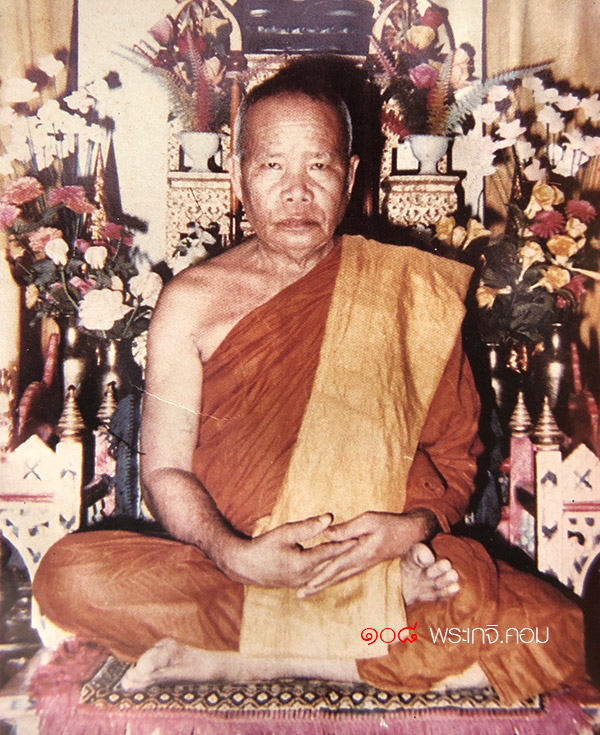
Luang Pu Onsi Sumetho (หลวงปู่อ่อนสี สุเมโธ), also known by his ecclesiastical title Phra Khru Silakhan Sangwon (พระครูสีลขันธ์สังวร), was a revered Thai forest tradition monk and direct disciple of the legendary Luang Pu Mun Bhuridatto (หลวงปู่มั่น ภูริทัตโต). He resided at Wat Phra Ngam Sri Mongkol (วัดพระงามศรีมงคล), Tha Bo District, Nong Khai Province, northeastern Thailand, and is venerated for his austere dhutanga practice and profound Dhamma teachings rooted in the Kammatthana forest tradition. Read more ↓
Biography
Who Was Luang Pu Onsi Sumetho?
Luang Pu Onsi Sumetho (หลวงปู่อ่อนสี สุเมโธ), also known by his ecclesiastical title Phra Khru Silakhan Sangwon (พระครูสีลขันธ์สังวร), was a revered Thai forest tradition monk and direct disciple of the legendary Luang Pu Mun Bhuridatto (หลวงปู่มั่น ภูริทัตโต). He resided at Wat Phra Ngam Sri Mongkol (วัดพระงามศรีมงคล), Tha Bo District, Nong Khai Province, northeastern Thailand, and is venerated for his austere dhutanga practice and profound Dhamma teachings rooted in the Kammatthana forest tradition.
Early Life and Ordination
Luang Pu Onsi Sumetho (หลวงปู่อ่อนสี สุเมโธ) was born in the Nong Khai region of northeastern Thailand, in the culturally rich Isan borderland along the Mekong River. His birth year is not widely documented in English sources, though records place his formative monastic years in the early-to-mid twentieth century Buddhist Era. He entered monastic life in the Theravada tradition and was ordained as a Bhikkhu in accordance with the Dhammayut or related reform lineage that was flourishing in the northeast during that period.
From the outset of his monastic career, Luang Pu Onsi demonstrated a temperament drawn to solitude, contentment, and rigorous self-discipline — qualities that would define his entire vocation. Based at Wat Phra Ngam Sri Mongkol (วัดพระงามศรีมงคล) in Tha Bo District (อำเภอท่าบ่อ), Nong Khai Province (จังหวัดหนองคาย), he cultivated his initial practice in the rural monastery environment of the Mekong basin before eventually undertaking the arduous dhutanga pilgrimage that would shape him as a master practitioner. The precise date of his full ordination (Upasampadā) is not widely documented in English sources.
Spiritual Development and Practice
Luang Pu Onsi Sumetho (หลวงปู่อ่อนสี สุเมโธ) belongs to the storied lineage of Luang Pu Mun Bhuridatto (หลวงปู่มั่น ภูริทัตโต), universally regarded as the founding father of the Thai Forest Tradition (พระกรรมฐาน) and one of the most venerated meditation masters in twentieth-century Theravada Buddhism. This lineage places supreme emphasis on Sila (ศีล — moral discipline), Samadhi (สมาธิ — meditative concentration), and Pañña (ปัญญา — liberating wisdom), practiced through intensive forest retreat and the austerities of the Dhutanga (ธุดงค์) wandering tradition.
Crucially, Luang Pu Onsi was a close spiritual companion (สหธรรมิก) of Luang Pu Thesk Thesarangsi (หลวงปู่เทสก์ เทสรังสี) of Wat Hin Mak Peng (วัดหินหมากเป้ง), Nong Khai — one of the most celebrated disciples of Luang Pu Mun. Together, they undertook an extraordinarily daring dhutanga journey northward through Laos and into the high mountain forests of northern Thailand and Myanmar, enduring wild terrain, wild animals including tigers, elephants, bears, and king cobras, and crossing into the territories of hill tribe peoples such as the Palaung (ปะหร่อง), Karen (กะเหรี่ยง), Yang (ยาง), and Lahu (มูเซอ) — all in single-minded pursuit of their teacher, Luang Pu Mun. Their eventual reunion with Luang Pu Mun at Tham Dok Kham cave (ถ้ำดอกคำ) near Mae Pang forest, Phrao District, Chiang Mai, was described by Luang Pu Onsi as one of the most spiritually transformative experiences of his life.
Major Amulet Consecrations and Ceremonies
Specific amulet batch records for Luang Pu Onsi Sumetho (หลวงปู่อ่อนสี สุเมโธ) — including precise Buddhist Era year of consecration, batch names, and materials used — are not widely documented in English sources. Collectors and devotees generally associate him with amulet types common to the northeastern forest tradition master lineage, including Roop Muean (รูปเหมือน — monk effigy tablets), Rian (เหรียญ — commemorative coins or medallions), and Phim (พิมพ์ — pressed votive tablets), typically produced in sacred lead alloy, copper, or alpaca silver. Detailed batch records, consecration dates, and material compositions require consultation of Thai-language temple archives at Wat Phra Ngam Sri Mongkol (วัดพระงามศรีมงคล) or specialist Thai amulet publications. Collectors seeking authenticated pieces are advised to consult established Thai amulet certification bodies such as G-Pra or Samakom for verification.
No specific amulet batches by Luang Pu Onsi Sumetho are currently listed in the Thai Amulets Collection (TAC) verified database. This page will be updated as authenticated records become available.
Legacy and Temple Significance
Although Luang Pu Onsi Sumetho (หลวงปู่อ่อนสี สุเมโธ) has passed into Parinibbana, his legacy endures as a beacon of authentic forest tradition practice in northeastern Thailand. He is remembered as a monk of exceptional peace, contentment, and moral purity — a true practitioner of Sila, Samadhi, and Pañña as transmitted directly from the lineage of Luang Pu Mun Bhuridatto (หลวงปู่มั่น ภูริทัตโต).
Wat Phra Ngam Sri Mongkol (วัดพระงามศรีมงคล), located in Tha Bo District (อำเภอท่าบ่อ), Nong Khai Province (จังหวัดหนองคาย), continues to serve as a centre of Buddhist practice and pilgrimage along the Mekong River corridor. Devotees who visit the temple pay respects at shrines dedicated to Luang Pu Onsi, regarding his image and amulets as objects of great merit and spiritual protection. His Dhamma teachings — particularly his counsel on impermanence, the importance of a calm and settled mind, and the dangers of worldly agitation — are preserved and recited by his disciples and students to this day. Within the collector community across Thailand, Singapore, Malaysia, China, Taiwan, and Hong Kong, Luang Pu Onsi is regarded as a forest master of deep attainment whose sacred objects carry the blessings of an authentic and unbroken lineage.