Luang Pho Kluay – Phra Khru Yanavorakit (Yanavaro)
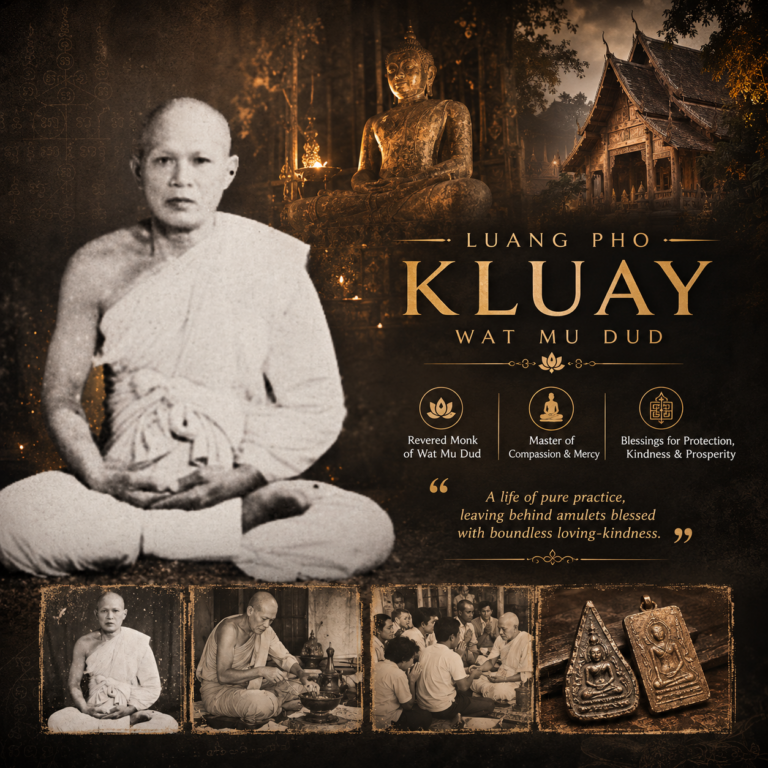
Luang Pho Kluay (หลวงพ่อคลาย), formally known as Phra Khru Yanavorakit (Yanavaro) (พระครูญาณวรกิต ยานวโร), was the former abbot of Wat Mu Dud (วัดหมู่ดุด), Khlong Khut Subdistrict, Tha Mai District, Chanthaburi Province, born on 11 March BE 2451 (AD 1908) and passing on 24 May BE 2534 (AD 1991). He is most revered as a strict Vinaya-observing monk of the Luang Pu Tim (หลวงปู่ทิม) lineage, celebrated for consecrating amulets of exceptional protective and invincibility power. Read more ↓
Amulets by Luang Pho Kluay – Phra Khru Yanavorakit (Yanavaro) 1 total · 1 available
Biography
Who Was Luang Pho Kluay – Phra Khru Yanavorakit (Yanavaro)?
Luang Pho Kluay (หลวงพ่อคลาย), formally known as Phra Khru Yanavorakit (Yanavaro) (พระครูญาณวรกิต ยานวโร), was the former abbot of Wat Mu Dud (วัดหมู่ดุด), Khlong Khut Subdistrict, Tha Mai District, Chanthaburi Province, born on 11 March BE 2451 (AD 1908) and passing on 24 May BE 2534 (AD 1991). He is most revered as a strict Vinaya-observing monk of the Luang Pu Tim (หลวงปู่ทิม) lineage, celebrated for consecrating amulets of exceptional protective and invincibility power.
Early Life and Ordination
Luang Pho Kluay (หลวงพ่อคลาย) was born on 11 March BE 2451 (AD 1908) in the fertile, spiritually rich province of Chanthaburi (จันทบุรี), located in the eastern region of Thailand. Chanthaburi has long been regarded as a province with deep Buddhist roots, bordered by dense forests and ancient temples that have nurtured many revered masters over the centuries.
Details of his family background and early childhood are not widely documented in English sources. What is known, however, is that he entered the monastic life with sincere devotion, eventually receiving full ordination as a bhikkhu (ภิกษุ). Having been a monk for 63 years at the time of his passing in BE 2534 (AD 1991), he would have been ordained approximately in BE 2471 (AD 1928), likely in his early twenties — a typical age for serious ordination candidates of his era.
He spent the entirety of his monastic life rooted at Wat Mu Dud (วัดหมู่ดุด) in Tha Mai District (อำเภอท่าใหม่), rising through the ranks of the Sangha to eventually serve as the temple’s abbot and receiving the ecclesiastical title Phra Khru Yanavorakit (พระครูญาณวรกิต). He passed away on 24 May BE 2534 (AD 1991) at the venerable age of 83 years and 2 months, leaving behind a monastic career of 63 years and a legacy that endures to this day across the amulet collector communities of Thailand and Southeast Asia.
Spiritual Development and Practice
Luang Pho Kluay’s (หลวงพ่อคลาย) spiritual formation was shaped decisively by his discipleship under Phra Ajarn Sangkhao (พระอาจารย์แสงเขา) of Wat Keng Chin (วัดเก็งจิน), a master teacher whose lineage produced some of Chanthaburi’s most celebrated monks. Through this connection, Luang Pho Kluay belongs to the same distinguished school as the legendary Luang Pu Tim (หลวงปู่ทิม) of Wat Lahan Rai (วัดละหารไร่) — one of the most revered monks in all of Thai amulet history. This shared lineage is a matter of great significance to collectors and devotees, as it places Luang Pho Kluay firmly within a tradition known for the extraordinary potency of its consecrated objects.
His primary meditative discipline was Kasina meditation (กสิณ), encompassing the four elemental meditations of earth (pathavi kasina), water (apo kasina), wind (vayo kasina), and fire (tejo kasina). This ancient Samatha (สมถะ) practice, detailed in the Pali Canon and the Visuddhimagga, is considered among the most demanding concentration meditations in the Theravada tradition, developing the meditator’s mind to states of profound absorption and, according to Thai Buddhist belief, generating the inner spiritual power (saksit — ศักดิ์สิทธิ์) that is channelled into amulet consecration ceremonies.
Above all, Luang Pho Kluay was known for his strict adherence to the Vinaya (พระวินัย) — the monastic code of discipline. This rigorous moral purity, combined with his advanced Kasina attainments, is understood by devotees and collectors alike to be the source of the extraordinary power attributed to his blessed objects.
Major Amulet Consecrations and Ceremonies
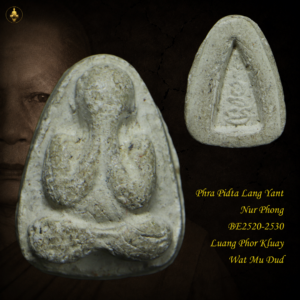
Luang Pho Kluay (หลวงพ่อคลาย) is known to collectors primarily through commemorative coins (เหรียญ) and standing Buddha image amulets (พระยืน). Among the documented batches, two are particularly significant in collector circles:
- First Edition Commemorative Coin — BE 2519 (AD 1976)
This inaugural coin release is regarded as a landmark issue from Wat Mu Dud (วัดหมู่ดุด) and is prized by collectors as the earliest widely circulated numismatic amulet associated with Luang Pho Kluay. It is sought after for its historical significance and its connection to the monk’s most active period of consecration work. - Standing Buddha Amulet, Second Edition — BE 2520 (AD 1977)
This is arguably the most celebrated of all Luang Pho Kluay’s sacred objects. A total of 5,000 pieces were produced, with the majority initially distributed to devotees making merit. Among collectors and devotees in Tha Mai District and beyond, this amulet has earned the informal title “Die Hard” (ไดฮาร์ด) — a testament to the extraordinary stories of invincibility and protective power associated with it. The reverse of the amulet features the striking image of a lion stepping on a Garuda, an iconographic detail that collectors regard as a visual declaration of supreme spiritual authority. Most amulets were originally requested and commissioned by high-ranking government officials, though Luang Pho Kluay chose to fund the production from his own resources — a detail that devotees regard as evidence of his selfless character. It is reported that approximately 3,000 pieces entered the hands of a new generation of collectors around BE 2550 (AD 2007), who have retained them in anticipation of growing collector recognition. - Commemorative Coin — BE 2542 (AD 1999)
A later commemorative coin release, this issue is popular among collectors seeking pieces connected to Luang Pho Kluay’s legacy in the years following his passing. It is considered accessible for newer collectors entering the Wat Mu Dud amulet market.
Beyond his own temple’s productions, Luang Pho Kluay was regularly invited to participate in major consecration ceremonies (phithi pluk sek — พิธีปลุกเสก) at prestigious temples throughout Thailand, most notably at Wat Suthat Thep Wararam (วัดสุทัศนเทพวราราม) in Bangkok — one of the kingdom’s most important royal temples. His participation in such high-profile ceremonies underscores the recognition accorded to his spiritual attainments by the broader Thai Sangha.
Detailed batch-by-batch records specifying clay compositions, sacred material inclusions, and full ceremony participant lists are not widely documented in English sources. Collectors seeking granular provenance data are advised to consult Thai-language temple records from Wat Mu Dud directly or reference specialist Thai amulet publications covering the Chanthaburi school.
Legacy and Temple Significance
Luang Pho Kluay — Phra Khru Yanavorakit (หลวงพ่อคลาย พระครูญาณวรกิต) — left an enduring mark on Thai Buddhism in the eastern provinces and on the wider amulet collector community across Southeast Asia. As the former abbot of Wat Mu Dud (วัดหมู่ดุด) for decades, he shaped the temple’s identity as a centre of strict Vinaya practice and powerful consecration work, placing it firmly within the prestigious lineage of Luang Pu Tim (หลวงปู่ทิม) of Wat Lahan Rai (วัดละหารไร่).
Within Tha Mai District (อำเภอท่าใหม่) and across Chanthaburi Province (จังหวัดจันทบุรี), Luang Pho Kluay is venerated as a monk whose spiritual power continues to operate through his consecrated objects long after his passing on 24 May BE 2534 (AD 1991). Local residents, merchants, farmers, and officials — including the police officers and government servants who sought his amulets during his lifetime — continue to regard his blessed pieces as among the most reliable protective amulets from the Chanthaburi school.
Stories of miraculous protection attributed to his amulets have passed into local oral tradition, ensuring that his name remains well known not only among dedicated collectors but also among the general Buddhist community of the region. Wat Mu Dud itself continues to serve as a place of pilgrimage for devotees who come to pay respects at the temple and to seek out genuine pieces connected to its most famous abbot. Specific details regarding any dedicated shrine, memorial statue, or annual commemoration ceremony in his honour at Wat Mu Dud are not widely documented in English sources.