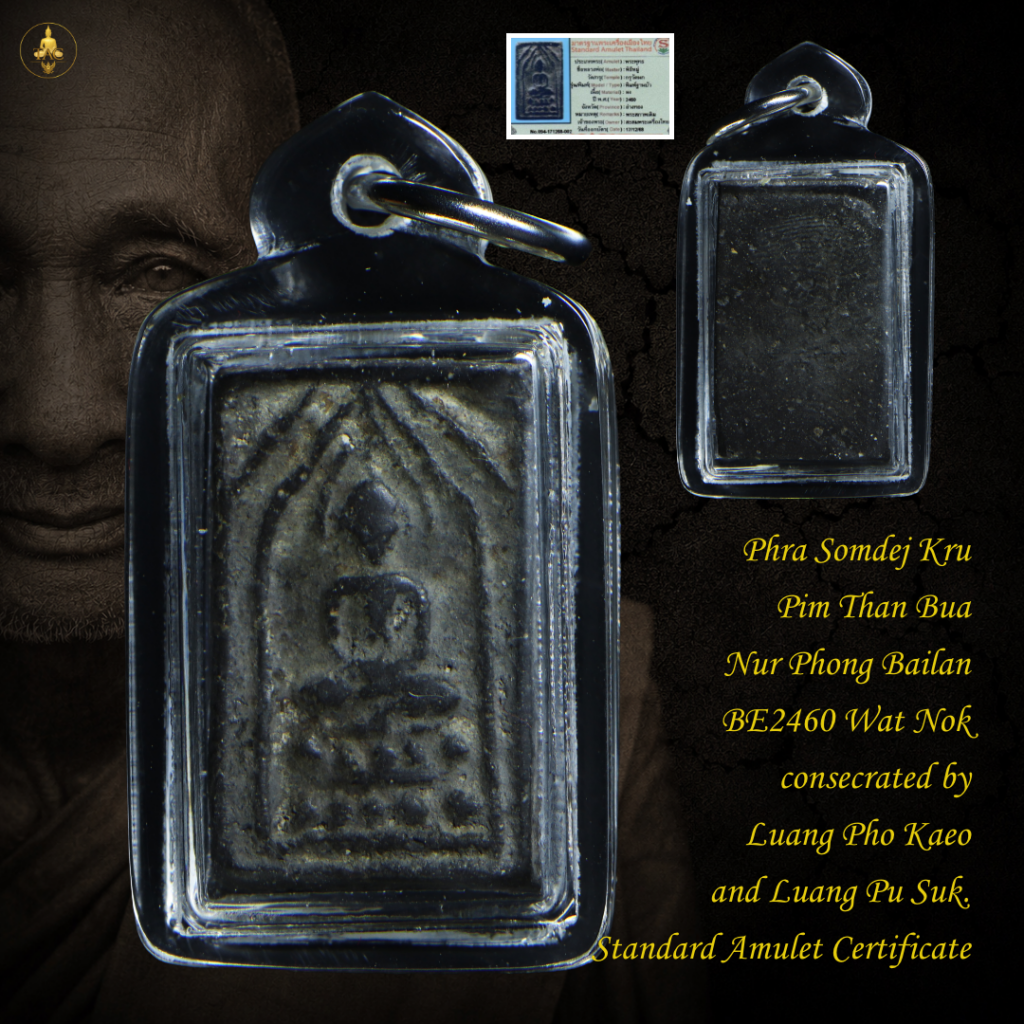
Phra Somdej Kru Pim Than Bua Nur Phong Bailan BE2460 Wat Nok consecrated by Luang Pho Kaeo and Luang Pu Suk
| Type | Phra Somdej Kru Pim Than Bua |
| Monk | Luang Pu Suk Gesaroh Wat Pak Khlong Makham Thao |
| Temple | Wat Nok |
| B.E. Year | 2460 |
| Material | Nur Phong Bailan |
| Condition | Good |
| Certificate | Standard Amulet |
| SKU | TAC-PhraSomdejKruPimThanBua-LuangPhoKaeoAndLuangPuSuk-003 |
Authentic Phra Somdej Kru Pim Than Bua Luang Pho Kaeo and Luang Pu Suk, Wat Nok BE 2460. Nur Phong Bailan. Certified Standard Amulet. Singapore dealer.
What is the Phra Somdej Kru Pim Than Bua amulet by Luang Pho Kaeo and Luang Pu Suk?
The Phra Somdej Kru Pim Than Bua Luang Pho Kaeo and Luang Pu Suk is an authentic Thai amulet produced at Wat Nok (Sakunaram) in Ang Thong Province, consecrated between BE 2453 and BE 2475, and crafted from Nur Phong Bailan — oil-infused sacred powder — in the distinctive lotus-base (Pim Than Bua) form. Collectors across Singapore and Southeast Asia regard this piece as one of the most spiritually significant Phra Somdej forms from the early twentieth century.
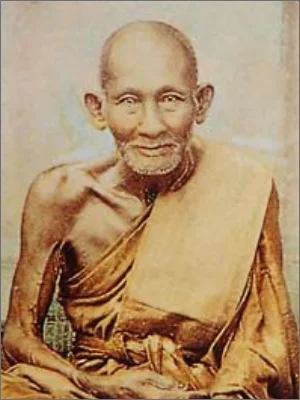
Luang Pho Kaeo and Luang Pu Suk jointly shaped the sacred identity of these amulets. Luang Pho Kaeo served as abbot of Wat Nok (Sakunaram) and continuously produced amulets from approximately 1910 through 1932. During Luang Pu Suk’s lifetime, he was personally invited to participate in the consecration ceremonies, lending additional spiritual authority to every piece produced.
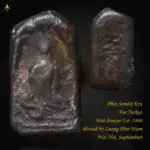
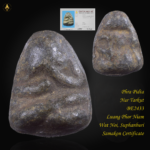
The amulet depicts the Buddha in a meditative posture, seated on a tiered lotus base within a two-tiered halo styled with rays — a design closely associated with the shared consecration tradition of both monks. The Buddha’s face is sharp and prominent, featuring a two-tiered high topknot and clearly visible folds of the monastic robe. The reverse side is smooth and often carries pressed inscriptions of the letters “U,” “Thaw,” or the sacred “Unnalom” symbol.
Because these amulets were interred in a reliquary (kru), traces of the burial deposit remain visible on surviving examples. This characteristic kru residue is among the most important physical markers collectors use when authenticating a genuine Phra Somdej Kru Pim Than Bua Luang Pho Kaeo and Luang Pu Suk today.
Phra Somdej Kru Pim Than Bua Wat Nok — Heritage and Provincial Significance
Ang Thong Province is home to three temples sharing the name Wat Nok: Wat Nok (Rajapaksi) in Mueang District, Wat Nok (Rajasakuna) in Wiset Chai Chan District, and Wat Nok (Sakunaram) in Chaiyo District — the temple from which the celebrated Phra Somdej Kru Pim Than Bua Wat Nok originates. Understanding this distinction is essential for collectors verifying provenance. The broader context of the Thai Buddhist amulet tradition helps explain why temple attribution carries such decisive weight in authentication.
Originally, the Phra Somdej Wat Nok (Sakunaram) was not widely known beyond the local area. It was only after accounts of remarkable protective incidents began circulating — including a villager bitten by a venomous snake whose flesh was not penetrated, and a child mauled by a dog whose skin remained unbroken despite torn clothing — that the amulet’s reputation spread decisively through the region.
These well-documented accounts elevated the Phra Somdej Kru Pim Than Bua Wat Nok from a local temple relic to a sought-after collector’s piece across Thailand and Southeast Asia. The Wat Nok examples are widely considered among the most compelling sacred biography accounts from Ang Thong Province, and they continue to drive collector interest from Singapore, Malaysia, and Greater China.
Nur Phong Bailan Phra Somdej Kru Pim Than Bua — Composition and Craftsmanship
The Nur Phong Bailan Phra Somdej Kru Pim Than Bua is made from oil-infused powdered palm leaf (bailan) — a sacred scriptural material traditionally sourced from ancient Buddhist manuscripts. This composition gives the amulet its characteristic density and produces the range of colours — green, gray, black, and white — found across surviving examples.
Amulets from the first production period, created by Luang Pho Kaeo between approximately 1910 and 1932, are primarily green and gray. Local collectors in Ang Thong Province describe the surface texture of this material as resembling a “razor sharpening stone” — a term that captures the fine-grained, slightly abrasive quality distinctive to this era. These first-period pieces were placed in a crypt (kru) to preserve the Buddhist faith for future generations.
The second production period followed Luang Pho Kaeo’s passing, when the next abbot, Luang Pho Fueang, created additional amulets using the same original moulds in white and black powder compositions. While both periods share the same sacred mould lineage, first-period pieces bearing the combined consecration of the Luang Pho Kaeo and Luang Pu Suk amulet are universally regarded by collectors as the most historically significant examples within this series.
Spiritual Benefits of Phra Somdej Kru Pim Than Bua by Luang Pho Kaeo and Luang Pu Suk
Devotees and collectors across Singapore, Malaysia, Thailand, and Greater China traditionally associate the Phra Somdej Kru Pim Than Bua Luang Pho Kaeo and Luang Pu Suk with powerful protective and fortune-attracting qualities. These beliefs are rooted in well-documented accounts from Ang Thong Province and have contributed directly to the amulet’s enduring reverence across generations. For those seeking an authentic Thai amulet Singapore specialist dealers can source with verified provenance, the Wat Nok Pim Than Bua represents one of the most compelling early twentieth-century Phra Somdej forms available.
- Kong Krapan (Invincibility): Collectors associate this amulet with protection against physical harm, as referenced in multiple historical accounts from Ang Thong Province — including the widely circulated snake-bite and dog-mauling incidents that first brought the Wat Nok amulet to broader attention.
- Klaew Klaad (Safety from Danger): The amulet is traditionally venerated for guarding the wearer from accidents, unexpected threats, and misfortune encountered in daily life.
- Maha Lap and Metta Mahaniyom (Good Fortune and Popularity): Devotees regard the Wat Nok amulet as a source of auspicious luck, social favour, and positive life circumstances — qualities that have sustained its reputation as a Thai amulet Singapore collectors actively seek.
Phra Somdej Kru Pim Than Bua BE 2460 — Authentication and Collector Value
The Phra Somdej Kru Pim Than Bua BE 2460 carries a Standard Amulet certificate, confirming its classification within the recognised framework used by established Thai amulet authentication bodies. This certification provides collectors with a documented baseline for provenance and supports confident acquisition, particularly for buyers across Singapore, Malaysia, and Greater China.
Authentic examples of the Phra Somdej Kru Pim Than Bua Luang Pho Kaeo and Luang Pu Suk can be identified by several physical markers: the characteristic Nur Phong Bailan powder composition in green or gray (first period), surface traces of kru reliquary deposits, and the lotus-base meditative Buddha image measuring approximately 1.5 centimetres wide by 2.3 centimetres high. The reverse may carry pressed inscriptions of “U,” “Thaw,” or “Unnalom.”
Because some Phra Somdej amulets from Wat Nok (Sakunaram) were historically misattributed to other revered monks, provenance verification is especially important for this series. Collectors are advised to cross-reference physical characteristics with the Standard Amulet certificate and consult specialist dealers when assessing first-period examples. A previously certified example from this same series — [SOLD] — has been documented at thaiamuletscollection.com, providing a verified reference point for comparison.
Attributes reflect Thai Buddhist devotional tradition and are not measurable claims.