Chapter 01
Caring for a Thai amulet is mostly restraint
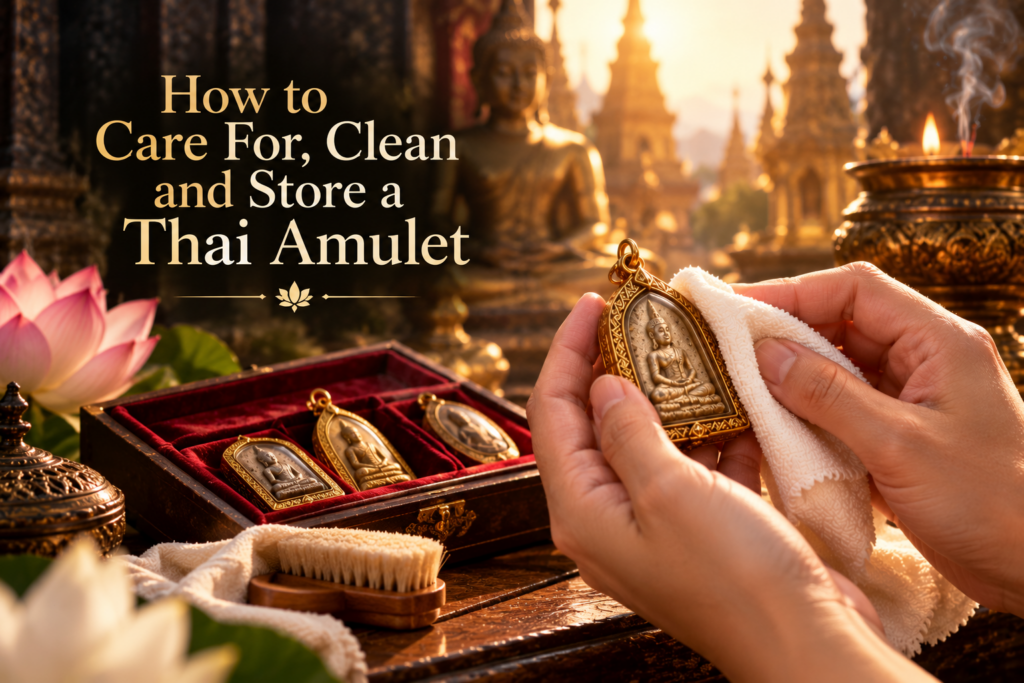
How to Care For, Clean and Store a Thai Amulet? Looking after a Thai amulet is less about doing things and more about not doing them. These are often old, fragile pieces, and the surface, colour and patina they develop over decades are a large part of what makes a genuine piece genuine — and valuable. The most common mistake new owners make is trying to "improve" a piece by cleaning or polishing it, which almost always does harm. The golden rule is simple: protect it, handle it with respect, and resist the urge to interfere. Get that mindset right and the rest is easy. A little care in how you wear, handle and store a piece will keep it in honest condition for a lifetime — and beyond, since amulets are meant to be passed on.Chapter 02
Why you should never clean most amulets
This surprises almost everyone, so it's worth saying plainly: for most Thai amulets — especially pressed-powder (phong) and clay pieces — you should not clean or polish them. The natural surface, the fine age-cracks, the settled patina on metal: these are exactly what experienced collectors look for as signs of authenticity and age. Scrubbing, soaking, or using any chemical or abrasive can strip that character away and noticeably lower a piece's value, sometimes permanently. If a piece genuinely needs attention, the safest step is to wipe surface dust very gently with a soft, dry cloth, and nothing more. Avoid water, soap, polish, toothbrushes and ultrasonic cleaners entirely. Anything beyond a gentle dusting — a piece that's badly soiled, or a delicate old amulet you're worried about — should be left to a specialist who handles amulets professionally. When in doubt, do nothing; it's the safest choice for the piece.Chapter 03
Everyday handling and the role of a casing
How you wear a piece day to day matters more than any cleaning routine. The single best thing you can do for an amulet you wear often is to keep it in a protective casing — a waterproof frame that shields it from sweat, moisture, dust and knocks. A good casing is cheap insurance that prevents the slow wear and accidental damage that account for most harm to worn pieces. Beyond that, handle the piece calmly: don't let it swing against hard surfaces, keep it above the waist (see how to wear a Thai amulet), and avoid dropping it. Pressed-powder and clay pieces in particular can chip or crack from a single knock, so a steady, respectful touch goes a long way.Chapter 04
Protecting a piece from water, sweat and knocks
Water and amulets don't mix well. Sweat, rain, pool chemicals and shower water can all damage powder, clay and even metal pieces over time. Before heavy exercise, swimming, or a shower, either remove the amulet or make sure it's sealed in a waterproof casing. The same goes for activities with impact or heat — anywhere the piece might be knocked, soaked or overheated. If a piece does get wet, don't rub it dry or apply heat; let it air-dry gently in a cool, shaded place. For a cased piece, check that no moisture has been trapped inside. These small habits prevent the kind of slow, avoidable deterioration that a piece can never recover from.Chapter 05
Storing amulets you're not wearing
For pieces you keep rather than wear, storage is straightforward: somewhere dry, stable, clean and respectful. A dedicated amulet box, a display case, or a drawer lined with soft cloth all work well, away from damp, direct heat and strong sunlight. Keep pieces separated — ideally each in its own compartment, pouch or casing — so they don't rub or knock against one another. Many collectors also keep their amulets in an honoured spot in the home rather than mixed in with everyday clutter — a reflection of the respect these blessed pieces are given. Humidity is the quiet enemy of powder and metal pieces alike, so in a damp climate a sealed box, or even a little silica gel, helps keep the air around them dry.Chapter 06
A piece that lasts a lifetime
Caring for a Thai amulet comes down to a few gentle habits: wear it in a casing, keep it dry and above the waist, handle it calmly, store it somewhere dry and respectful — and, above all, don't clean it. Do that, and a genuine piece will keep its character, its honesty and its value for a lifetime and well beyond. Browse our pieces, or ask us about casings and safe handling for any amulet.Chapter 07
Frequently Asked Questions
How do you care for a Thai amulet?
Wear it in a protective casing, keep it dry and above the waist, handle it gently, and store it somewhere stable and clean. Most importantly, don't clean or polish it — the natural surface and ageing are part of its value.Should you clean a Thai amulet?
No — for most pieces, cleaning or polishing strips the natural surface and ageing that make them genuine and valuable, often permanently. At most, wipe surface dust with a soft dry cloth and leave anything more to a specialist.How should you store Thai amulets?
In a dry, stable, clean place — a dedicated box, case or cloth-lined drawer — away from damp, heat and direct sunlight, with pieces separated so they don't rub. In a humid climate, a sealed box or a little silica gel helps.Can you wear a Thai amulet in the shower or swimming?
Better not to. Water, sweat and chemicals can harm powder, clay and metal pieces; remove the amulet or seal it in a waterproof casing first, and let it air-dry gently if it ever gets wet.What should you do if a Thai amulet gets dirty?
Wipe it very gently with a soft, dry cloth and nothing else. Avoid water, soap, polish and brushes. If it's badly soiled or delicate, leave it to a specialist rather than risk damaging the surface.Dealer's Note — Thai Amulets Collection, Singapore, since 2015. Ask us about waterproof casings and safe handling for any piece over WhatsApp.