Chapter 01
Pre-owned is how the hobby works
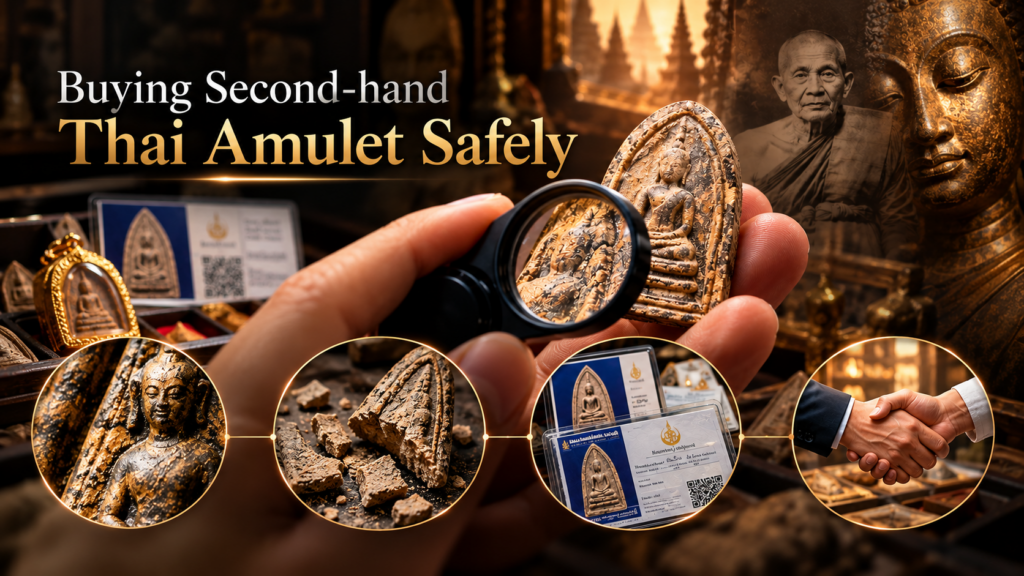
Buying second-hand Thai amulets safely isn't a compromise — it's simply how the hobby has always worked. Almost every genuine old piece in existence is pre-owned, having passed between collectors, families and temples for years or decades. There is no cultural stigma against a used amulet; on the contrary, a piece that has been worn and cared for can be more desirable, not less. Its age and honest wear are part of its character and part of the evidence that it is what it claims to be. So the goal isn't to avoid second-hand pieces — it's to buy them wisely. The good news is that the skills are the same as for any amulet purchase; you just apply them with a little extra attention to the piece's story and the seller's trustworthiness.Chapter 02
What you're really buying: the piece and its story
With a pre-owned amulet, you're acquiring two things: the piece itself, and its provenance — the story of where it came from. A clear, consistent history (which temple and master, roughly which era, how it's been kept, perhaps previous respected owners) supports both authenticity and value. It tells you the piece is what the seller says, and it's part of what you pass on when the amulet one day changes hands again. A vague, shifting or suspiciously perfect story is the single biggest warning sign in a second-hand sale. Genuine pieces usually come with a history that holds together under a few honest questions; dubious ones tend to get evasive. Our guide to choosing and authenticating a Thai amulet covers the full set of checks — mould, material, provenance and guarantee — which apply directly here.Chapter 03
The risks of a private sale
Most people who get caught out buy from a private seller with no accountability. The pitfalls to watch for are the familiar ones, only sharper second-hand:- A price well below the known market for that specific piece.
- A seller who won't let you inspect it properly, or who rushes the sale.
- No guarantee of authenticity and no returns accepted.
- Condition that's too perfect for the claimed age, or "ageing" that looks applied rather than natural.
- A provenance story that's vague, changes, or can't answer basic questions.
Chapter 04
How to buy a used amulet safely
The safeguard is simple and reliable: buy from a dealer who inspects and guarantees the piece. A seller who examines every amulet, describes its condition honestly, notes certification where it exists, answers your questions, and accepts a return turns a second-hand purchase from a gamble into a confident one. Their reputation is on the line with every sale, which is precisely why it protects you. Take your time, ask about the piece's history, and don't let urgency push you — a trustworthy seller will never mind questions. That's exactly how we've worked since 2015: every pre-owned piece we list is inspected, honestly described and stood behind.Chapter 05
Why age and honest wear can add value
It's worth repeating, because it reframes the whole question: with Thai amulets, "used" is not a downgrade. The natural patina, the fine age-cracks, the softened surface of a piece that has been worn for decades are prized by collectors as marks of authenticity and age — the very things a faker struggles to reproduce. A genuine older piece in honest condition is often the most desirable and valuable kind there is. So rather than seeing second-hand as second-best, see it as the mainstream of serious collecting.Chapter 06
Buy the seller as much as the piece
Second-hand is the heart of Thai amulet collecting, not a corner of it — embrace it, but buy the seller as much as the piece. A clear story and an honest guarantee turn a pre-owned amulet from a risk into a genuine pleasure to own, and often a better piece than any brand-new issue. Browse our pieces and ask us about any one's history — we're happy to walk you through it.Chapter 07
Frequently Asked Questions
Is it safe to buy second-hand Thai amulets?
Yes, if you buy from a dealer who inspects, honestly describes and guarantees the piece. Most genuine old amulets are pre-owned; the risk lies in private, no-guarantee sales, not in the fact that a piece is used.Are used Thai amulets less valuable?
Not necessarily — age and honest wear are part of a genuine piece's character and often add to its appeal and value. Value rests on the master, era, rarity, material and condition, not on a piece being new.What should I check when buying a used Thai amulet?
Its story (temple, master, era), the mould and material, honest condition for its age, and whether the seller guarantees authenticity and accepts returns. A clear, consistent provenance is key.Where is the safest place to buy second-hand Thai amulets?
From an established dealer who inspects and guarantees each piece and will answer questions — not from anonymous, no-accountability private sales, which is where most buyers get caught out.Why do collectors prefer older Thai amulets?
Because genuine age brings a natural patina and surface that are prized and hard to fake, and because the most historically significant, rare pieces are by nature old and pre-owned. Honest wear is a feature, not a flaw.Dealer's Note — Thai Amulets Collection, Singapore, since 2015. Every pre-owned piece we list is inspected, honestly described and guaranteed — ask us about any one's history over WhatsApp.