Chapter 01
What makes a Thai amulet valuable
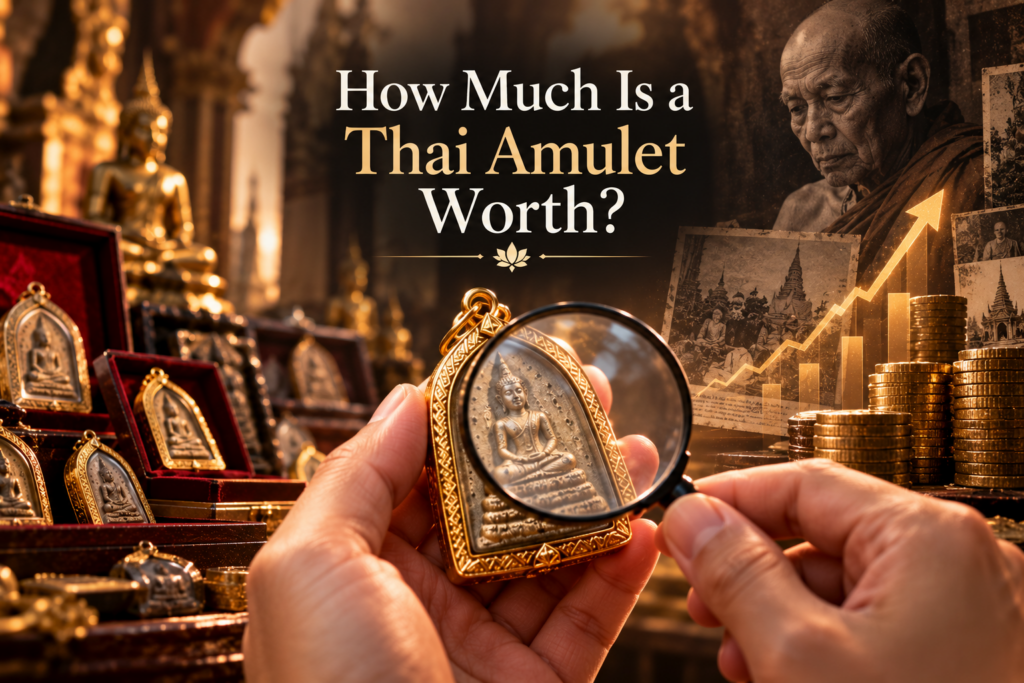
How much is a Thai Amulet worth? How much is a Thai amulet worth? The honest answer is: anywhere from the price of a nice meal to the price of a car — and, for the rarest pieces, far beyond. Value has very little to do with size or how striking a piece looks, and almost everything to do with who made it, where, when, how rare it is, what it's made of, and the condition it survives in. Understand those drivers and the huge range of prices stops being mysterious: you can see why two amulets that look nearly identical can sit worlds apart in value. It's worth saying up front that there's no single "price list" for Thai amulets. Value is set by the market — by what knowledgeable collectors will pay — and it rests on the factors below, weighed together.Chapter 02
The master and the temple behind it
The single biggest factor is usually the renown of the monk who consecrated the piece and the temple behind it. An amulet blessed by a celebrated master, at a famous temple and a significant ceremony, carries a prestige and a demand that an anonymous piece never will — even when the two look alike. A revered master's barami (accumulated virtue and standing) is, in a real sense, what the market is pricing. This is why the name attached to a piece is the first thing serious collectors ask about.Chapter 03
Age, rarity and surviving examples
Age and scarcity drive value hard. An original early piece — say a sought-after amulet from the BE2400s — is rare, historically significant, and prized accordingly; a respectful later edition of the same design, made in larger numbers, is far more affordable. The fewer genuine examples that survive in good condition, the higher the value climbs. Rarity isn't just about age, either: a limited ceremony, a famous batch, or a particularly hard-to-find pim can all make a piece scarce and sought-after.Chapter 04
Material, mould and making
What a piece is made from, and how well, matters too. A celebrated sacred blend (muan sarn) — one containing powders from famous older amulets or other potent materials — adds real value, as do prized metals like nawa and rare inclusions such as gems or a monk's hair (our guide to how Thai amulets are made explains these). A famous mould pressed crisply and cleanly commands more than a worn, weak or lesser example of the same type. In short, the quality and significance of the making feed directly into the price.Chapter 05
Condition, certification and the market
Honest, original condition is valued — but with a crucial caveat: be wary of a piece that looks too perfect for its claimed age, as artificial freshness can signal a problem. Genuine, well-kept condition for its era is what commands a premium. On famous pieces, a recognised grading or competition placing (Samakom / Thaprachan) can lift value further by adding confidence. And always remember that the market sets the rate: a price far below the known value for a specific sought-after piece is a warning sign, not a lucky bargain. If something seems too cheap for what it claims to be, that's usually the most important fact about it.Chapter 06
Reading a price with confidence
Put it all together and a price becomes readable. Ask: who's the master and temple? How old and how rare is it? What's it made of, and how good is the mould? What condition is it in, and is it certified? The answers explain the number. If you're weighing a specific piece and want an honest view, our guide to choosing and authenticating a Thai amulet helps, and you're always welcome to ask us. Browse our pieces across every budget — there are genuine, meaningful amulets at almost every price.Chapter 07
Frequently Asked Questions
How much is a Thai amulet worth?
From very affordable to extremely valuable, depending on the master and temple behind it, its era and rarity, its material and making, and its condition. Size and appearance alone don't set the price — value is decided by the market, weighing those factors together.Why are some Thai amulets so expensive?
Because they come from a renowned master and famous ceremony, are old and rare with few surviving examples, use prized materials like a celebrated muan sarn or nawa metal, and survive in genuine good condition — all of which drive demand far above an anonymous later copy.Is a cheap Thai amulet always fake?
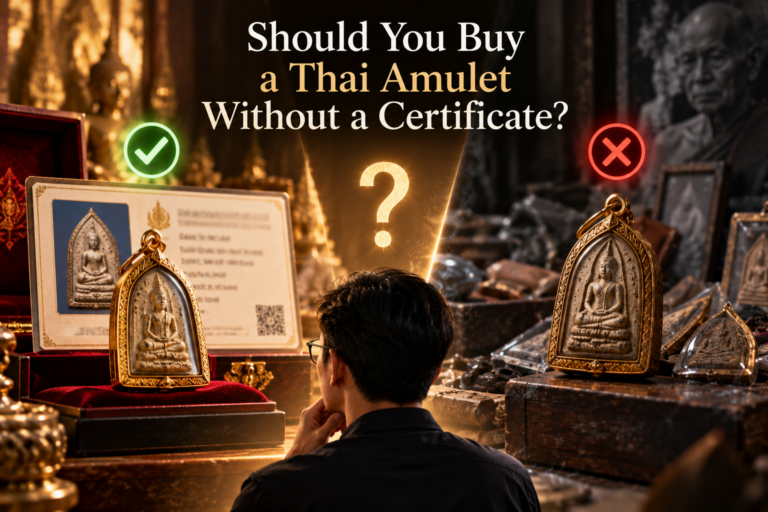
Not at all — many genuine pieces are affordable, as most amulets were made in reasonable numbers. But a price far below the known market rate for a specific sought-after piece is a warning sign worth questioning closely.Does a certificate increase a Thai amulet's value?
On famous, valuable pieces, a recognised grading or competition placing can lift value by adding confidence. On everyday pieces it matters far less. A certificate supports value rather than creating it.How do I know if a Thai amulet is priced fairly?
Weigh the master and temple, the era and rarity, the material and mould, and the condition — then compare against what similar genuine pieces fetch. A trustworthy dealer can give you an honest view, and a price far below the norm is a red flag, not a bargain.Dealer's Note — Thai Amulets Collection, Singapore, since 2015. We'll give you an honest view of any piece's value and provenance — just message us on WhatsApp.