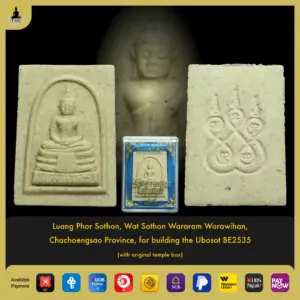
 Luang Phor Sothon, Wat Sothon Wararam Worawihan, Chachoengsao Province, for building the Ubosot BE2535 (with original temple box)
S$10
S$18save S$8 (44%)
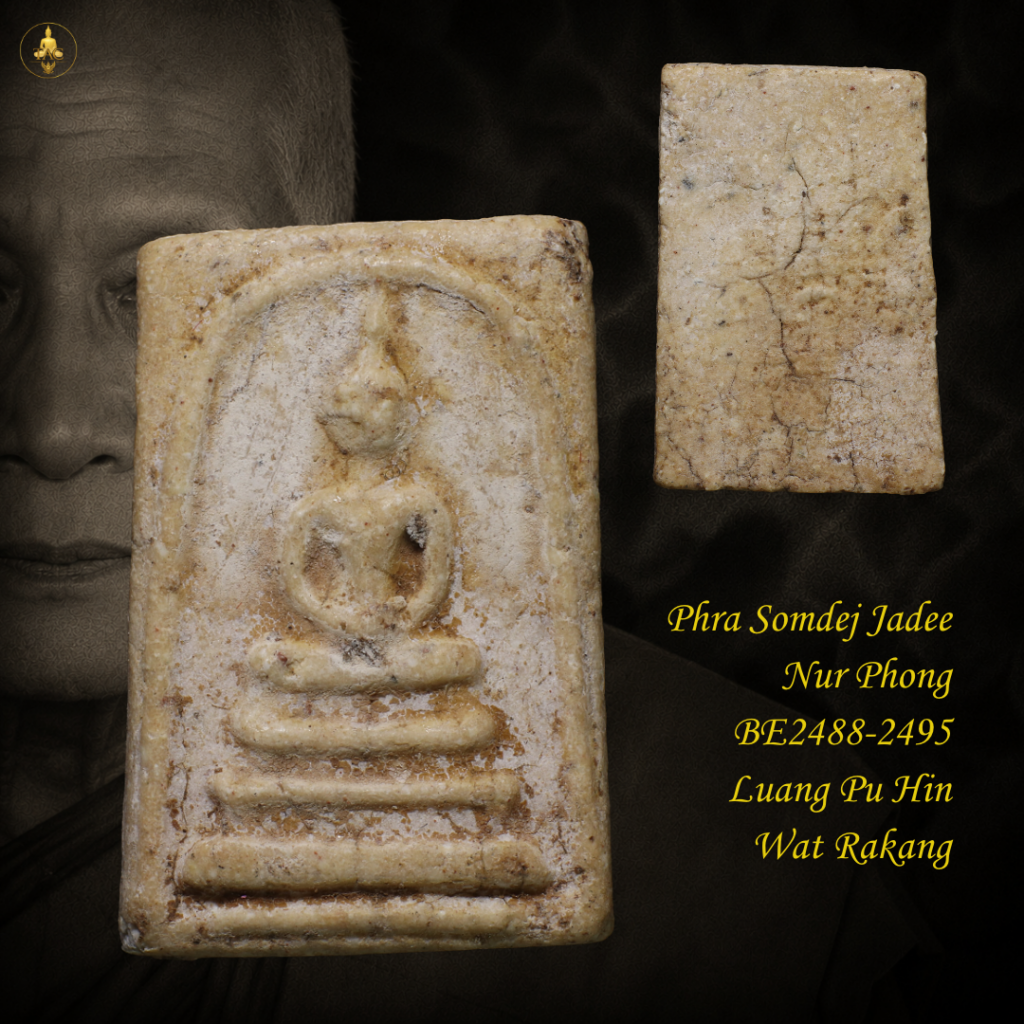
| Type | Phra Somdej Jadee |
| Monk | Luang Pu Hin Wat Rakang Kositaram |
| Temple | Wat Rakang |
| B.E. Year | 2488 |
| Material | Nur Phong |
| Condition | Good |
| SKU | TAC-PhraSomdejJadee-LpHin-001 |
Luang Phor Sothon, Wat Sothon Wararam Worawihan, Chachoengsao Province, for building the Ubosot BE2535 (with original temple box)
 Phra Luang Pu Thuad (Lp Thuad) Nur Wahn BE2550 Wat Kongkha Liap (Tha Sak), Nakhon Si Thammarat (425 Years Anniversary, 9 Days & 9 Grand Ceremonies)
 Phra Pang Umbat (Wednesday Buddha) BE2512 Luang Phor Tae (Lp Tae) Khongthong Wat Sam Ngam
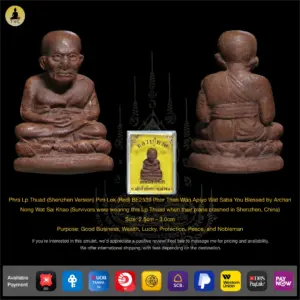 Phra Lp Thuad 龙婆托 (Shenzhen Version) Pim Lek (RED) BE2539 Phor Than Wan Apiyo Wat Saba You Blessed by Archan Nong Wat Sai Khao
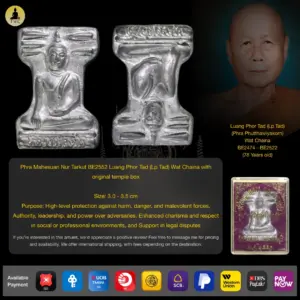 Phra Mahesuan Nur Tarkut BE2552 Luang Phor Tad (Lp Tad) Wat Chaina with original temple box
Each adds this amulet plus the offer at the bundle price — ready at checkout, or mention it when you enquire on WhatsApp.
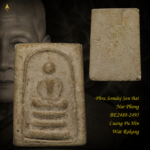
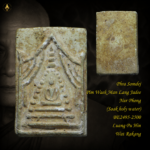
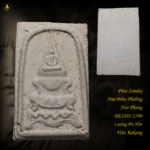
Authentic Phra Somdej Jadee Luang Pu Hin, Wat Rakang, BE 2488–2495. Pressed in Nur Phong. A classical-era Somdej from one of Bangkok's most significant amulet temples.
The Phra Somdej Jadee Luang Pu Hin is a classical-era pressed amulet produced at Wat Rakang in Bangkok between BE 2488 and 2495. It is pressed in Nur Phong — a dry sacred powder mix — and belongs to the Somdej Jadee (stupa or chedi-form) family. Pieces from this temple and this period sit at the top of serious collectors’ reference lists.
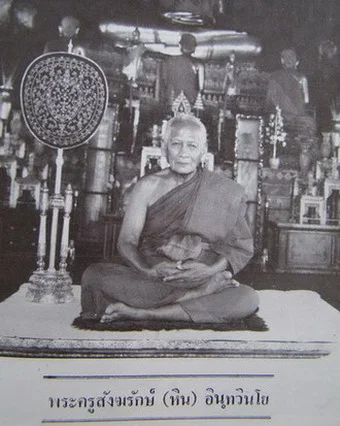
Luang Pu Hin was among the monks at Wat Rakang during the mid-twentieth century, a period when the temple was still producing amulets in the direct lineage of its most celebrated tradition. The monks who oversaw work at Wat Rakang during BE 2488–2495 were custodians of a practice going back to the era of Somdej Phra Phutthachan Toh — the founding figure of the Somdej tradition. That lineage matters. It determined who conducted the pluk sek (consecration ceremony) and whose hands blended the muan sarn (the sacred powder mixture pressed into each piece). A monk tied to Wat Rakang in that window carries that association automatically.
The BE 2488–2495 period covers the years immediately after World War II — a time when temple resources, monastic discipline and the solemnity of the work were all tightly maintained. Collectors who track the temple’s output by era treat this window with particular attention. For more on the broader Thai Buddhist amulet tradition, the Wikipedia overview is a reasonable starting point for newer collectors.
The nuea here is Nur Phong — a dry powder composition. At Wat Rakang, the muan sarn traditionally incorporated blessed chalk, dried flowers from prior ceremonies, ground sacred earth and other temple materials accumulated over years. Pressed pieces in Nur Phong from this era tend to show a particular surface character: the powder compacts densely, and genuine pieces from this period develop a patina that reflects age and handling, not lacquer or artificial treatment.
The pim (mould-form) is the Jadee or stupa shape — an architectural form rather than the seated Buddha image more commonly associated with Somdej amulets. The chedi form carries its own iconographic weight in Thai Buddhist practice, representing the reliquary and the presence of the Buddha’s teaching. What you want to look at first is the crispness of the moulded detail and whether the edges of the form show natural wear consistent with age. Artificially aged pieces tend to wear unevenly in ways that experienced hands pick up quickly.
No certificate is listed for this piece. That is not unusual for amulets of this age and type — many genuine examples from BE 2488–2495 predate the formal certification bodies that emerged later. Authentication for pieces of this period rests on the pim reference, the nuea character and provenance. Experienced collectors and sien (specialist judges) are your best tool here.
Devotees and collectors associate this piece primarily with metta, baramee and fortune support — the qualities most closely linked to the Somdej tradition at Wat Rakang.
A piece like this suits daily wear. Those in client-facing roles — sales, advisory, teaching, healthcare — tend to find the metta quality most relevant to their work. The baramee aspect makes it a natural choice for anyone stepping into a new position or carrying more responsibility than before. Business owners and those managing teams often keep a Somdej of this type close precisely because the tradition frames it around earned trust rather than force. For practitioners, the chedi pim is traditionally worn or placed at a shrine during sitting meditation. Standard care applies: keep it clean, avoid contact with harsh chemicals, and if you encase it, let the material breathe — airtight encasement is not ideal for Nur Phong pieces over time.
This is a Phra Somdej Jadee Luang Pu Hin from Wat Rakang, pressed in Nur Phong during BE 2488–2495 — right in the classical window that collectors track most closely for this temple. No certificate is listed, which is common for pieces of this age; authentication rests on the pim and nuea, so we at TAC recommend viewing it alongside a reference example if you are new to this period.
Attributes reflect Thai Buddhist devotional tradition and are not measurable claims.