Phra Pidta Lang Sukittima Yant Fang Tarkut BE2523 Somdej Phra Yanasangwon Wat Bowonniwet Luang Pu Toh
| Type | Phra Pidta |
| Monk | Luang Pu Toh (Lp Toh) Wat Pradoochimplee |
| Temple | Wat Boromniwat |
| B.E. Year | 2523 |
| SKU | TAC-0263 |
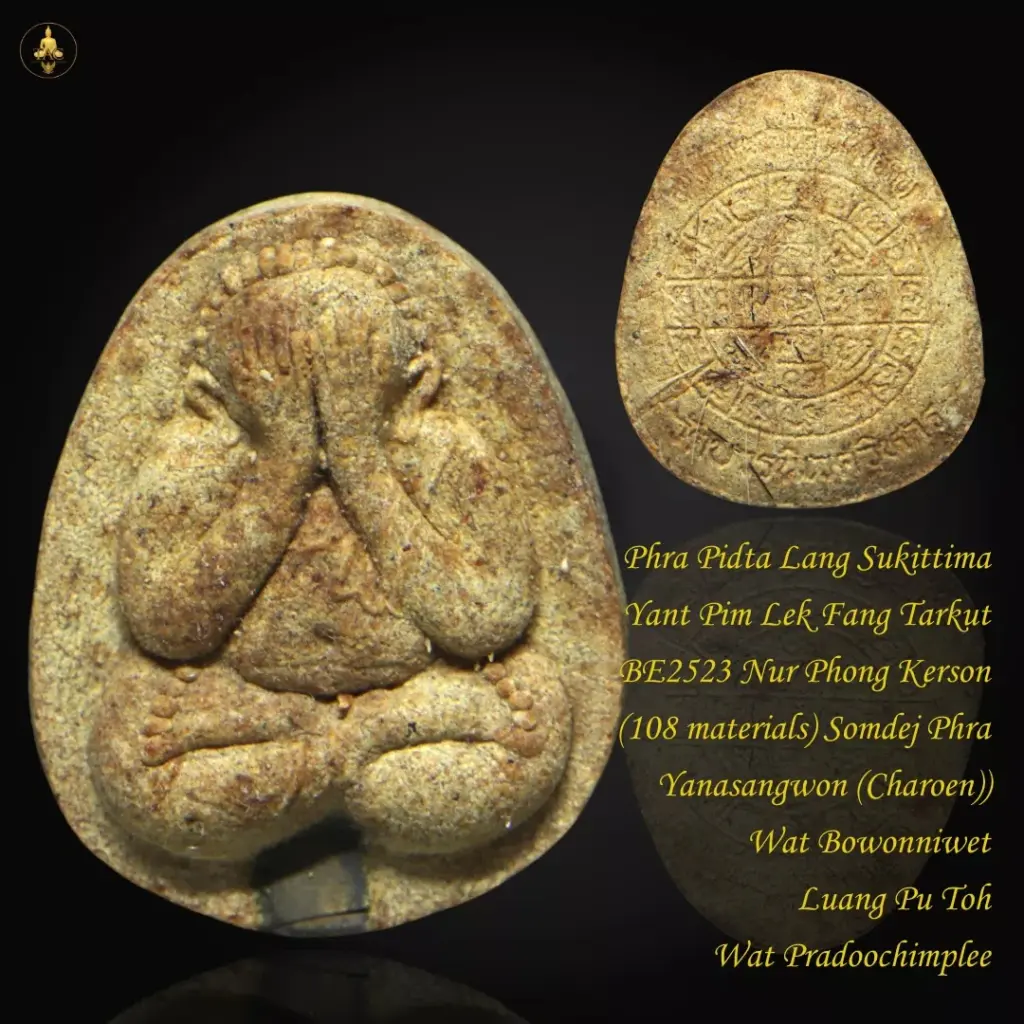
Authentic Phra Pidta Luang Pu Toh (Lp Toh) Wat Pradoochimplee, Wat Boromniwat BE 2523. Nuea phong kerson, pim lek with Sukittima yant reverse and takrut.
What is the Phra Pidta Lang Sukittima Yant by Luang Pu Toh (Lp Toh) Wat Pradoochimplee from Wat Boromniwat?
The Phra Pidta Luang Pu Toh (Lp Toh) Wat Pradoochimplee referenced here is a BE 2523 temple issue from Wat Boromniwat — specifically the compact pim lek (small-mould) Pidta with a reverse Sukittima star yant and an embedded takrut, pressed in nuea phong kerson, a sacred pollen-based powder composite of 108 ritual substances, under the patronage of Somdej Phra Yanasangwon with consecration joined by Luang Pu Toh (Lp Toh) Wat Pradoochimplee.
Why Luang Pu Toh’s participation matters to collectors
Luang Pu Toh (Lp Toh) Wat Pradoochimplee carries weight that needs no embellishment among serious collectors. His name on a pluk sek (consecration ceremony) is treated as a meaningful marker — not just a formality. Collectors in Singapore, Malaysia, and Thailand consistently place higher devotional confidence in pieces where his participation is documented, and this BE 2523 issue is one such example.
Somdej Phra Yanasangwon (Charoen) anchored the temple’s role in the issue. His association with Wat Boromniwat — a royal temple with clear institutional standing in modern Thai Buddhism — gives this piece a well-defined provenance. When temple patronage and consecration participation are both documented, that combination is what collectors use to frame authenticity and lineage confidence.
Reading the nuea and the pim
The nuea (material/substance) here is phong kerson — a sacred powder blend described as a 108-material composition. In the Thai Buddhist amulet tradition, the number 108 carries a specific ritual meaning: layered ingredients suggesting completeness of consecration intent, not just quantity. Collectors study phong bodies through surface texture, how the pressed detail holds at the edges, density, and the natural age tone that develops over decades.
This is a pim lek — a compact mould — which demands sharper pressing clarity than a full-size pim. The front carries the classic Pidta posture: the figure seated with hands covering the eyes, a form traditionally read as guarded sense-doors and inward composure. The reverse Sukittima star yant gives this pim its distinct identity within the broader BE 2523 issue, and the takrut (rolled metal scroll) embedded into the body adds a physical ritual layer that plain powder-press variants do not carry.
Authentication points collectors typically check:
- Clarity of the pim lek Pidta figure — fine detail at a small scale is harder to fake convincingly
- Integrity of the reverse Sukittima yant inscription — line precision and placement
- The takrut placement and how it sits within the powder body without disturbing the pressed surface
- Surface aging consistent with a phong body pressed in BE 2523
- Overall nuea density and texture — phong kerson has a recognisable feel that differs from later synthetic compositions
What a collector should know about value and rarity
Production quantities for this issue are not documented in available records, so rarity claims should not be overstated. What can be stated plainly: the combination of Luang Pu Toh’s consecration participation, Somdej Phra Yanasangwon’s patronage, the phong kerson nuea, the reverse Sukittima yant, and the takrut insert within a single compact pim lek form is not a common configuration. That specificity — ritual construction plus documented lineage — is what gives this piece its collector interest.
No certificate is currently attached to this piece. For collectors who require certified examples, that is a relevant factor when assessing the piece against certified comparables in the market.
This BE2523 Phra Pidta from Wat Bowonniwet Vihara draws its collector value from a convergence of factors that are rarely found together in a single piece at this price tier: the institutional weight of Wat Bowonniwet's royal-lineage patronage under Somdej Phra Yanasangwon, the consecration participation of Luang Pu Toh of Wat Pradoochimplee — one of the most widely revered monks of the late twentieth century — and the materially layered construction of Nur Phong Kerson sacred powder with an embedded takrut beneath a reverse Sukittima star yantra. We at TAC consider the Pim Lek format particularly appealing to disciplined collectors who prioritise monastic lineage and ritual integrity over visual scale.
Attributes reflect Thai Buddhist devotional tradition and are not measurable claims.