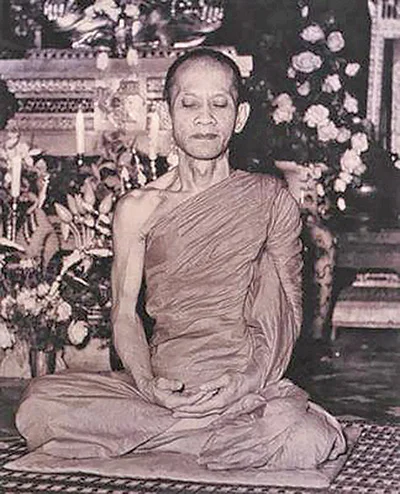
Phra Nak Prok Wat Sin Khan BE2513 Consecrated by Chao Khun Nor (CK Nor) Wat Thepsirin
| Type | Phra Nak Prok |
| Monk | Chao Khun Nor Wat Thepsirin |
| Temple | Wat Thepsirin |
| B.E. Year | 2513 |
| Condition | Fair |
| SKU | TAC-0361 |

Adds this amulet and the offer at the bundle price — ready at checkout. Or mention it when you enquire on WhatsApp.
Authentic Phra Nak Prok by Chao Khun Nor Wat Thepsirin, BE 2513, pressed from sacred phong. No certificate.
What is the Phra Nak Prok by Chao Khun Nor Wat Thepsirin?
The Phra Nak Prok Chao Khun Nor Wat Thepsirin is a sacred powder amulet pressed in BE 2513 under the consecration of Chao Khun Nor at Wat Thepsirin. It depicts the Buddha seated in meditation beneath the Naga serpent king’s hood — one of the most protective images in Thai Buddhist iconography. No certificate accompanies this piece.
Chao Khun Nor and the weight behind this consecration
Chao Khun Nor was a senior monk of considerable standing within the Thai monastic hierarchy. The honorific Chao Khun (a royally bestowed ecclesiastical title) places him well above the ordinary rank of temple abbot — collectors recognise it immediately as a marker of serious spiritual seniority. Pieces consecrated by monks of this rank carry a different weight in the market from ordinary temple batches.
The BE 2513 batch falls in 1970 CE, a period of active merit-making and ceremonial production at many Bangkok temples. Over five decades of age now sit in the nuea (material/substance) of every surviving piece, which matters both to collectors assessing patina and to devotees who understand that time does not diminish a properly consecrated amulet.
The Naga Prok image, the nuea, and how this piece was made
The iconography here is specific and deliberate. The Buddha sits in samadhi — deep meditative absorption — while the seven-headed Naga king raises its hood to shelter him from a sudden storm. In the Thai Buddhist amulet tradition, this image is read as total protection: the Dhamma above, the natural world below, both aligned in the devotee’s favour. It is not a common image — collectors who carry it tend to do so with a clear intention.
The nuea is phong — sacred powder — pressed into a mould. Phong blends of this era typically incorporated consecrated herbal material, sacred earths, and other ritual ingredients prepared under strict ceremonial conditions before pressing. The porous quality of the material is considered significant: it absorbs the presiding monk’s meditative intention during the pluk sek (consecration ceremony) more completely than denser metal or clay.
Each piece in the batch would have been individually pressed using a fixed pim (mould), then passed through chanting sessions led by Chao Khun Nor. What survives today is the physical record of that ceremony — the mould definition, the surface texture, the natural ageing of the powder body.
What collectors should look at, and what to know about certification
For a phong amulet now past fifty years old, condition assessment centres on a few specific points. Genuine pieces from a BE 2513 batch will show natural powder patina — fine surface ageing consistent with decades of ambient humidity and handling, not artificial darkening or coating. The pim should still read clearly: the Naga hood, the Buddha’s posture, and any reverse-face yant (sacred inscription) should be legible without enhancement.
- Surface texture: natural powder ageing, no signs of recoating or artificial patination
- Image definition: the Naga hood and the Buddha’s seated form should remain distinct despite age
- Reverse markings: look for yant or temple markings consistent with Wat Thepsirin’s production style of that period
- Overall integrity: undamaged edges and no restoration work on the powder body
This piece carries no certificate. That is not unusual for a batch of this age — formal certification systems developed well after BE 2513. For uncertified vintage phong amulets, physical examination by someone who knows the batch is the standard approach. Buy from a dealer who will let you look at the piece properly before committing.
We at TAC are offering this Phra Nak Prok Chao Khun Nor Wat Thepsirin from BE 2513 — a phong amulet now over fifty years old, consecrated by a monk of senior Chao Khun rank. For collectors focused on vintage Bangkok temple pieces with a serious consecrating monk behind them, this batch is worth attention. No certificate accompanies it, so we recommend arranging a physical viewing before purchase.
Attributes reflect Thai Buddhist devotional tradition and are not measurable claims.