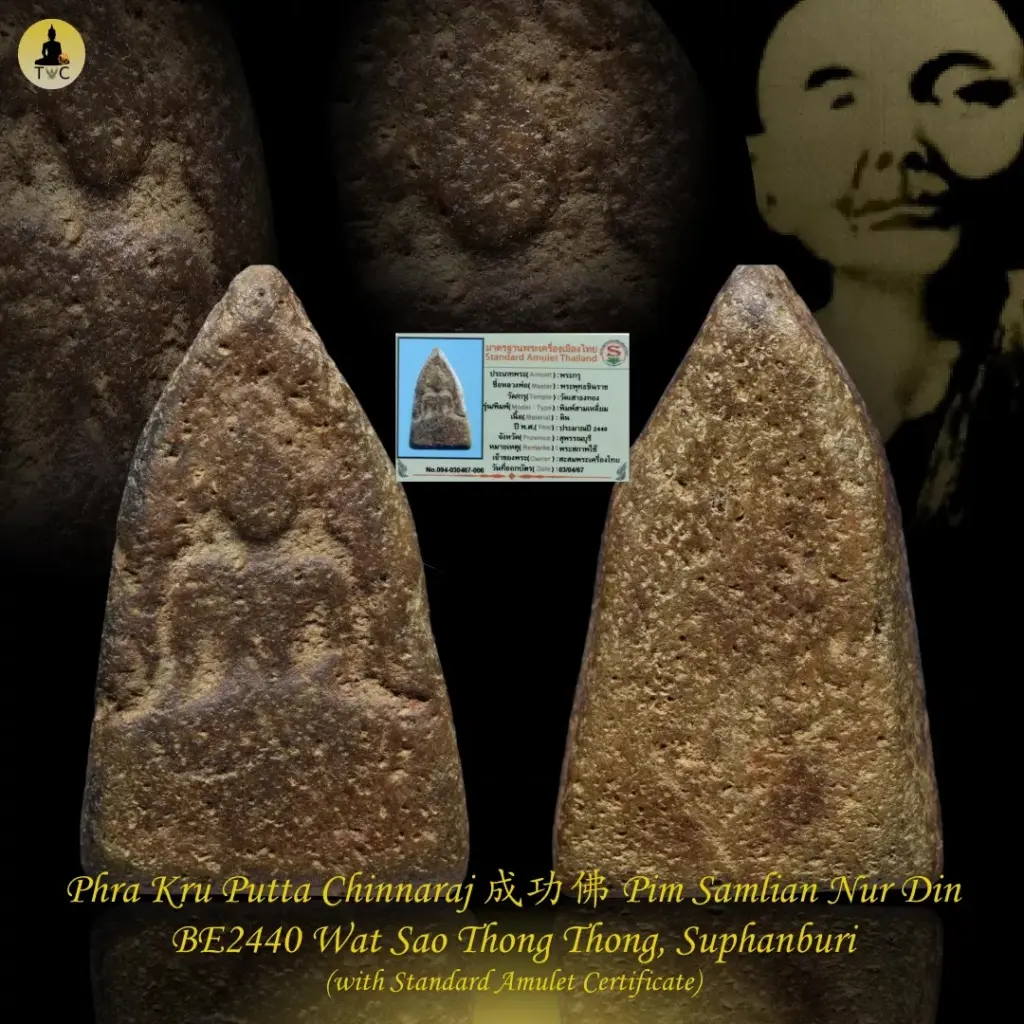
Phra Chinnaraj 成功佛 BE2440 Wat Sao Thong Thong Lp Niam
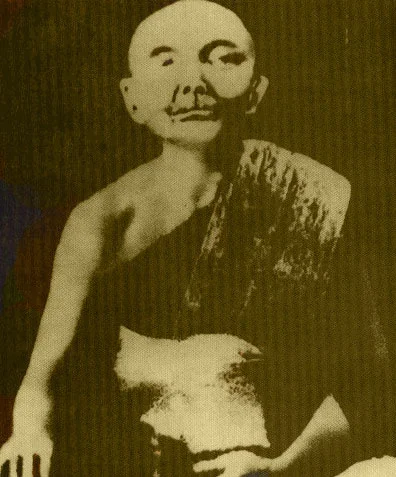
| Monk | Luang Phor Niam Puttaso (Lp Niam), Wat Noi, Suphanburi |
| Temple | Wat Sao Thong Thong |
| B.E. Year | 2440 |
| SKU | TAC-0046 |
Phra Buddha Chinnarat Wat Sao Thong Thong • BE2430–2440 Early Phra Buddha Chinnarat Pim Samlian • Wat Sao Thong Thong, Suphanburi • Terracotta / Nur Din Series Main obverse — early Phra
Phra Buddha Chinnarat Wat Sao Thong Thong • BE2430–2440
Early Phra Buddha Chinnarat Pim Samlian • Wat Sao Thong Thong, Suphanburi • Terracotta / Nur Din Series
Main obverse — early Phra Buddha Chinnarat image from Wat Sao Thong Thong, dated to circa BE2430–2440.
Historical Significance
The Phra Buddha Chinnarat amulet from Wat Sao Thong Thong is widely regarded as one of the earliest known
small-format representations of Phra Buddha Chinnarat in Thai amulet history. Created around
BE2430–2440 (late 19th century), this batch was consecrated in a grand Putthapisek
with Luang Pu Perm, abbot of Wat Sao Thong Thong, together with
Luang Por Niam of Wat Noi and Luang Por Nong of Khlong Madan Temple.
These masters are central figures in early Chinnarat lineage amulets, making this series historically important for both devotees and researchers.
Reverse — authentic back details with attachment holes from original ceiling/panel installation.
Contextual Insight:
These Phra Buddha Chinnarat pieces were originally made both as kru (enshrined) amulets installed on the ceiling of the chapel,
and as distributed pieces for villagers. The intent was to perpetuate the Buddha’s teachings while extending protective blessings to the local community.
This dual ritual role gives the pieces a unique position as both architectural sacred objects and personal amulets.
Temple of Origin & Master’s Discipline
Wat Sao Thong Thong in Suphanburi is known for its early Chinnarat-related votive tablets and strong monastic leadership in the late 19th century.
Luang Pu Perm, as abbot, collaborated with Luang Por Niam of Wat Noi and Luang Por Nong of Khlong Madan,
forming a highly respected triad of ritual masters. Their emphasis on scriptural chanting, mindful intention, and careful selection of materials is reflected
in the enduring reputation of this Phra Buddha Chinnarat series.
Verified by Standard Amulet with certificate — supporting originality and correct period attribution.
Materials & Craftsmanship
| Material | Terracotta / Nur Din base with clay and ground rice mixture; some pieces finished gilded, others left natural or coated. |
| Finish & Colour | Gilded, non-gilded, rubber-coated, or natural surfaces; colour spectrum from reddish-brown to deep black, depending on firing and age. |
| Construction Detail | Backs often show small holes or indentations, evidence of original attachment to ceiling panels or structural boards within the chapel. |
Highly revered form of Phra Buddha Chinnarat from Wat Sao Thong Thong, cherished by collectors and devotees alike.
Spiritual Function & Doctrinal Purpose
According to Thai Buddhist belief, this Phra Buddha Chinnarat amulet supports protection from dangers and obstacles,
wealth attraction and financial stability, Metta Mahaniyom (charm and kindness that attracts support),
and nobleman luck, believed to draw benefactors and influential supporters.
The Chinnarat image itself symbolises unwavering victory of wisdom over defilements, making it a powerful devotional focus.
Rarity & Collector Significance
Due to its early production period and original architectural function, authentic Phra Buddha Chinnarat Wat Sao Thong Thong amulets are now
exceptionally scarce. The direct connection to three highly revered masters —
Luang Pu Perm, Luang Por Niam, and Luang Por Nong —
further elevates their spiritual and collector value. Certified examples with strong surface, clear image, and traceable provenance
are considered collector-grade within the Chinnarat category.
Thai Amulet Inquiries
For provenance and acquisition details, contact us via
WhatsApp.
Disclaimer: The information here supports cultural and academic appreciation of Thai Buddhist material heritage.
Details on authentication and provenance aid study and personal appreciation, and are not legal or forensic certification.
Attributes reflect Thai Buddhist devotional tradition and are not measurable claims.
![[SOLD] Tarkut Sarika BE2433-2452 Luang Phor Niam (Lp Niam) Wat Noi, Suphan Buri](https://tac-media.sgp1.digitaloceanspaces.com/2026/03/tarkut-sarika-be2433-2452-luang-phor-niam-lp-niam-wat-noi-suphan-buri-150x150.webp)