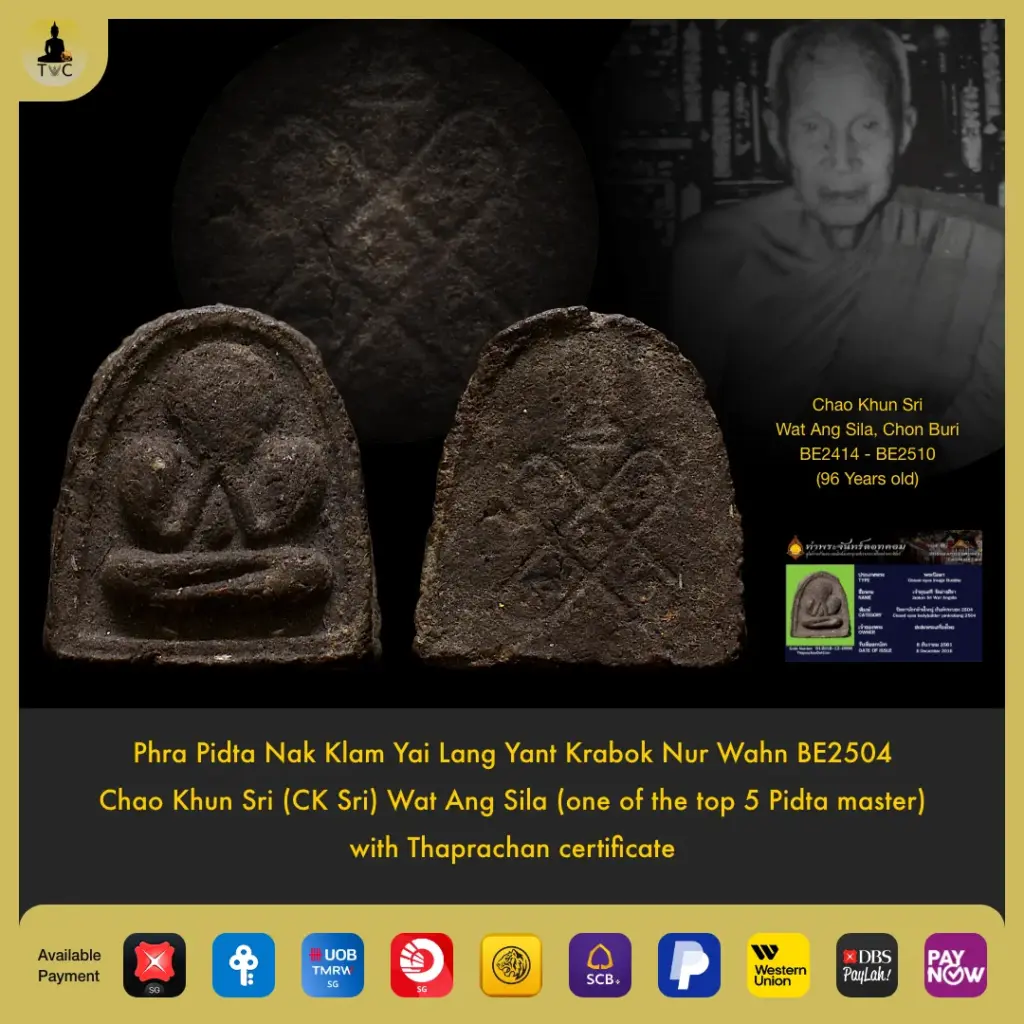
Phra Pidta Nak Klam Yai Lang Yant Krabok Nur Wahn Rak BE2504 Chao Khun Sri Wat Ang Sila
| Type | Phra Pidta |
| Monk | Chao Khun Sri Wat Suthat |
| Temple | Wat Ang Sila |
| B.E. Year | 2504 |
| Material | Wahn Rak |
| SKU | TAC-0507 |
Authentic Phra Pidta Chao Khun Sri Wat Suthat, Wat Ang Sila BE 2504, nuea Wahn Rak with Yant Krabok reverse. Thaprachan certified. Available from TAC Singapore.
What is the Phra Pidta Chao Khun Sri Wat Suthat from Wat Ang Sila, BE 2504?
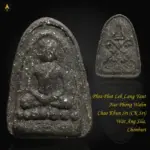
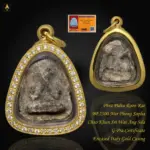
The Phra Pidta Chao Khun Sri Wat Suthat from Wat Ang Sila, Chonburi, consecrated in BE 2504 (CE 1961), is a mid-century Pidta pressed in nuea (material/substance) Wahn Rak — a sacred herbal powder composition. The pim (mould collectors authenticate against) presents the Nak Klam Yai closed-arm posture on the front and a Yant Krabok sacred inscription on the reverse, and the piece carries a Thaprachan certificate.
Chao Khun Sri and the Wat Ang Sila Pidta line
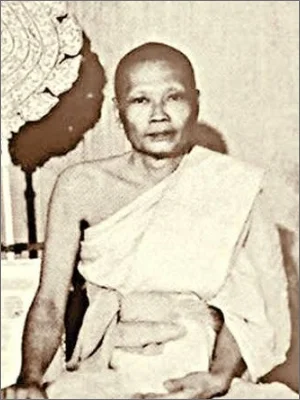
Chao Khun Sri Wat Suthat, also recorded as Phra Ratchawetmunee, built his reputation through decades of religious practice and ritual discipline — not through association with any single famous campaign. Among Thai Pidta specialists, he is placed consistently in the top tier of Pidta masters, a standing that has held across collector generations and markets. That kind of long-term regard is not easy to manufacture.
His work at Wat Ang Sila in Chonburi gave rise to a distinct Pidta lineage that collectors now study as a body. The Thai Buddhist amulet tradition has produced many Pidta masters, but few have their name tied so firmly to a single temple’s output. The BE 2504 issues belong to what most collectors regard as his mature consecration period — the years when ritual authority and accumulated merit are generally considered at their deepest.
The nuea Wahn Rak body and what the pim shows
Wahn Rak is a nuea built from sacred herbal powder — herbs, blessed powders, and other temple-prepared ingredients combined with ritual intention before pressing. It is not a simple clay body. An aged Wahn Rak piece reads differently in hand: the surface tends to be dry and settled, the body dense, the tone warm and uneven in a way that speaks to organic materials and real age rather than modern pressing.
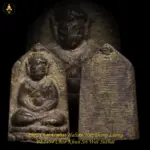
The front pim carries the Nak Klam Yai posture — the large curled-arm Pidta form, closed-eye, inward-facing. That configuration has long been one of the most appreciated among serious collectors because the visual identity is strong and the symbolic reading clear: withdrawal from distraction, guarding of the inner self. The reverse bears the Yant Krabok inscription, which gives this variant its distinct ritual signature and makes front-and-back study essential when handling the piece.
- Front: Nak Klam Yai posture — large curled-arm Pidta, closed eyes
- Reverse: Yant Krabok sacred inscription — the defining typological marker for this variant
- Nuea: Wahn Rak — sacred herbal powder composition
- Period: BE 2504 / CE 1961, mature consecration phase
- Certificate: Thaprachan
The consecration process is described as intensive and traditional — extended chanting, sacred inscription work, empowerment of the raw Wahn Rak material, all conducted within the temple environment under Chao Khun Sri’s direct guidance. In Thai amulet practice, the presiding monk’s ritual standing shapes how the finished piece is read by devotees and collectors alike.
What collectors look for and how this piece is documented
Pieces from this lineage are increasingly selective to find in documented condition. The convergence of Chao Khun Sri’s master-tier attribution, a clearly identified BE 2504 issue, a recognisable pim with front-and-back typological markers, and a Thaprachan certificate is not something you see in every lot. Each of those factors matters independently; together, they make identification and comparison straightforward for anyone studying the Wat Ang Sila Pidta line.
The Thaprachan certificate accompanying this piece supports collector confidence in presentation and provenance. For newer collectors entering the Pidta category, documentation from a recognised certification body is an important starting point. For advanced collectors, it is a useful cross-reference against pim study and surface reading.
We at TAC are offering this Phra Pidta Nak Klam Yai Lang Yant Krabok in Wahn Rak from the BE 2504 Wat Ang Sila issue — one of the more clearly documented Pidta variants associated with Chao Khun Sri, whose name consistently carries weight among serious Pidta collectors across the region. The piece comes with a Thaprachan certificate, and the pim markers — Nak Klam Yai front, Yant Krabok reverse — are the right ones for this issue. For a collector building a serious Chao Khun Sri or Wat Ang Sila reference set, this is the kind of documented mid-century piece that is becoming harder to source in confident condition.
Attributes reflect Thai Buddhist devotional tradition and are not measurable claims.