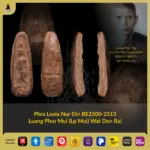
Luang Phor Sothon, Wat Sothon Wararam Worawihan, Chachoengsao Province, for building the Ubosot BE2535 (with original temple box)
S$10
S$18save S$8 (44%)

| Type | Phra Khun Paen |
| Monk | Luang Phor Mui Wat Don Rai |
| Temple | Wat Don Rai |
| B.E. Year | 2482 |
| Material | Din |
| SKU | TAC-0588 |
Luang Phor Sothon, Wat Sothon Wararam Worawihan, Chachoengsao Province, for building the Ubosot BE2535 (with original temple box)
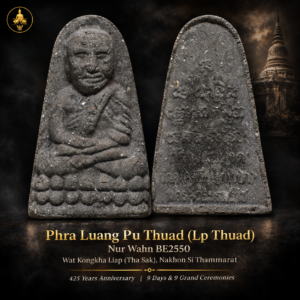 Phra Luang Pu Thuad (Lp Thuad) Nur Wahn BE2550 Wat Kongkha Liap (Tha Sak), Nakhon Si Thammarat (425 Years Anniversary, 9 Days & 9 Grand Ceremonies)
 Phra Pang Umbat (Wednesday Buddha) BE2512 Luang Phor Tae (Lp Tae) Khongthong Wat Sam Ngam
 Phra Lp Thuad 龙婆托 (Shenzhen Version) Pim Lek (RED) BE2539 Phor Than Wan Apiyo Wat Saba You Blessed by Archan Nong Wat Sai Khao
 Phra Mahesuan Nur Tarkut BE2552 Luang Phor Tad (Lp Tad) Wat Chaina with original temple box
Each adds this amulet plus the offer at the bundle price — ready at checkout, or mention it when you enquire on WhatsApp.
Authentic Phra Khun Paen by Luang Phor Mui Wat Don Rai, Run Marawichai, BE2482. Sacred clay, kru provenance, Wat Bot Kao Suphan Buri.
The Phra Khun Paen Luang Phor Mui Wat Don Rai is a sacred clay amulet dated BE2482 (1939), pressed in the Marawichai posture and attributed to Luang Phor Mui Buddharakkhito of Wat Don Rai. The nuea (material/substance) is din — temple-blessed sacred clay — and the pieces were enshrined within the old chapel at Wat Bot Kao, Suphan Buri, before surfacing during restoration works.
Luang Phor Mui Wat Don Rai is one of the older Suphan Buri masters whose name carries genuine weight among serious Khun Paen collectors. His work sits within the broader Thai Buddhist amulet tradition of master-monks pressing devotional clay images for temple supporters and devotees — a practice that predates most modern gammakan (committee edition) runs by several generations.
The enshrinement location here is Wat Bot Kao — the old chapel in Suphan Buri — not Wat Don Rai itself. That detail matters for provenance. The pieces were kept within a crypt-like chamber at Wat Bot Kao and came to light during restoration, which is why genuine examples from this batch carry the surface characteristics typical of kru (temple crypt) recoveries: natural crusting, mineral speckling, and a matured clay skin that develops only over decades in a sealed temple environment.
The nuea on this piece is din — fired sacred clay, described in the source notes as mixed with consecrated powders and spiritual materials during preparation. At approximately 2.8 cm wide and 4.8 cm tall, the pim (the mould collectors authenticate against) shows the Marawichai posture: the Buddha seated, right hand lowered to call the earth to witness victory over Mara. It is a composition with strong iconographic meaning in Khun Paen collecting culture, tied to overcoming obstacles.
The pluk sek (consecration ceremony) is described in the original notes as personal and intensive — Luang Phor Mui empowering the batch through prolonged traditional ritual rather than a large public phutthaphisek (mass consecration). That distinction matters to collectors evaluating older pieces, where the ritual context is part of what the market prices in.
This piece is presented in a modern waterproof casing. The casing protects fragile old clay from humidity and handling — a practical call for a piece of this age — but the authentication work still focuses on what is underneath: clay maturity, surface crust consistency, mineral inclusion patterns, and how the lines of the pim read against reference examples.
Old Suphan Buri sacred clay from this era does not fake easily, but it does require a disciplined eye. Key points collectors focus on for this batch:
No certificate accompanies this piece. That places the authentication weight entirely on physical evaluation — clay maturity, pim fidelity, and provenance coherence — rather than a grading paper.
We at TAC are offering this Phra Khun Paen Run Marawichai in din, attributed to Luang Phor Mui Buddharakkhito and dated BE2482 — one of the earlier sacred clay batches connected to this master, recovered from the old chapel at Wat Bot Kao in Suphan Buri. For a piece of this age with no accompanying certificate, the clay itself has to do the talking, and collectors who know old Suphan Buri din will find this one worth a close look.
Attributes reflect Thai Buddhist devotional tradition and are not measurable claims.