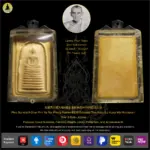
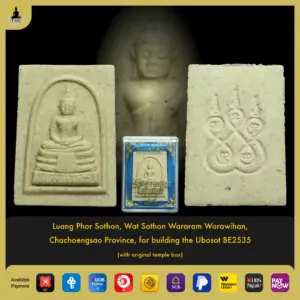
 Luang Phor Sothon, Wat Sothon Wararam Worawihan, Chachoengsao Province, for building the Ubosot BE2535 (with original temple box)
S$10
S$18save S$8 (44%)
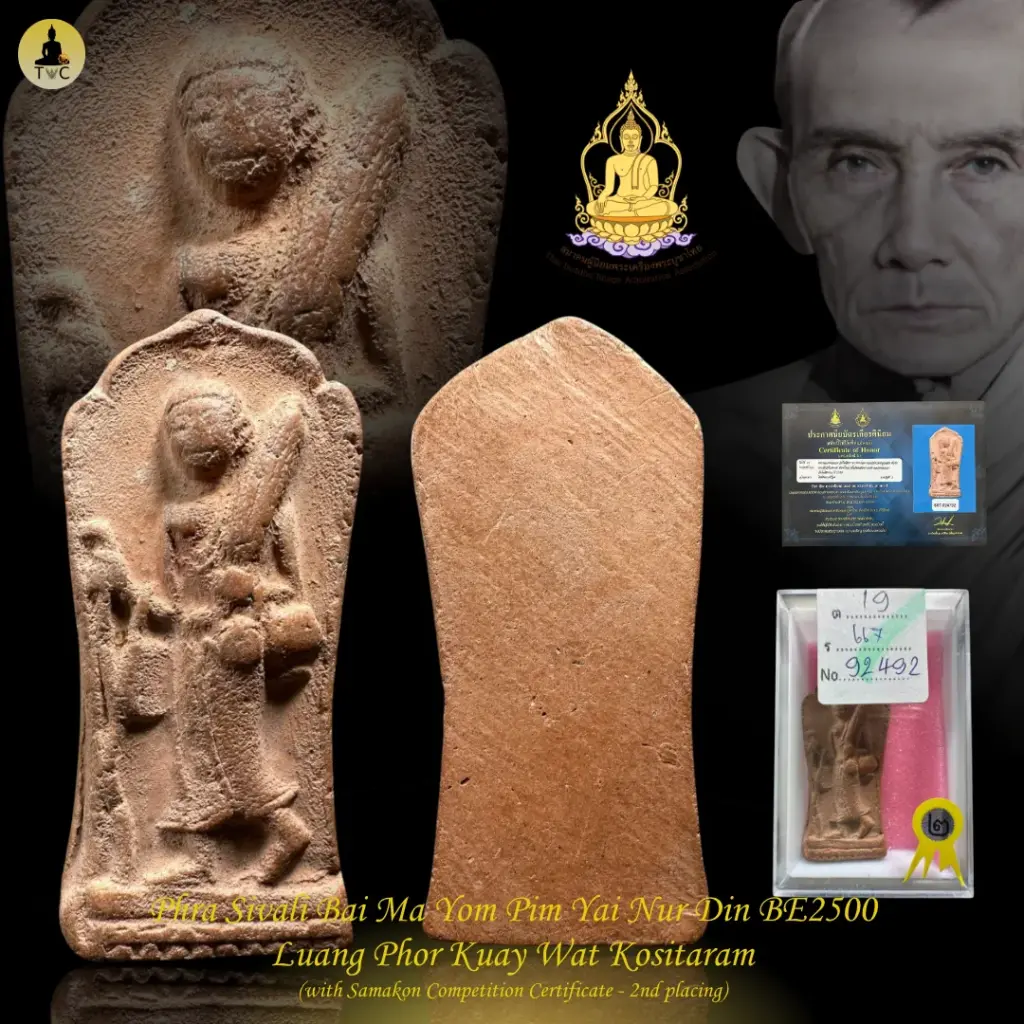

| Type | Phra Sivali |
| Monk | Luang Phor Kuay Wat Kositaram |
| Temple | Wat Kositaram |
| B.E. Year | 2500 |
| Material | Din |
| Condition | Very Good |
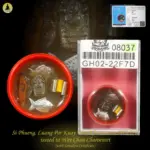
| Certificate | Competition |
| Competition | Won 2ND placing |
| SKU | TAC-0593 |
Luang Phor Sothon, Wat Sothon Wararam Worawihan, Chachoengsao Province, for building the Ubosot BE2535 (with original temple box)
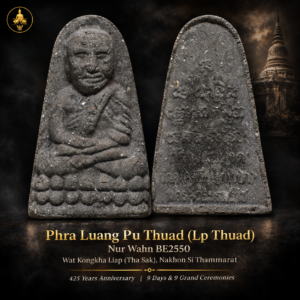 Phra Luang Pu Thuad (Lp Thuad) Nur Wahn BE2550 Wat Kongkha Liap (Tha Sak), Nakhon Si Thammarat (425 Years Anniversary, 9 Days & 9 Grand Ceremonies)
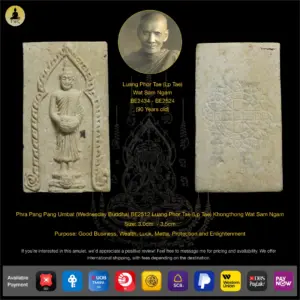 Phra Pang Umbat (Wednesday Buddha) BE2512 Luang Phor Tae (Lp Tae) Khongthong Wat Sam Ngam
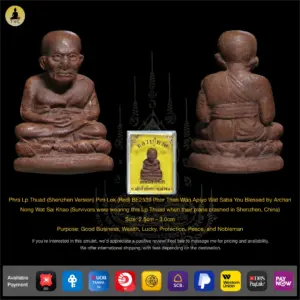 Phra Lp Thuad 龙婆托 (Shenzhen Version) Pim Lek (RED) BE2539 Phor Than Wan Apiyo Wat Saba You Blessed by Archan Nong Wat Sai Khao
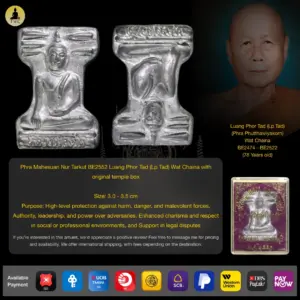 Phra Mahesuan Nur Tarkut BE2552 Luang Phor Tad (Lp Tad) Wat Chaina with original temple box
Each adds this amulet plus the offer at the bundle price — ready at checkout, or mention it when you enquire on WhatsApp.
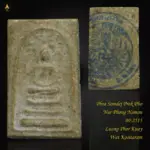
Authentic Phra Sivali Luang Phor Kuay Wat Kositaram, Bai Ma Yom Pim Yai, BE2500. Nuea din. Samakon Competition 2nd Place certified. Available at TAC Singapore.
The Phra Sivali Luang Phor Kuay Wat Kositaram is a BE2500 (CE1957) amulet pressed in nuea din — sacred earthen clay blended with temple powder admixtures — from Wat Kositaram in Chainat Province. Cast in the Bai Ma Yom Pim Yai mould, it depicts the Walking Sivali in Tudong posture and holds a Samakon Competition 2nd Place certificate.
BE2500 was the 2,500-year centennial of Theravada Buddhism — a year when temples across Thailand produced amulets with deliberate commemorative intent. LP Kuay’s Sivali series from that year carries both his individual consecration weight and that broader devotional context. The two things together give this run a grounding that later editions simply do not have.
The Bai Ma Yom (ใบมะยม — Star Gooseberry leaf) designation refers to the leaf-shaped border that frames the Walking Sivali figure, a mould design specific to the Kositaram school. In Thai Buddhist folk tradition the Ma Yom plant is associated with ease and abundance, so the leaf outline is not just an aesthetic choice — it layers an additional symbolic register onto the iconography. The Pim Yai (พิมพ์ใหญ่ — large mould) scale gives the composition enough surface to render the glod umbrella-staff, the alms bowl, the monastic robing, and the forward step at a detail level that smaller variants cannot match. Among specialists, the Pim Yai Bai Ma Yom is the primary reference pim for calibrating early Kositaram clay character and relief standards.
The Walking Sivali posture — Tudong (ธุดงค์), the ascetic wandering stance — is iconographically specific. Sivali is shown in motion through the world, which is precisely how the early Buddhist community understood him: a monk whose presence on any journey ensured the provision of all necessities. That iconographic specificity is part of what separates the Phra Sivali type from generic protective pieces in the Thai Buddhist amulet tradition.
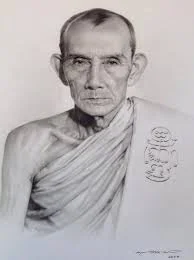
Luang Phor Kuay Chutintaro (หลวงพ่อขวัญ จุทินฺทโร) was the presiding master of Wat Kositaram in Chainat and one of the most studied monk-craftsmen in the mid-century central Thai amulet tradition. His method combined rigorous monastic discipline with precise timing of consecration against auspicious astrological cycles — what practitioners call Reuks Mongkol (ฤกษ์มงคล). Amulet production under his stewardship was not separated from monastic life; it was an extension of it.
Each series went through multi-phase pluk sek (เสกพลัง — empowerment rites) conducted within active meditation and deliberate merit-making. For LP Kuay, Phra Sivali was not simply a commission — the act of preparing, empowering, and completing a Sivali series was itself an enactment of the giving-and-receiving dynamic the figure represents. That framing shaped how the early Kositaram community understood these pieces, and it is part of what distinguishes the Yuk Dton (ยุคต้น — early era) Kositaram works from later commercial productions.
Wat Kositaram sits in Chainat Province, historically a transit and agricultural centre on the Chao Phraya river system. The temple’s amulet tradition developed a regional identity distinct from the major Bangkok schools — rooted in the particular quality of Chainat’s laterite-enriched soils and the specific temple-ground minerals and botanicals LP Kuay incorporated into his nuea din formulas. Specialists in central Thai mid-century amulets treat Kositaram examples as important regional markers, and the school’s Sivali series has maintained consistent study-collection interest among LP Kuay lineage collectors.
Nuea din (เนื้อดิน — sacred earthen clay) is among the oldest amulet material traditions in Thailand. In the Kositaram school, LP Kuay prepared his clay from earth harvested within the consecrated precincts of the temple itself, combined with muan sarn admixtures: ash from ritual fires, powdered incense residue from the ordination hall, and in some series pollen and plant materials from the temple grounds. The compound was kneaded, pressed into the Bai Ma Yom mould, and cured as part of the ritual process — not as a separate manufacturing step.
After nearly seven decades, the aging profile of authentic early Kositaram nuea din is well-characterised. Collectors assess:
The Samakon (สมาคม — Association) Competition 2nd Place result adds a formal external layer to all of the above. Samakon competitions are structured events where submitted pieces are assessed by panels of expert judges against documented reference standards. A placed result is not a dealer’s opinion — it is a formal provenance anchor that the collector market treats as meaningful independent verification. The competition certificate should be stored with the piece.
Luang Phor Kuay of Wat Kositaram is among the most respected monk-masters of the mid-twentieth century Chainat tradition, and a BE2500 Nur Din piece from his hand — particularly one recognised with a Samakon Competition 2nd Place certificate — represents exactly the kind of documented, vetted example that serious collectors seek as a foundation piece. The Bai Ma Yom mould in Pim Yai size is among the more sought-after formats of his Phra Sivali output, and the earthen clay matrix, blended with temple powders, is characteristic of the tactile and material authenticity that distinguishes this era from later reproductions. We at TAC regard competition-certified pieces of this vintage as anchor acquisitions: the Samakon attribution removes a significant layer of authentication uncertainty and gives the collector a traceable reference point that holds its standing within the Thai amulet community over time.
Attributes reflect Thai Buddhist devotional tradition and are not measurable claims.