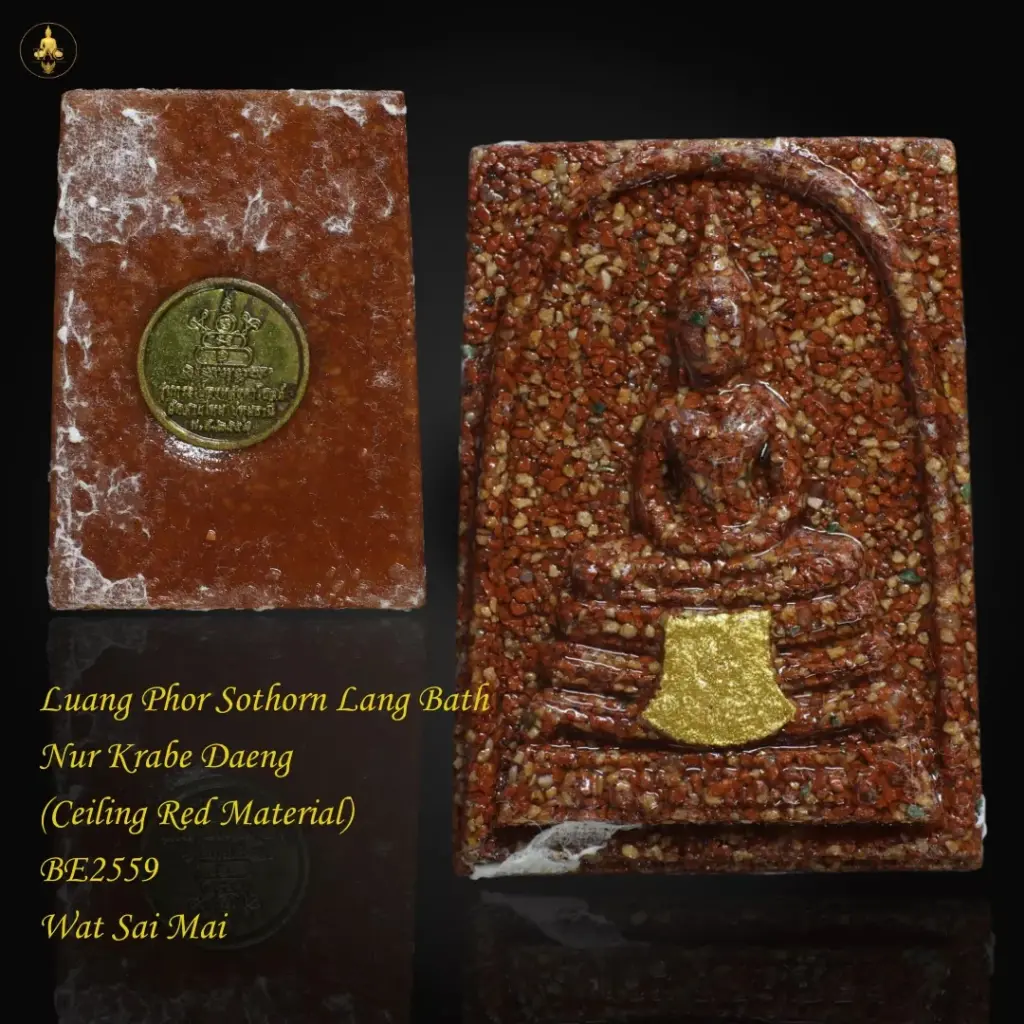
Luang Phor Sothorn Lang Bath Nur Krabe Daeng (Ceiling Red Material) BE2559 Wat Sai Mai
| Monk | Luang Phor Sothorn |
| Temple | Wat Sai Mai |
| B.E. Year | 2559 |
| Material | Nur Krabe Daeng |
| SKU | TAC-0617 |
Luang Phor Sothorn Lang Bath • Nur Krabe Daeng BE2559 • Wat Sai Mai • Red-toned material issue • A compact devotional-format amulet associated with the Luang Phor Sothorn image Overview of a Luang Phor Sothorn d
Luang Phor Sothorn Lang Bath • Nur Krabe Daeng
BE2559 • Wat Sai Mai • Red-toned material issue • A compact devotional-format amulet associated with the Luang Phor Sothorn image
Overview of a Luang Phor Sothorn devotional amulet in red-toned material, presented in a compact format that collectors typically read through its image clarity, reverse design, and overall material character.
What This Piece Represents (Collector Lens)
Amulets bearing the Luang Phor Sothorn image remain popular among devotees because the icon itself carries long-standing recognition in Thai Buddhist culture. This BE2559 piece from Wat Sai Mai presents that devotional image in a compact wearable format, with Nur Krabe Daeng giving the amulet a distinct red-toned body. From a collector perspective, the appeal of this piece comes less from age and more from recognisable sacred imagery, accessible devotional use, and its clearly named material and temple issue format.
Amulet Information
Name: Luang Phor Sothorn Lang Bath
Material: Nur Krabe Daeng (Red Material)
Year (BE): 2559
Temple: Wat Sai Mai
Format: Front with Luang Phor Sothorn image, reverse with bath motif design
Lineage Note: A modern devotional-format temple amulet associated with the revered Luang Phor Sothorn image, issued in red-toned material and identified in the listing as a Wat Sai Mai piece from BE2559.
SKU: TAC-LuangPhorSothorn-LangBath-BE2559-001
Price:
SGD 48
History & Devotional Context
Luang Phor Sothorn is one of the most widely recognised sacred Buddha images in Thailand, and amulets carrying this image are commonly worn for devotional remembrance, blessing, and spiritual reassurance. In this case, the listing identifies the piece as a BE2559 issue from Wat Sai Mai. As with many modern temple amulets, the collector reading should remain grounded in the details actually provided: the named image, the temple, the year, and the material.
Because this is a later-period issue rather than an early-era antique piece, the emphasis usually shifts away from deep age-based rarity and toward devotional accessibility, design presentation, and temple-issued identity. Collectors and devotees often appreciate such amulets for daily wear, gifting, and altar placement, especially when the imagery is clear and the format is easy to understand at a glance.
The phrase “Lang Bath” indicates the reverse-side bath motif noted in the listing. In Thai amulet collecting, reverse-side motifs often help distinguish one temple issue from another, especially for modern pieces where the front image may be devotional and familiar, while the back design gives the amulet its more specific issue identity.
About the Material
The listing identifies this piece as Nur Krabe Daeng, meaning a red-toned material body. For modern temple amulets, material naming is important because it helps collectors distinguish variants within the same release family. In practical terms, the red body gives the amulet a warmer visual presence and makes it easy to separate from darker, lighter, or metallic versions that may exist in related temple issues.
- Collectors typically note the evenness of the colour and how naturally the surface presents under light.
- Material identity is often one of the clearest ways to distinguish modern temple variants.
- For devotional-format pieces, the appeal often comes from the combination of recognised imagery and clean material presentation.
Design / Variant Notes
The front presents the well-known Luang Phor Sothorn image in a compact devotional layout, while the reverse-side bath motif gives the amulet its identifying “Lang Bath” designation. This front-and-back pairing is useful from a collector standpoint because it keeps the piece visually direct: the front carries the sacred identity, and the reverse helps define the specific variant. That makes the amulet approachable for both new devotees and collectors who prefer clearly named temple formats.
Traditional Spiritual Attributes & Metaphysical Properties
In Thai Buddhist culture, amulets bearing the Luang Phor Sothorn image are often associated with blessing, peace of mind, and devotional protection. Many devotees keep such pieces for daily reassurance, travel, prayer, or as a symbol of faith. These are traditional cultural beliefs rather than guarantees, and the strongest way to understand such an amulet is as a respectful Buddhist object connected with devotion and merit.
- Often linked with calmness, blessing, and spiritual reassurance.
- Commonly worn as a devotional reminder for daily life and travel.
- Suitable for personal wear, gifting, or respectful altar placement.
Collector Significance
This piece should be understood primarily as a modern devotional temple amulet rather than a rarity-driven antique. Its significance comes from its clear identity: Luang Phor Sothorn image, Lang Bath reverse, red material body, BE2559 dating, and Wat Sai Mai attribution. For collectors who appreciate approachable, well-defined temple amulets, that combination gives the piece a straightforward and usable profile.
Conclusion
Luang Phor Sothorn Lang Bath Nur Krabe Daeng BE2559 Wat Sai Mai is a clean modern devotional amulet with a recognisable sacred image, a clearly named reverse motif, and an easy-to-identify red-toned material body. Its strength lies in clarity, accessibility, and everyday devotional appeal.
Front view showing the Luang Phor Sothorn image and the overall presentation of the red-toned material body.
Back view showing the reverse-side bath motif that gives the amulet its Lang Bath identity.
Attributes reflect Thai Buddhist devotional tradition and are not measurable claims.