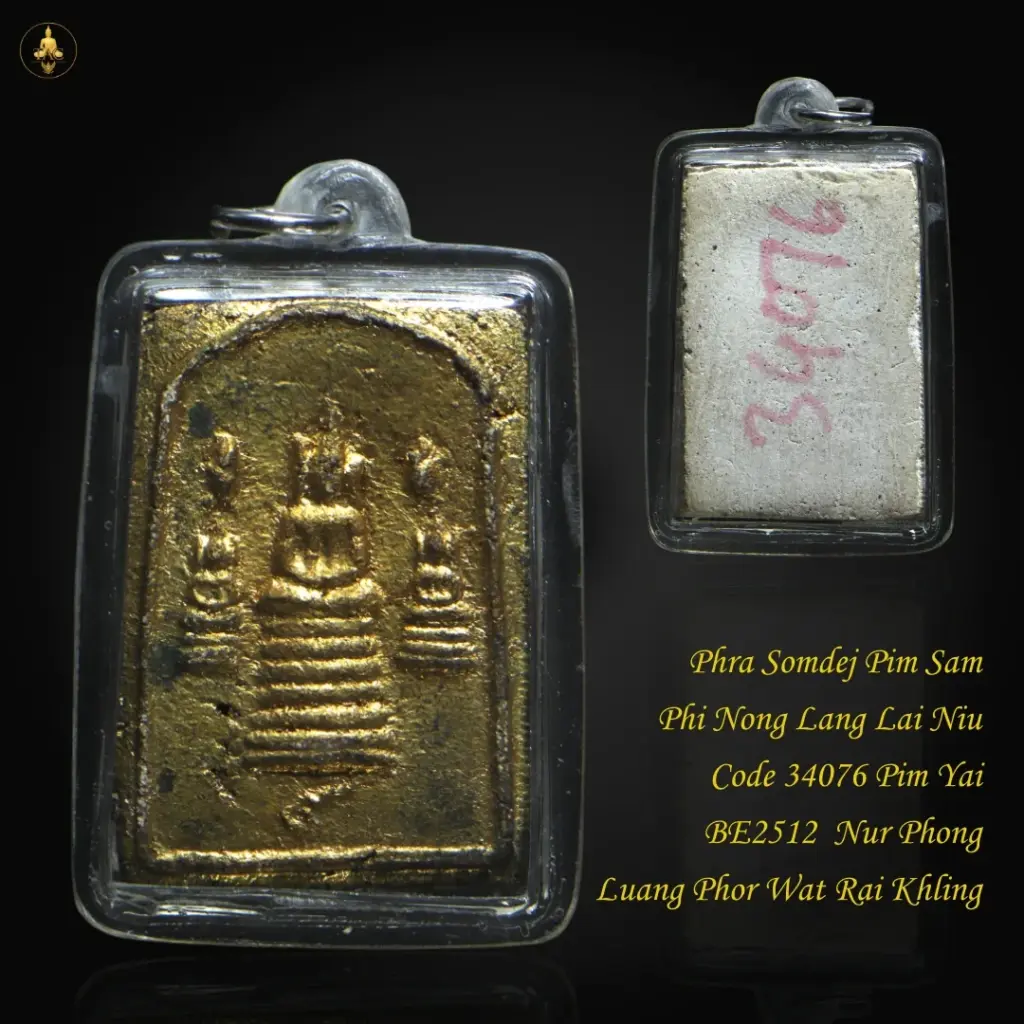
Phra Somdej Pim Sam Phi Nong Lang Lai Niu Code 34076 Pim Yai BE2512 Nur Phong Luang Phor Wat Rai Khling
| Monk | Luang Phor Wat Rai Khing |
| B.E. Year | 2512 |
| Material | Phong |
| SKU | TAC-0725 |
Phra Somdej Pim Sam Phi Nong Lang Lai Niu Code 34076 Pim Yai • Nur Phong Phra BE2512 / CE1969 • Wat Rai Khing • Consecrated in a multi-monk phutthaphisek blessing ceremony • Wat Rai Khing sacred powder Somdej lineage
Phra Somdej Pim Sam Phi Nong Lang Lai Niu Code 34076 Pim Yai • Nur Phong Phra
BE2512 / CE1969 • Wat Rai Khing • Consecrated in a multi-monk phutthaphisek blessing ceremony • Wat Rai Khing sacred powder Somdej lineage
Overview of a BE2512 phra somdej in nur phong phra (sacred powder), showing the broad pim yai form, aged surface, and the evidence cues collectors study on Wat Rai Khing issues.
What This Piece Represents (Collector Lens)
In Thai amulet culture, a Wat Rai Khing Phra Somdej from BE2512 / CE1969 is appreciated not only as a devotional object but also as a study piece in sacred powder composition, temple-era blessing practice, and identifiable evidence marks. Collectors typically pay attention to the pim sam phi nong format, the larger pim yai presentation, and the distinctive rear fingerprint impression described in the listing as lang lai niu. The termite residue and matured powder surface are also important because they are read as age-consistent evidence rather than mere visual texture. Together, these elements make the amulet meaningful on three levels: ritual context, material study, and collector documentation.
Amulet Information
Name: Phra Somdej Pim Sam Phi Nong Lang Lai Niu Code 24076 Pim Yai (พระสมเด็จ พิมพ์สามพี่น้อง หลังลายนิ้ว โค้ด 34076 พิมพ์ใหญ่)
Material: Nur Phong Phra / sacred powder (เนื้อผงพระ)
Year: BE2512 / CE1969
Temple: Wat Rai Khing (วัดไร่ขิง)
Province: Nakhon Pathom
Monk: Listing notes a multi-monk consecration including Somdej Phra Sangharaja Pa of Wat Suthat, Luang Phor Toh of Wat Pradoochimplee, Luang Pu Tim of Wat Lahan Rai, Luang Phor Koon of Wat Ban Rai, and Luang Phor Ngern of Wat Don Yai Hom
Lineage Note: This BE2512 Wat Rai Khing issue is described as a sacred powder Somdej created for temple purposes and blessed in a large phutthaphisek ceremony by several respected monks of the era. Collectors value the rear fingerprint impression, natural kraap pluak termite residue, and recorded code 24076 as key reference points.
SKU: TAC-WatRaiKhing-PhraSomdejPimSamPhiNong-001
Price:
SGD 138
History & Lineage — Phra Somdej Pim Sam Phi Nong Lang Lai Niu Code 34076 Pim Yai (Wat Rai Khing)
This amulet was issued in BE2512 / CE1969 at Wat Rai Khing, a temple long associated with strong devotional culture and respected local sacred objects. In collector terms, the pim sam phi nong or “Three Brothers” mold is notable because it belongs to a recognizable Somdej family whose form is studied through proportion, base lines, body mass, and field texture. The pim yai or large mold version is especially valued for its more spacious presentation, allowing the relief and powder composition to be examined more clearly.
The listing attributes the consecration to a major multi-monk blessing ceremony involving several famous monks of the era, including Somdej Phra Sangharaja Pa, Luang Phor Toh, Luang Pu Tim, Luang Phor Koon, and Luang Phor Ngern. In Thai amulet culture, such collective blessing ceremonies are important because they place the object within a wider network of temple merit, ritual intention, and recognized monastic authority. Collectors often treat this kind of consecration note as part of the amulet’s documentary value, especially when it survives alongside identifiable physical evidence.
The issue is described as part of a temple fundraising purpose, which is historically consistent with many temple amulet projects of the period. That context matters because these objects were created not only for personal devotion but also to support the temple and its community. As a result, the amulet carries a dual role: it is a phra khruang (portable devotional amulet) and also a record of how temples in the late BE2500s used blessed objects to sustain religious life.
About the Material — Nur Phong Phra Composition
Nur phong phra refers to a sacred powder composition, often understood by collectors as a blend of ritual powders, old temple substances, incense ash, mineral traces, and other consecrated ingredients. What makes powder amulets especially interesting is that age reveals itself differently from metal. Instead of patina, one studies grain, compression, surface dryness, embedded residue, and areas where the powder body has matured naturally over time. On this example, the described kraap pluak termite residue and the worn but coherent surface are the sort of cues collectors usually regard as worthy of closer examination.
- Sacred powder body associated with temple-made Somdej issues rather than later industrial casting materials
- Natural surface aging, residue, and grain structure are important evidence cues in authentic old phong amulets
- The rear fingerprint impression adds collector interest because it individualizes the back surface and supports reference-based study
Design / Pim / Variant Notes
The design belongs to the pim sam phi nong family, with this example identified as pim yai, or the larger mold. In Somdej collecting, the value of a mold name lies in its repeatable structure: collectors compare the throne tiers, seated Buddha form, shoulder spread, arch space, and powder density across known examples. The rear lang lai niu fingerprint impression is an especially notable feature because it gives the piece a distinct identifying marker beyond the front mold alone. Code 24076 further strengthens the reference profile, making the amulet easier to document within a collector framework.
Traditional Spiritual Attributes & Metaphysical Properties
Devotees often regard Wat Rai Khing Somdej amulets as protective and auspicious, especially when they come from established temple blessing ceremonies. These traditional attributions belong to Thai devotional belief rather than measurable effects. In practical terms, devotees may wear such a piece for everyday steadiness, favorable human support, and confidence under uncertain conditions. Collectors typically describe the spiritual profile of a Somdej in terms of calm blessing, accumulated merit, and balanced protection rather than aggressive ritual force.
- แคล้วคลาด (klaew khlat): traditionally understood as protection and safe passage away from danger or accident
- เมตตามหานิยม (metta mahaniyom): associated with charm, ease in human relations, and favorable regard from others
- โชคลาภ (chok lap): connected in devotional belief with opportunity, support, and smoother worldly conditions
Rarity & Collector Significance — Phra Somdej Pim Sam Phi Nong Lang Lai Niu Code 34076 Pim Yai BE2512
The collector importance of this amulet lies in the combination of identifiable mold type, sacred powder body, named blessing context, and distinctive evidence cues. The rear fingerprint impression, the termite residue noted in the listing, and the recorded code 34076 all contribute to its study value. Collectors typically look for consistency between front mold proportions, surface age, back texture, and the overall character of the powder body. When those elements align, the piece becomes more than a generic Somdej; it becomes a referenceable example within a specific Wat Rai Khing issue. That is why such amulets are considered significant not merely for devotion, but also for cataloguing and comparative study.
Conclusion
This BE2512 / CE1969 Phra Somdej Pim Sam Phi Nong Lang Lai Niu Code 34076 Pim Yai from Wat Rai Khing stands out as a well-defined sacred powder amulet with strong collector reference points. Its significance rests in the meeting of temple history, multi-monk consecration, identifiable mold family, and age-consistent physical evidence such as the fingerprint impression and matured powder surface. In Thai amulet culture, that combination gives the piece lasting value as both a devotional object and a documented study specimen within the broader Somdej tradition.
Front view showing the broad pim yai structure, seated Buddha relief, and the naturally aged sacred powder surface.
Back view with the distinctive lang lai niu fingerprint impression, an evidence cue frequently cited by collectors of this issue.
Attributes reflect Thai Buddhist devotional tradition and are not measurable claims.