Phra Somdej 3 Chan Lang Yant BE2513 Chao Khun Nor Wat Thepsirin
| Type | Phra Somdej |
| Monk | Chao Khun Nor Wat Thepsirin |
| Temple | Wat Thepsirin |
| B.E. Year | 2513 |
| SKU | TAC-0735 |

Adds this amulet and the offer at the bundle price — ready at checkout. Or mention it when you enquire on WhatsApp.
Authentic Phra Somdej Chao Khun Nor Wat Thepsirin BE 2513, 3 Chan with lang yant reverse. Sacred powder nuea, no certificate.
What is the Phra Somdej Chao Khun Nor Wat Thepsirin BE 2513?
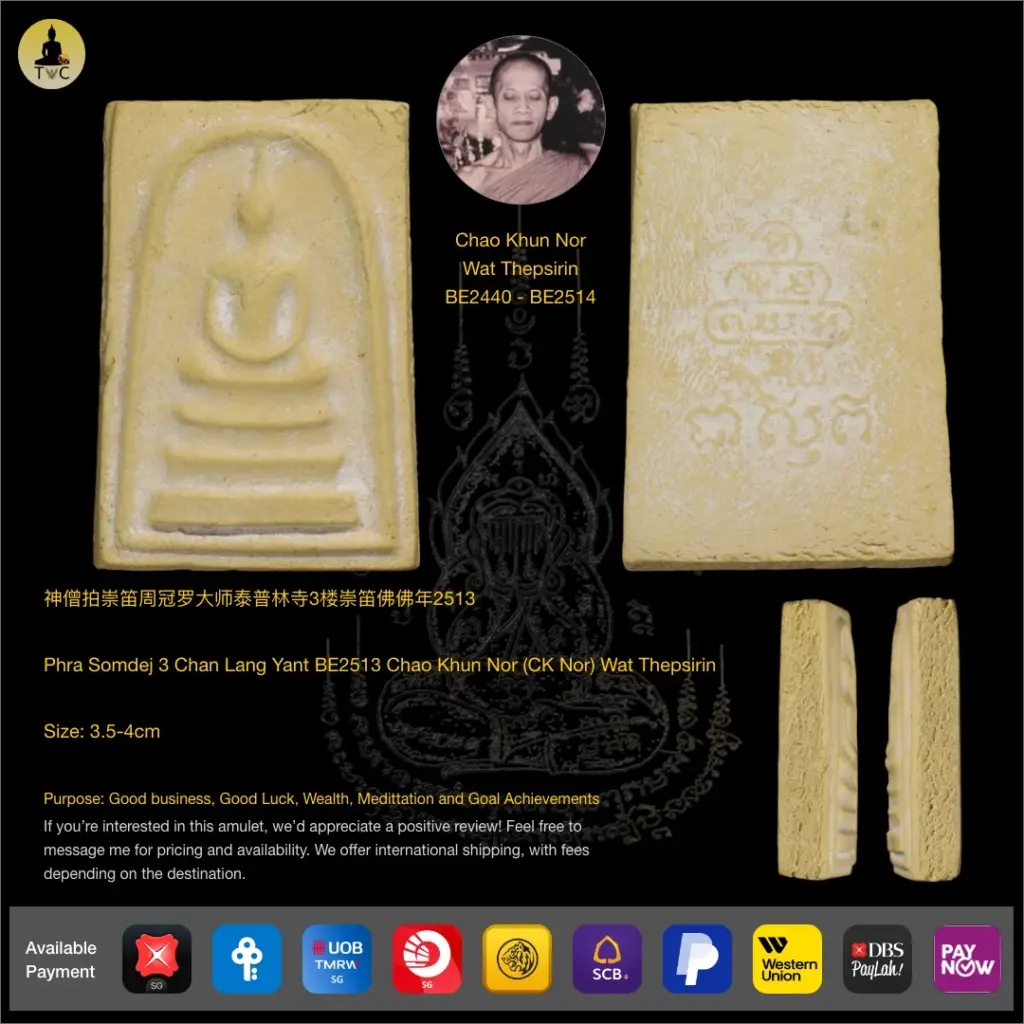
The Phra Somdej Chao Khun Nor Wat Thepsirin BE 2513 is a three-tiered (3 Chan) Phra Somdej with a yant (sacred inscription) panel on the reverse, created under the authority of Chao Khun Nor at Wat Thepsirin in Bangkok. Pressed from temple-blessed muan sarn (sacred powder blend), it represents one of the significant Somdej editions associated with this temple from that era.
Chao Khun Nor and the standing of Wat Thepsirin
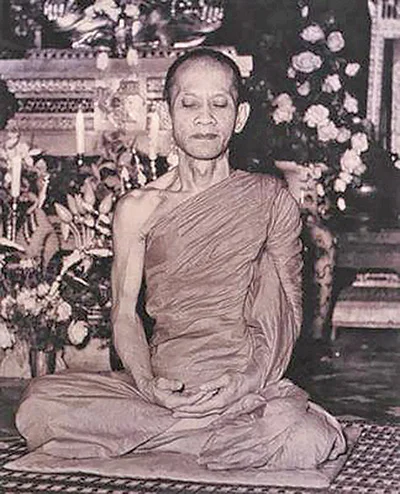
Chao Khun Nor Wat Thepsirin held senior ecclesiastical rank — the title “Chao Khun” itself marks a monk elevated within the Thai royal ecclesiastical hierarchy. His connection to Wat Thepsirin gave his editions a specific provenance that collectors track carefully, distinct from the broader Somdej lineage that traces back to Somdej Toh of Wat Rakhang.
Wat Thepsirin is a Bangkok royal temple with a long history of producing amulets under qualified monks. Editions from this temple are documented within the broader Thai Buddhist amulet tradition as regionally significant, particularly for collectors in Thailand and across Southeast Asia. The temple’s institutional weight adds a layer of credibility to any piece issued under its name.
The pim: 3 Chan with a yant reverse
The pim (mould) here is the classic three-tiered throne form — 3 Chan in collector shorthand — which stacks three diminishing arched tiers beneath the seated Buddha figure. What distinguishes this edition is the lang yant, the reverse face impressed with a yant rather than left plain or marked only with a simple seal. That back panel is one of the first things a collector checks when identifying this specific run from BE 2513.
The nuea is muan sarn, the compressed sacred powder blend standard to the Somdej form. Exact phong (powder) components — chalk, pollen, herbs, sacred clay — vary by edition and are typically verified against reference pieces held by experienced collectors or documented in Thai amulet catalogues. No certificate accompanies this piece.
What collectors look for when authenticating this piece
Without a certificate, authentication rests entirely on the physical evidence. Collectors familiar with this edition focus on a consistent set of reference points when examining the piece against known niyom (collector-standard reference) examples.
- Pim accuracy: The three-tiered throne structure should match documented proportions for this mould — check the arch spacing and the seated figure’s posture against catalogue images.
- Lang yant detail: The yant on the reverse should show clean, well-defined lines consistent with the original press; worn or smeared yant lines may indicate a different mould or later reproduction.
- Nuea surface: Aged muan sarn develops a characteristic patina over decades. Surface condition on a BE 2513 piece should reflect over fifty years of natural ageing.
- No certificate: This piece is sold without accompanying certification. Buyers should assess it on material and pim evidence alone, or seek independent expert opinion before purchase.
This is a BE 2513 Phra Somdej from Chao Khun Nor of Wat Thepsirin — the 3 Chan pim with a lang yant reverse, which is the distinguishing feature collectors use to identify this specific edition. For collectors focused on Bangkok royal temple editions from this period, the Wat Thepsirin provenance and Chao Khun Nor's ecclesiastical rank make this a worthwhile study piece, particularly given the absence of a certificate — authentication rests on physical evidence, which we are happy to walk through with any serious buyer.
Attributes reflect Thai Buddhist devotional tradition and are not measurable claims.