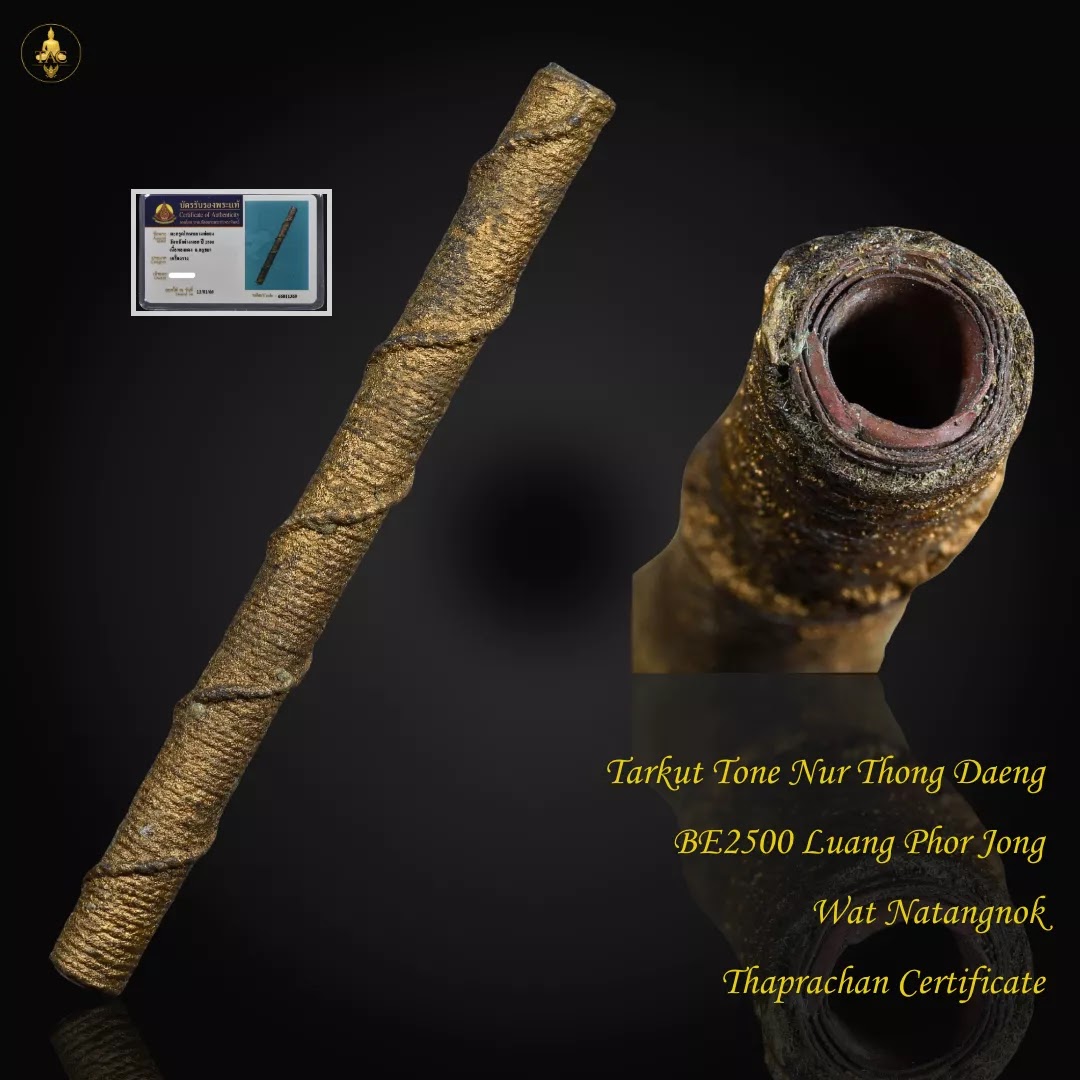
Tarkut Tone Nur Thong Daeng BE2500 Luang Phor Jong Wat Natangnok
$288.00
Tarkut Tone • Nur Thong Daeng
BE2500 • Wat Natangnok • Listing associated with Luang Phor Jong • Thaprachan certificate
Overview image showing the takrut together with certification reference. In Thai amule
Description
Tarkut Tone • Nur Thong Daeng
BE2500 • Wat Natangnok • Listing associated with Luang Phor Jong • Thaprachan certificate
Overview image showing the takrut together with certification reference. In Thai amulet culture, a takrut tone (single takrut) is often studied through both devotional context and collector evidence.
What This Piece Represents (Collector Lens)
This piece represents the old Thai takrut tradition in a compact and highly wearable form. A takrut tone refers to a single rolled yantra cylinder rather than a multi-piece set, and collectors typically appreciate such pieces for their simplicity, portability, and direct association with protective devotional practice. In the provided listing, this example is identified as a copper-bodied piece from BE2500 linked to Luang Phor Jong of Wat Natangnok, with certification included as part of the documentation.
Amulet Information
Name: Tarkut Tone
Material: Nur Thong Daeng
Year (BE): 2500
Temple: Wat Natangnok
Monk: Luang Phor Jong
Lineage Note: Listing identifies this takrut as a BE2500 copper example associated with Luang Phor Jong of Wat Natangnok and accompanied by a Thaprachan certificate.
SKU: TAC-LuangPhorJong-TarkutTone-001
Price:
SGD 288
History & Lineage Context
In Thai amulet culture, the takrut is one of the most enduring protective forms. It is usually made by inscribing sacred formulae or yantra material onto a sheet, then rolling it into a cylindrical tube for wearing or carrying. The provided listing identifies this example as a takrut tone from BE2500 in copper, a format that collectors often place within the broader old-school devotional stream of protection, restraint, and disciplined faith.
The monk named in the listing is Luang Phor Jong of Wat Natangnok. Detailed batch notes, issue purpose, and temple release records for this exact example are not available in the material provided here, so the collector approach should remain evidence-based. In practice, this means placing weight on the physical construction, age expression, and accompanying certificate rather than expanding beyond what the listing itself supports.
For older takrut pieces such as this, provenance matters. When complete archival details are unavailable, collectors typically study a combination of lineage attribution, material behaviour, dimensional consistency, and third-party certification. That approach is especially relevant for portable amulets like takrut, where the form is simple but small differences in construction often carry importance.
About the Material
Nur Thong Daeng (เนื้อทองแดง) means the takrut body is made from copper. In Thai amulet collecting, copper is respected as a classic and practical medium: it rolls well, keeps inscription form clearly, and over time develops a natural aged surface that collectors often examine closely. Compared with modern bright copper, older pieces are usually appreciated for their settled tone, surface maturity, and the way the metal reflects long-term handling and storage.
- Copper takrut pieces are commonly studied through patina, tone variation, and the natural ageing of the rolled surface.
- Collectors usually look at the ends of the cylinder, the tightness of the roll, and whether the overall form feels balanced and period-consistent.
- Because takrut are often worn on the body, honest signs of age and devotional use may be considered together with preservation rather than treated as defects alone.
Design / Pim / Variant Notes
The design here follows the classic takrut tone format: a single cylindrical amulet with a compact build suitable for wearing. Unlike face amulets or medallions that rely on a visible image or pim, takrut pieces are valued through form, construction, and sacred method. In collector terms, that shifts attention toward proportion, finish, end structure, and the overall integrity of the roll rather than decorative relief.
Traditional Spiritual Attributes & Metaphysical Properties
In Thai devotional culture, takrut are often worn with intentions connected to khumkhrong (คุ้มครอง, protection), klaew khlat (แคล้วคลาด, safe avoidance), and steadiness of mind under pressure. These attributions belong to traditional belief and long-standing practice rather than measurable guarantees. Collectors and devotees usually frame such pieces as supports for mindfulness, faith, and disciplined conduct.
- คุ้มครอง (Khumkhrong): Traditionally associated with general protection and guarded presence.
- แคล้วคลาด (Klaew Khlat): Commonly linked in Thai amulet culture with safe passage and avoidance of danger.
- เมตตา (Metta): Some devotees also wear takrut with the intention of calm bearing, restraint, and smoother human interaction.
Rarity Assessment & Collector Significance
This piece carries collector interest through a combination of age, format, named monk attribution, and supporting certificate. Exact production numbers for this BE2500 takrut are not available in the provided information, so rarity should not be overstated numerically. Even so, old single takrut pieces associated with recognised monks are usually appreciated because they are small, easy to wear, and often encountered with varying condition profiles. In practical collector terms, certification, overall integrity of the cylinder, and coherent age character are the strongest significance markers visible from the listing.
Conclusion
This is a straightforward old-style takrut listing where the value lies in form, lineage attribution, and evidence discipline. For collectors, it is best approached as a classic copper takrut tone linked to Luang Phor Jong of Wat Natangnok, with the certificate and physical build forming the main appreciation points.
Full view of the takrut body and hanging loop.
Measurement reference for scale and proportion.
Close-up view for surface study and age character.
Thaprachan certificate image retained as provided in the listing.
Reviews
There are no reviews yet.