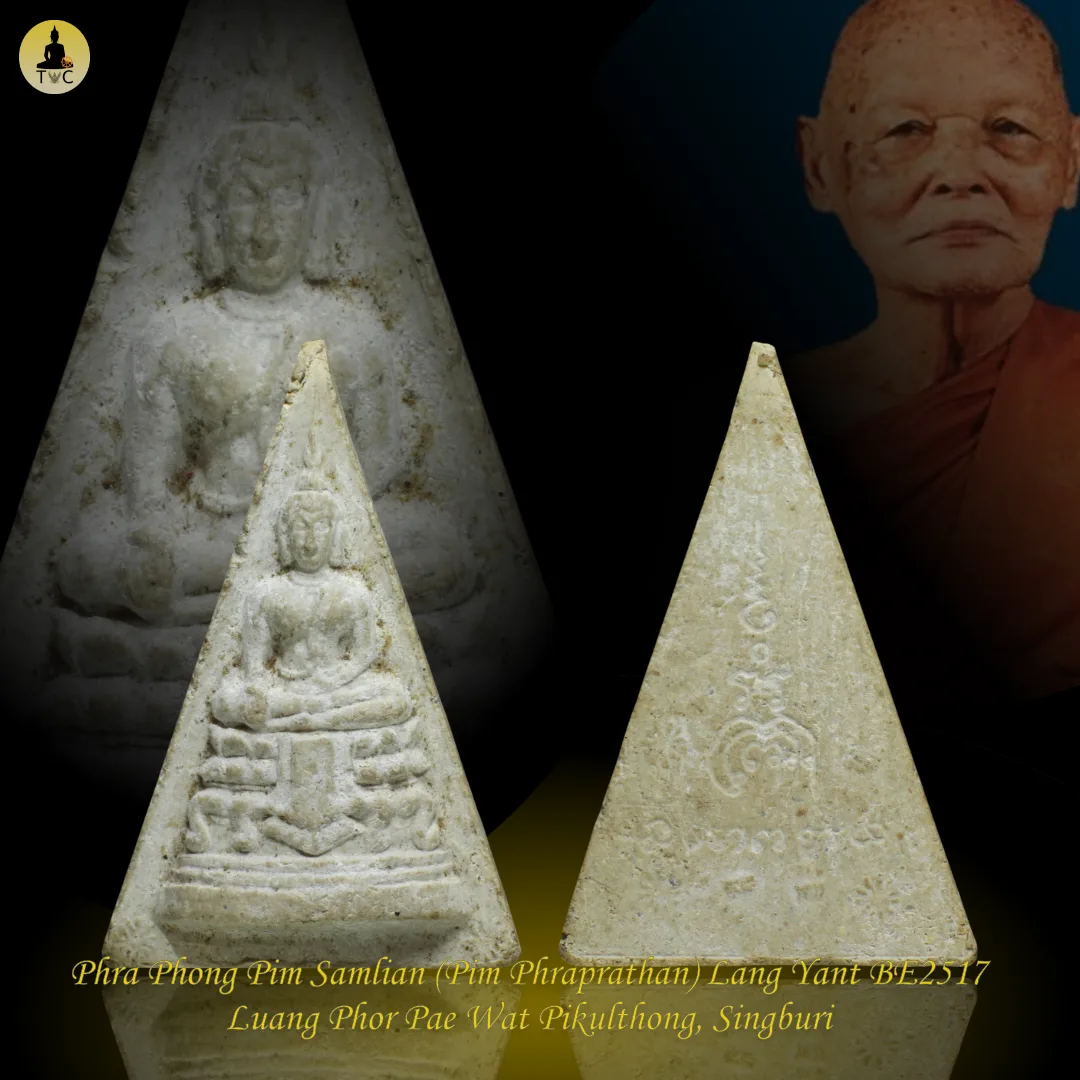
Phra Phong Pim Samlian Pim Phraprathan Lang Yant BE2517 Nur Phong Luang Phor Pae Wat Pikulthong, Singburi
$108.00
Phra Phong Pim Samlian (Pim Phraprathan) Lang Yant • Nur Phong
BE2517 / CE1974 • Wat Pikulthong, Singburi • Issued under Luang Phor Pae • Listing notes: Pim Phraprathan Lang Yant
Over
Description
Phra Phong Pim Samlian (Pim Phraprathan) Lang Yant • Nur Phong
BE2517 / CE1974 • Wat Pikulthong, Singburi • Issued under Luang Phor Pae • Listing notes: Pim Phraprathan Lang Yant
Overview — Phra Phong in Pim Samlian / Pim Phraprathan format with reverse Lang Yant, issued BE2517 at Wat Pikulthong, Singburi, under Luang Phor Pae.
Amulet Information
Name: Phra Phong Pim Samlian (Pim Phraprathan) Lang Yant
Material: Nur Phong — powder-based sacred composition
Year: BE2517 / CE1974
Temple: Wat Pikulthong, Singburi (วัดพิกุลทอง สิงห์บุรี)
Monk: Luang Phor Pae (หลวงพ่อแพ) — listing attribution
Certification: No certificate stated in the listing
SKU: TAC-LPPAE-PHRAPHONG-SAMLIAN-LANGYANT-2517-001
Price:
SGD 108
What This Piece Represents (Collector Lens)
In Thai amulet culture, Phra Phong often carries a special sincerity. Powder amulets are typically valued less for ornament and more for devotional purpose. This BE2517 example, identified in the listing as Pim Samlian (Pim Phraprathan) with Lang Yant, belongs to a collector category where the form is both practical and reverential: the front stabilizes attention through the seated Buddha image, while the back adds yantra identity that signals ritual framing without excessive elaboration.
Wat Pikulthong in Singburi is strongly associated in collector memory with Luang Phor Pae. That alone gives the piece an immediately readable context. A clear temple, a named monk, and a stated year create what collectors often rely on most: enough grounded information to classify the amulet properly even when batch literature is limited.
The best approach is disciplined documentation: record what is stated, observe what is visible, and keep spiritual claims within traditional belief language. That protects both collector integrity and respect for the amulet’s devotional nature.
History & Lineage Context
The listing identifies this amulet as a BE2517 issue from Wat Pikulthong under Luang Phor Pae. It does not specify a commemorative title, a fundraising objective, or a named sub-batch. In careful collector writing, those absent points should remain unspecified rather than filled by assumption.
What can be stated responsibly is the lineage suggested by the design itself. Pim Phraprathan places the Buddha image at the center, encouraging direct devotional focus. Lang Yant adds a second layer: the symbolic language of sacred geometry and ritual protection. Together, they create a format that is especially typical of temple-issued powder amulets meant for daily carrying and remembrance.
Luang Phor Pae’s name remains the main collector anchor here. Within Thai amulet collecting, that attribution is meaningful in itself. It connects the piece to one of the most widely remembered temple lineages of modern Singburi amulet culture.
Powder Amulets and “Phra Phong” Practice
Phra Phong broadly refers to amulets made from pressed sacred powder compositions. Depending on temple practice, these may include ritual powders, ashes, soils, floral substances, binders, or older devotional matter. Because the listing does not specify an exact formula for this piece, the correct method is to describe the material category rather than invent a recipe.
Collectors usually assess powder amulets through direct visual cues: sharpness of the molded front, consistency of the powder body, age at the edges, and the overall coherence of the back yant. Powder issues from the 2510s often reveal handling at the corners and raised points, so condition matters immediately.
- Material honesty: powder texture is appreciated for devotional intent rather than shine.
- Form integrity: the triangular Samlian outline supports subtype recognition.
- Condition reading: collectors inspect corners, rim wear, and relief clarity for natural aging.
Design / Pim / Signature
Pim Samlian is recognized first through its triangular geometry. That structure gives the amulet an immediate visual identity and a compact devotional presence. When paired with Pim Phraprathan, the emphasis shifts toward the centered Buddha image, making the piece feel visually stable and temple-oriented rather than decorative.
The reverse is identified as Lang Yant. Even when a listing does not specify the exact yantra system, a yant-backed amulet is generally understood as ritually framed. In collector practice, the back often becomes one of the most useful comparison points, because the geometry and layout can help distinguish one issue from another more precisely than the front alone.
Front view — Pim Samlian / Pim Phraprathan profile.
Back view — Lang Yant reference.
Side photo is not provided in the listing set. If a thickness/profile image is later added, it should be placed here using the same 420px display rule.
Spiritual Focus (Common Intentions)
Powder amulets with Buddha-image fronts and yantra backs are commonly carried for a balanced set of intentions: inward steadiness through devotion, and outward protection through sacred structure. In Thai belief language, these are traditional attributions rather than guarantees.
- Protection: carried as a reminder to live carefully and avoid reckless exposure.
- Avoidance of harm: traditional language for safe outcomes in work and movement.
- Stability and clarity: daily devotional reference to the Buddha image supports steadier conduct.
Traditional Spiritual Attributes & Metaphysical Properties
For amulets associated with respected temple lineages, collectors often describe the traditional qualities using familiar Thai vocabulary: metta (goodwill), khum khrong (protection), klaew klaad (avoidance of danger), and sometimes maha lap (good fortune). The responsible framing is to present these as cultural and devotional meanings, not measurable effects.
When an amulet includes Lang Yant, the metaphysical idea is usually one of disciplined protection. The yantra is not only decorative. It represents order, boundaries, and mindful conduct. If a listing does not identify a named wicha, the article should stop there rather than over-extend the claim.
- Metta: traditionally linked with smoother interactions and softer social presence.
- Protection: often understood as a guarding frame for daily life.
- Yantra discipline: symbolic structure supporting steadiness, restraint, and inward order.
Rarity Assessment & Collector Significance
The listing does not state mintage numbers or a formal limited-edition count, so rarity should not be described numerically. Instead, collector significance comes from defensible cues: clear year, clear temple, clear monk attribution, and a recognizable format that can be compared against other Wat Pikulthong powder amulets.
In practice, pieces like this are often collected within focused groups: Luang Phor Pae amulets, triangular powder Buddha-image formats, or yant-backed temple issues. That means condition, reverse clarity, and documentation quality tend to matter more than broad rarity language.
Conclusion
This Phra Phong Pim Samlian (Pim Phraprathan) Lang Yant BE2517 is a clean and documentation-friendly example of a temple-issued powder amulet: clear year, clear temple, and a listing-linked issuing monk in Luang Phor Pae of Wat Pikulthong. Its strength lies in disciplined form, with a calm Buddha image on the front and a readable yantra identity on the reverse.
For collectors, it is best preserved as a carefully recorded cabinet entry. Keep the listing facts tight, compare mold and yant cues against references when needed, and present all spiritual language as traditional intention rather than promise.
Reviews
There are no reviews yet.