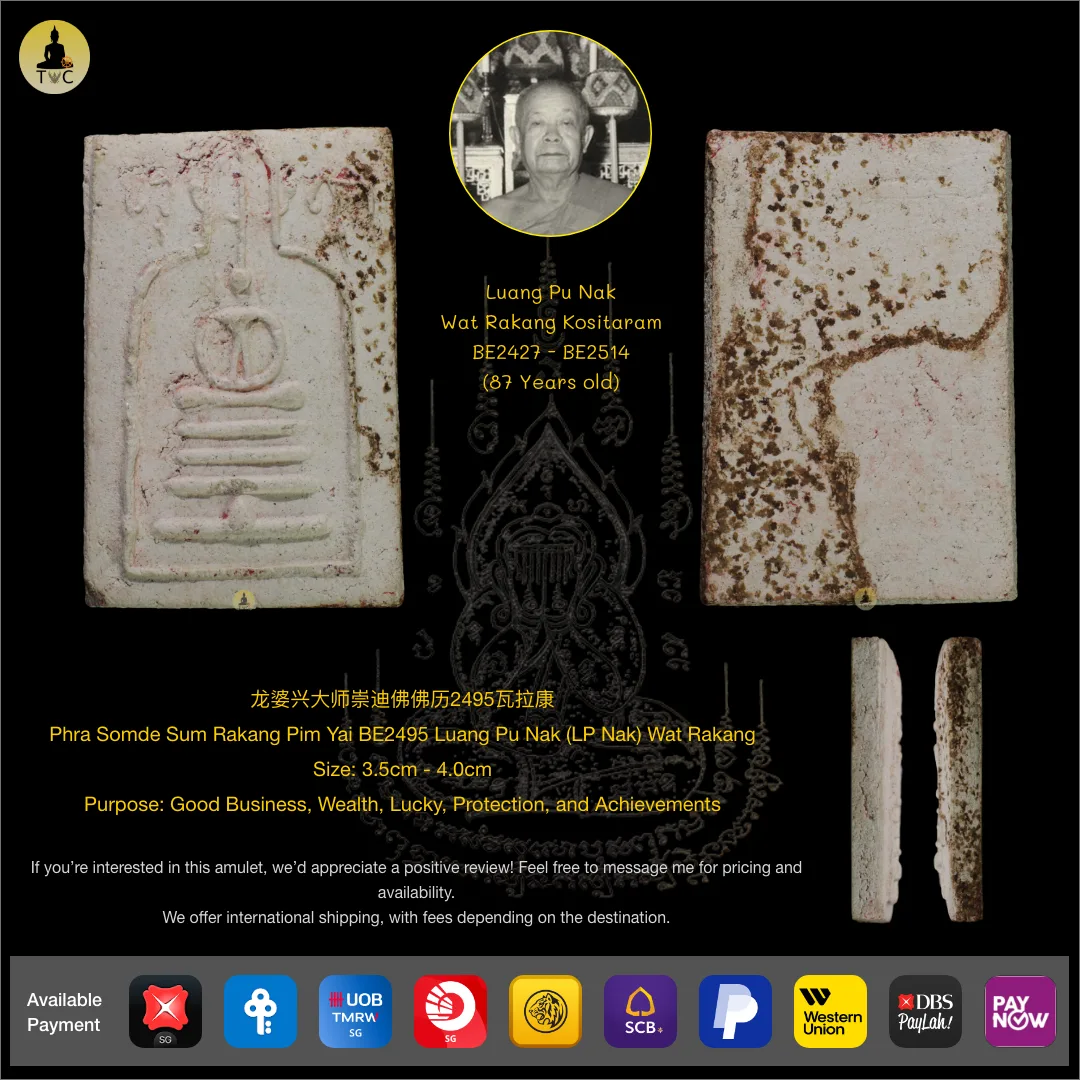
Phra Somde Sum Rakang Pim Yai BE2495 Luang Pu Nak (LP Nak) Wat Rakang
$150.00
Phra Somdej Sum Rakang • Pim Yai • Powder Style
BE2495 • Wat Rakang Kositaram, Bangkok • Luang Pu Nak
Somdej “Sum Rakang” (ซุ้มระฆัง) in Pim Yai (พิมพ์ใหญ่) format — a classic Wat R
Description
Phra Somdej Sum Rakang • Pim Yai • Powder Style
BE2495 • Wat Rakang Kositaram, Bangkok • Luang Pu Nak
Somdej “Sum Rakang” (ซุ้มระฆัง) in Pim Yai (พิมพ์ใหญ่) format — a classic Wat Rakang family silhouette prized for calm, balanced presence.
What This Piece Represents (Collector Lens)
In Singapore/Malaysia collector circles, a Somdej from the Wat Rakang line is often treated as a “foundation piece” — not loud, not flashy, but steady.
The Sum Rakang arch (ซุ้มระฆัง) carries a very recognisable temple identity: a sheltered, bell-arch frame that makes the Buddha image feel composed and grounded.
Pim Yai, as the name suggests, tends to read fuller in hand — a more “present” mould that wears well as a daily amulet for those who prefer quiet confidence.
Amulet Information
Name: Phra Somdej Sum Rakang • Pim Yai
Material: Powder-based (Nur Phong style)
Year (BE): 2495
Temple: Wat Rakang Kositaram, Bangkok
Monk: Luang Pu Nak (LP Nak) (หลวงปู่นาค โสภโณ)
Size: 3.5cm – 4.0cm
Key Spiritual Focus (listing): Good Business, Wealth, Luck, Metta, Protection, Meditation, Kindness
Biography:
View Biography
SKU: TAC-SOMDEJ-SUMRAKANG-PIMYAI-2495-RKG-001
Price:
SGD 150
History & Lineage Context
“Wat Rakang” is a name that sits right at the centre of Somdej culture. When collectors say “Somdej standard,” they often mean the Wat Rakang visual language:
clean, symmetrical Buddhist geometry, and a calm devotional feel. The Sum Rakang layout is one of the better-known silhouettes in this family because the arch frames the image in a way that reads protective and complete.
For this piece, the listing attributes the amulet to Luang Pu Nak and dates it to BE2495. In collector practice, that’s treated as a “documented listing claim”
rather than a blanket certainty — so the correct approach is to appreciate the lineage story while still letting the physical amulet (พิมพ์ + เนื้อ) do the talking.
In day-to-day Singapore/Malaysia collecting, Somdej pieces are frequently kept for their “steady base” character — worn when you want your energy to feel settled,
especially for work and social environments where you want calm presence more than aggressive luck chasing.
About the Material
Powder-style Somdej (เนื้อผง) is usually appreciated for how it ages. Instead of looking “sharp and new,” older powder pieces tend to develop a softer, more settled surface —
what collectors call a calm, naturally matured feel (ความเก่าแบบธรรมชาติ).
- Collectors often look for a matte, settled surface rather than shiny “fresh” texture.
- Edges and recesses can show gentle ageing differences — not forced contrast.
- Overall feel matters: a believable powder piece tends to look calm, not noisy or over-processed.
Design / Pim / Variant Notes
Pim Yai (พิมพ์ใหญ่) is typically read through “presence and proportion.” The Buddha image should sit confidently inside the Sum Rakang arch, with a balanced base and a centred overall flow.
For Somdej, collectors rarely judge by one single line — the decision is usually a full “harmony read” (ดูทรงรวม) across arch, figure, base, and how the mould breathes.
Traditional Spiritual Attributes & Metaphysical Properties
In Thai amulet culture, Somdej is traditionally regarded as a “cool-headed” Buddha category — associated with metta (เมตตา) and a steady protective field (คุ้มครอง) that supports daily life.
Many devotees also link Somdej wearing to personal practice: keeping precepts, staying mindful, and carrying a softer but firm presence in how you speak and work.
- Metta (เมตตา): often worn to soften interactions, improve social ease, and reduce unnecessary friction.
- Protection (คุ้มครอง / แคล้วคลาด): traditionally associated with safe passage and steadiness while moving around daily.
- Mindfulness support: devotees commonly treat Buddha amulets as a reminder to stay calm, kind, and disciplined.
Rarity Assessment & Collector Significance
For pieces labelled with Wat Rakang + Somdej family naming, collector interest usually comes from two angles: (1) how convincing the pim reading is, and (2) whether the powder character looks naturally matured.
Without batch / release details provided in the listing, the safest collector stance is to treat rarity as “market rarity by encounter” — how often you actually see comparable examples circulating — rather than making claims about production counts.
Either way, a clean, well-proportioned Sum Rakang Pim Yai tends to sit comfortably in the “core-collection” category because it is so wearable and culturally recognisable.
Conclusion
If you like Somdej that feels calm and classic, the Sum Rakang Pim Yai format is one of those “keep and wear” types. It’s the kind collectors reach for when they want stable energy — good for workdays, meetings, and everyday movement — while keeping the spirit of Buddha practice close.
Front view — pim reading focus (พิมพ์) and overall proportion (ทรงรวม).
Back view — powder character (เนื้อ) and natural ageing cues.
Angle view — thickness, edge wear, and surface maturity (ความเก่า).
Reviews
There are no reviews yet.