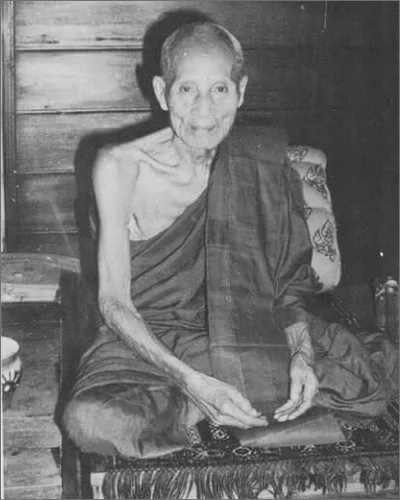
Phra Khru Kamphirawutthachan (Luang Pu Nu Kampeero / Lp Nu), Wat Thung Si Wilai
Wat Thung Si Wilai and Luang Pu Nu Kampeero: A Legacy of Dhamma and History Tambon Chi Tawan, Amphoe Khueang Nai, Ubon Ratchathani Province Wat Thung Si Wilai is one of the most significant spiritual and historical temples in Ubon Ratchathani Province. It is best known as the residence of Phra Upachaya Nu Kampeero (Luang ... Read more ↓
Biography
Wat Thung Si Wilai and Luang Pu Nu Kampeero: A Legacy of Dhamma and History
Tambon Chi Tawan, Amphoe Khueang Nai, Ubon Ratchathani Province
Wat Thung Si Wilai is one of the most significant spiritual and historical temples in Ubon Ratchathani Province. It is best known as the residence of Phra Upachaya Nu Kampeero (Luang Pu Nu)—a revered monk who upheld the Dhamma with distinction, and whose contributions as a teacher and administrator shaped the spiritual heritage of the region.
Historical Origins of Wat Thung Si Wilai
Wat Thung Si Wilai received its royal charter to define the temple boundary in B.E. 2430 (1887), although its actual origin dates much earlier. Archaeological remains—such as ancient sema stones, sandstone relics, and laterite Buddha statues—suggest that the temple was founded during two different eras.
According to local lore, the temple was initially established during the time of Prince Inthasaket of Sisaket, who became a monk out of remorse for causing the death of Nang Jiang Dai, daughter of the former ruler of Xixuan (now Chi Tawan). The prince took refuge in what was once her garden and built a pagoda in her memory. Over time, the temple became abandoned, overgrown by dense forest, and used only by travelers for shelter.
In the modern era, excavations around Wat Thung Si Wilai revealed Dvaravati and Khmer-period ruins, including ancient pulpit remains and laterite Buddha images. This sparked community efforts to restore the temple. A temporary wooden structure was built to enshrine the recovered Buddha images. After a fire destroyed this shrine—believed to have been started by votive candles—a single, untouched Buddha statue emerged, later named Phra Chao Wichian (also known as Luang Pho Phra Phuttha Wichian), reinforcing the community’s faith and deepening the temple’s sacred status.
Sacred Image of the Temple: Phra Phutthawises
Today, Wat Thung Si Wilai houses Luang Pho Phra Phutthawises, a laterite reclining Buddha image in Dvaravati style. Measuring 55 cm wide and 90 cm high, this sacred image is highly revered by the people of Chi Tawan and surrounding regions. The temple grounds also feature multiple ancient sema stone layers, a large pond, a library, and a brick sermon hall—attesting to the temple’s historic depth, believed to be more than 300–400 years old.
Notable Abbots of Wat Thung Si Wilai
Though many abbots have overseen the temple throughout history, only four have been recorded clearly:
-
Ubon Ratchathani Rajabhat University
-
Ubon Ratchathani University
Explore more from Thai Amulets Collection: browse all amulets, monk biographies, or discover katha sacred chants.
For broader context on Thai Buddhist traditions, see Thai amulets on Wikipedia.