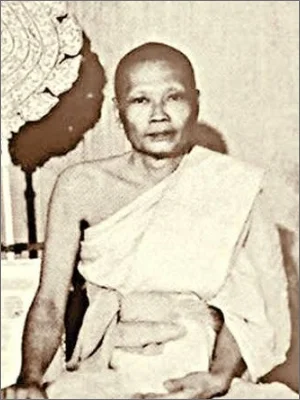
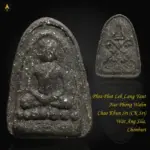
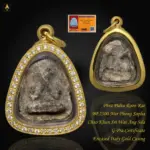
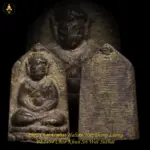
Phra Sankajai Pim Yai Nur Phong BE2493 Chao Khun Sri Wat Suthat
| Monk | Chao Khun Sri Wat Suthat |
| Temple | Wat Suthat |
| B.E. Year | 2493 |
| Material | Phong |
| SKU | TAC-0398 |
Authentic Phra Sankajai Pim Yai Nur Phong BE2493 Chao Khun Sri Wat Suthat by Chao Khun Sri Wat Suthat. Phong, Wat Suthat BE2493. Collector-grade.
What is the Phra Sankajai Pim Yai Nur Phong BE2493 Chao Khun Sri Wat Suthat by Chao Khun Sri Wat Suthat?
The Phra Sankajai Pim Yai Nur Phong BE2493 Chao Khun Sri Wat Suthat by Chao Khun Sri Wat Suthat is a sacred powder amulet pressed at Wat Suthat in Bangkok in BE 2493 (1950). Cast in the large Pim Yai mould, its nuea (material/substance) is a phong blend incorporating scripture powders, old temple soil, flower pollen, and fine binding agents, consecrated at a formal phutthaphisek ceremony with senior Bangkok masters.
Wat Suthat in 1950 and why this batch stands out
Wat Suthat Thepwararam is a Royal Temple with direct ties to the Supreme Patriarchate. Its monastic standards have always been strict, its ritual calendar precise. In the early post-war years, the temple revived several classical moulds to fund restoration work and to give lay followers access to protective and prosperity-focused pieces rooted in court-Buddhism practice.
The BE 2493 Sankajai batch was part of that revival. Senior monks of the capital participated in multi-night chanting cycles before and during the phutthaphisek (consecration ceremony). The purpose was practical as much as devotional — temple maintenance funds alongside merit-making for devotees. That dual function is typical of the serious, disciplined batches Wat Suthat produced in this period.
Wat Suthat has a long association with wicha Sankajai, a charm-prosperity discipline centred on contentment, metta, and abundance. The Sankajai images produced here emphasise sangkhapat — balance and moderation — visible in the rounded torso, calm facial expression, and deep-fold robe lines of the Pim Yai form. For more background on how pieces like this fit into the broader tradition, see the Thai Buddhist amulet tradition overview on Wikipedia.
The phong and what the Pim Yai mould tells you
The nuea here is Nur Phong — phong (sacred powder blend) drawn from scripture powders and soil taken from the main ubosot of Wat Suthat, with flower pollen and binding agents. That sourcing matters. Ubosot soil carries specific ritual weight at a Royal Temple, and including it in the muan sarn (sacred powder blend) reflects the classical approach Chao Khun Sri’s batches were known for.
The pim (mould collectors authenticate against) is Pim Yai — the large-body form. Authentic examples show a wide, rounded torso, clearly defined robe folds, and a characteristically calm, full-faced expression. The powder grain on genuine pieces has a specific compaction and surface texture that develops naturally with age. Collectors reference the grain tone alongside the geometry when verifying a piece.
Authentication points worth checking:
- Mould geometry — torso width and robe fold depth consistent with the Pim Yai form
- Powder tone and surface grain typical of Wat Suthat phong from this era
- Natural aging patterns in the compacted powder, not artificially induced
- Sharp definition retained along the robe lines — heavy wear or surface damage reduces collector grade
No certificate details are held on record for this piece. Collectors sourcing this batch should rely on physical authentication against known reference examples from Wat Suthat’s BE 2493 run.
What collectors associate this piece with
In Thai Buddhist belief, Phra Sankajai is the figure of contentment and abundance — a monk so at ease that his form became a symbol of prosperity itself. Pieces from Wat Suthat’s BE 2493 batch are traditionally carried for Metta Mahaniyom (charm and personal magnetism), Maha Lap (great fortune), and Chok Lap (ease of earning). Devotees wear or carry them for business luck, harmonious relationships, and a calm, grounded presence.
TAC presents this as cultural tradition and collector context, not as a promise of any specific outcome.
We at TAC acquired this Phra Sankajai Pim Yai Nur Phong BE2493 Chao Khun Sri Wat Suthat as part of our focus on early post-war phong pieces from Royal Temples with verifiable batch histories. What makes the BE 2493 Wat Suthat Sankajai run worth holding is the combination of documented phutthaphisek participation by senior Bangkok masters and the use of ubosot soil in the muan sarn — both factors that serious collectors in Bangkok and across the region recognise.
Attributes reflect Thai Buddhist devotional tradition and are not measurable claims.