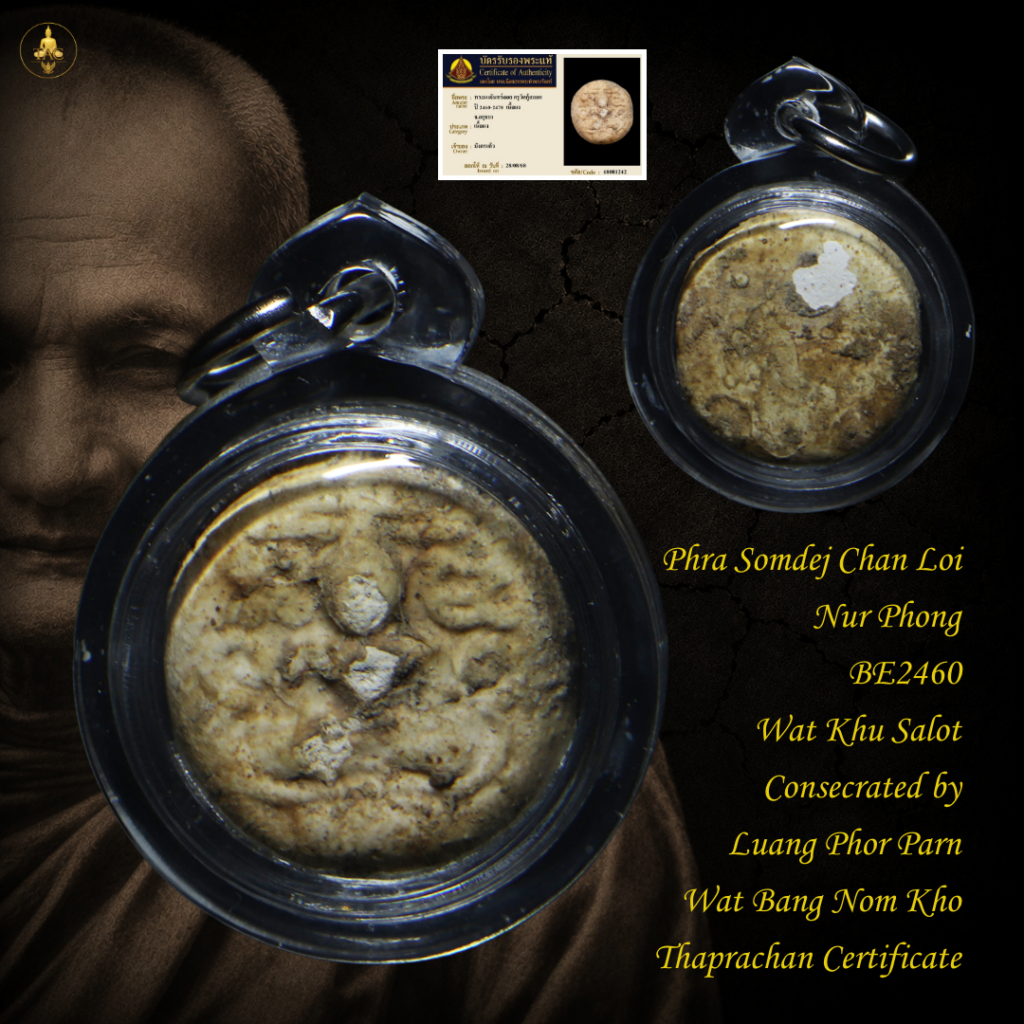
Phra Phong Chan Loi BE2460 Wat Khu Salot Luang Phor Parn Wat Bang Nom Kho
| Type | Phra Phong Chan Loi |
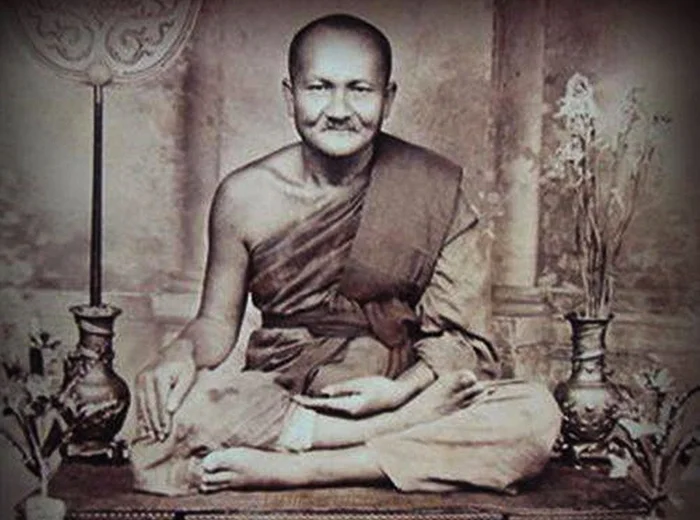
| Monk | Luang Phor Parn (Lp Parn) Wat Bang Nom Kho, Ayutthaya |
| Temple | Wat Bang Nom Kho |
| B.E. Year | 2460 |
| Material | Nur Phong |
| Pim / Mold | Chan Loi |
| Condition | Good |
| Certificate | Thaprachan |
| SKU | TAC-0645 |
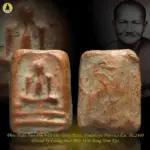
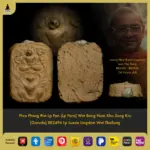
The Phra Phong Chan Loi Luang Phor Parn (Lp Parn) Wat Bang Nom Kho, Ayutthaya dated BE 2460 is among the earlier oil-powder amulets produced within the …
The Phra Phong Chan Loi Luang Phor Parn (Lp Parn) Wat Bang Nom Kho, Ayutthaya dated BE 2460 is among the earlier oil-powder amulets produced within the Wat Bang Nom Kho devotional tradition, and it is actively sought by collectors across Singapore, Malaysia, and the broader Chinese-speaking world for its association with metta — the quality of loving-kindness and social grace. Certified by Thaprachan, this piece carries institutional provenance confidence rarely found in amulets of this age.
Luang Phor Parn (Lp Parn) Wat Bang Nom Kho, Ayutthaya is regarded as one of the most consequential monk-masters of the Ayutthaya region in the early twentieth century, known for a disciplined blessing culture and a consistent devotional grammar across the amulets produced under his lineage. His influence extended to associated temples, where disciples continued preparation and consecration practices in alignment with his tradition.
The BE 2460 issue of the Phra Phong Chan Loi falls within a period of temple restoration activity, a common context for merit-driven amulet distribution in early twentieth-century Thailand. Donor distribution supported restoration funding, and remaining pieces were enshrined — a pattern that accounts for the relative scarcity of surviving examples today.
The Chan Loi designation — literally “Floating Moon” (จันทร์ลอย) — describes the calm, rounded field of the amulet’s obverse. Within the Wat Bang Nom Kho tradition, this visual language signals disciplined mindfulness rather than decorative elaboration, and it remains a recognisable identifier for serious collectors studying this lineage.
Phra Phong Chan Loi and Wat Bang Nom Kho Heritage
Wat Bang Nom Kho in Ayutthaya holds a documented place in Thai Buddhist amulet history as the home temple of Luang Phor Parn, whose consecration tradition is associated with powder-matrix amulets of restrained iconography and careful material preparation. The temple’s amulet heritage is distinguished by consistency of intent — pieces that prioritise devotional utility over ornamental complexity.
Amulets produced within the Wat Bang Nom Kho blessing tradition are studied as part of the broader Thai Buddhist amulet tradition, which encompasses centuries of sacred material culture linking monastic lineage, sacred ingredients, and lay devotional practice. The BE 2460 Phra Phong Chan Loi sits within this continuum as a documented early-period powder issue from one of Ayutthaya’s most respected lineages.
The collector value of Wat Bang Nom Kho-associated pieces is reinforced by the temple’s documentary record and the degree to which Luang Phor Parn’s blessing tradition has been studied, photographed, and verified by specialist committees over decades. Surviving examples with intact certification are treated as reference specimens within the collector community.
Nur Phong Phra Phong Chan Loi — Composition and Craftsmanship
The material designation Nur Phong — specifically a Phong Namon matrix — identifies this Phra Phong Chan Loi as an oil-powder amulet, produced by blending consecrated sacred powder with holy oil to create a softer, more tactilely alive body than dry-pressed powders alone. This matrix produces the characteristic matte bloom and fine micro-porosity that collectors study as age markers in early twentieth-century powder issues.
Temple-prepared holy powders attributed to the lineage of Luang Phor Parn were incorporated as admixtures, maintaining the devotional integrity of the Wat Bang Nom Kho preparation tradition. The hand-pressed and ambient-set production method, consistent with early devotional manufacture of the period, results in the gentle surface undulation visible on authentic examples.
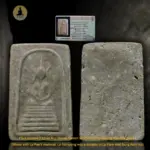
With genuine age, Nur Phong amulets from BE 2460 develop an ivory-to-brown tonality and what collectors describe as a “tofu-foam” micro-porosity — surface characteristics that serve as primary study points during authentication. The obverse presents the calm Chan Loi field, while the reverse shows a consolidated powder body with the subtle movement inherent to hand-pressed production.
Spiritual Benefits of Phra Phong Chan Loi by Luang Phor Parn (Lp Parn) Wat Bang Nom Kho, Ayutthaya
Within Thai Buddhist devotional tradition, the Phra Phong Chan Loi Luang Phor Parn (Lp Parn) Wat Bang Nom Kho, Ayutthaya is associated with qualities of warmth, social harmony, and safe passage — attributes consistent with the metta emphasis of the Wat Bang Nom Kho blessing culture. These are documented as cultural belief and devotional tradition; outcomes are understood to reflect personal conduct, merit, and circumstance.
- Metta Mahaniyom: the cultivation of warmth, goodwill, and supportive relationships — social grace in professional and personal environments
- Klaew Klaad: a protective framing associated with safe passage and avoidance of misfortune, as understood within Thai devotional practice
- Lineage Continuity: devotional steadiness and calm resolve, qualities attributed to the disciplined blessing culture of Luang Phor Parn’s tradition
Phra Phong Chan Loi BE 2460 — Authentication and Collector Value
This example of the Phra Phong Chan Loi BE 2460 carries a Thaprachan certificate — one of Thailand’s recognised specialist amulet verification bodies — which strengthens provenance confidence and supports scholarly comparison against other surviving examples. Buyers should always match the certificate details directly to the physical piece during verification, as certification is specimen-specific.
The collector appeal of this amulet rests on three reinforcing factors: the early oil-powder Nur Phong matrix, the Chan Loi field identity as a studied type within Ayutthaya-period powder issues, and the blessing context anchored to the Wat Bang Nom Kho tradition of Luang Phor Parn. This convergence of material, type, and lineage is uncommon in pieces that also carry institutional certification.
Survival rates for early BE 2460 powder amulets are limited by both age and the original distribution model — pieces were disbursed as merit donations during temple restoration, with remaining quantities enshrined. Documentation, including certification, photographs, and chain-of-custody records, forms an integral part of the object’s modern collector identity.
Attributes reflect Thai Buddhist devotional tradition and are not measurable claims.