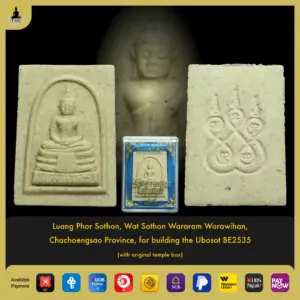
 Luang Phor Sothon, Wat Sothon Wararam Worawihan, Chachoengsao Province, for building the Ubosot BE2535 (with original temple box)
S$10
S$18save S$8 (44%)
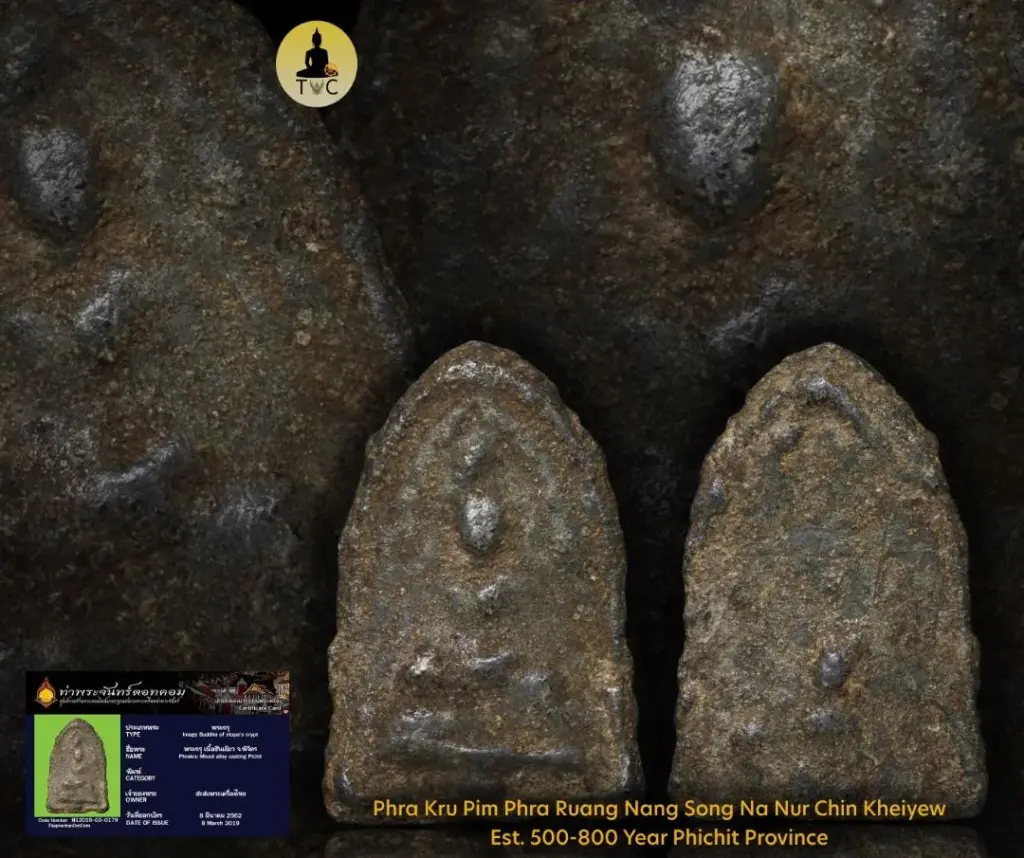
| Type | Phra Kru |
| Material | Nur Chin Kheiyew Phichit Est |
| SKU | TAC-0613 |
Luang Phor Sothon, Wat Sothon Wararam Worawihan, Chachoengsao Province, for building the Ubosot BE2535 (with original temple box)
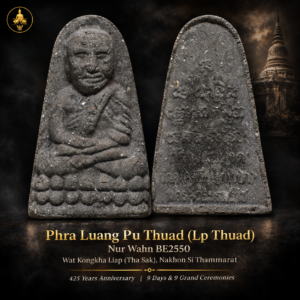 Phra Luang Pu Thuad (Lp Thuad) Nur Wahn BE2550 Wat Kongkha Liap (Tha Sak), Nakhon Si Thammarat (425 Years Anniversary, 9 Days & 9 Grand Ceremonies)
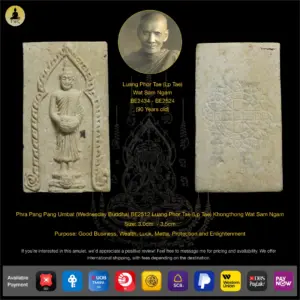 Phra Pang Umbat (Wednesday Buddha) BE2512 Luang Phor Tae (Lp Tae) Khongthong Wat Sam Ngam
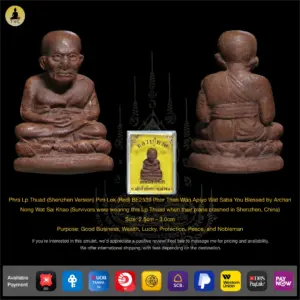 Phra Lp Thuad 龙婆托 (Shenzhen Version) Pim Lek (RED) BE2539 Phor Than Wan Apiyo Wat Saba You Blessed by Archan Nong Wat Sai Khao
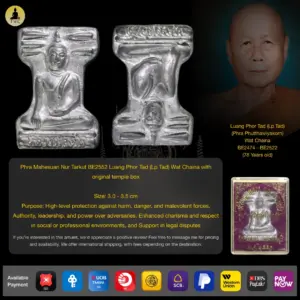 Phra Mahesuan Nur Tarkut BE2552 Luang Phor Tad (Lp Tad) Wat Chaina with original temple box
Each adds this amulet plus the offer at the bundle price — ready at checkout, or mention it when you enquire on WhatsApp.
Authentic Phra Kru Pim Phra Ruang Nang Song Na Nur Chin Kheiyew Phichit Est 500-800 Year, double-sided, Thaprachan certified. SGD 588. Singapore dealer TAC.
The Phra Kru Pim Phra Ruang Nang Song Na Nur Chin Kheiyew Phichit Est 500-800 Year is a double-sided antique Buddha-form amulet pressed in nur chin kheiyew (greenish lead-based alloy), linked to a Phichit provenance, and estimated at 500–800 years old. It carries a Thaprachan certificate and is offered by Thai Amulets Collection at SGD 588.
Song Na (สองหน้า) — double-sided — is not just a design feature. It is a demand on the maker. Both faces must show readable relief, balanced thickness, and deliberate symmetry. A piece that achieves this in nur chin kheiyew, at an age estimate of 500–800 years, has survived considerable odds in readable condition.
The pim (พิมพ์) here follows the Phra Ruang family visual language: calm, upright sitting posture, uncluttered borders. Collectors in this category specifically value that restraint. Ornate is easy to fake. Stillness and proportion are harder to replicate convincingly across five centuries of surface aging.
When evaluating Song Na pieces, four things matter most:
Nur chin kheiyew is the collector term for an older alloy composition that develops a characteristic aged surface — greenish tonal behaviour, deep oxidation, and a quiet, non-reflective sheen. For antique pieces, the surface is not cosmetic. It is a record of time. The Thai Buddhist amulet tradition has long treated material integrity as part of an object’s authenticity story.
What you want to see: natural patina transitions, micro-pitting consistent with age, and wear concentrated at the high points — the raised edges of the Buddha image, the rim — rather than distributed artificially. What you want to avoid: any sign of aggressive polishing or chemical cleaning. That erases the surface history and removes the very evidence collectors and certifiers rely on.
Storage matters too. Dry environment, low humidity, clean hands or cloth when handling. The aged skin on a piece like this is not fragile, but it is irreplaceable.
The listing tags this piece to Phichit — a Central Thai province with documented excavation history for older metalwork amulets. The age range of 500–800 years is an informed collector estimate, triangulated through material behaviour, oxidation pattern, comparative pim study, and the provenance tag. It is stated carefully here as an estimate, not a laboratory result. That is the honest framing for antique pieces without full scientific dating.
What adds concrete value to this piece is the Thaprachan certificate. Thaprachan is a recognised reference point in Thai amulet collecting circles — a certification trail that can be cross-checked when the piece changes hands. For older material where documentation is scarce, that paper trail is a meaningful part of the collector profile. It is not the only authentication tool, but it is the anchor.
For collectors in Singapore, Malaysia, and across the Chinese-speaking markets, documentation matters increasingly at resale. A certified piece with a clear provenance tag is easier to transfer with confidence than one that relies entirely on visual assessment alone.
We at TAC are offering this Phra Kru Pim Phra Ruang Nang Song Na Nur Chin Kheiyew Phichit Est 500-800 Year as a documented antique piece — double-sided construction in nur chin kheiyew, Phichit-tagged, with a Thaprachan certificate that provides a concrete reference trail for future transfers. For collectors focused on older metalwork in the Phra Ruang category, the Song Na format combined with this age estimate and certification makes it a practical addition to a documented collection rather than a speculative one.
Attributes reflect Thai Buddhist devotional tradition and are not measurable claims.