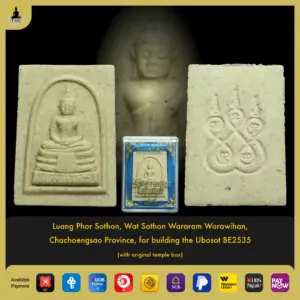
 Luang Phor Sothon, Wat Sothon Wararam Worawihan, Chachoengsao Province, for building the Ubosot BE2535 (with original temple box)
S$10
S$18save S$8 (44%)
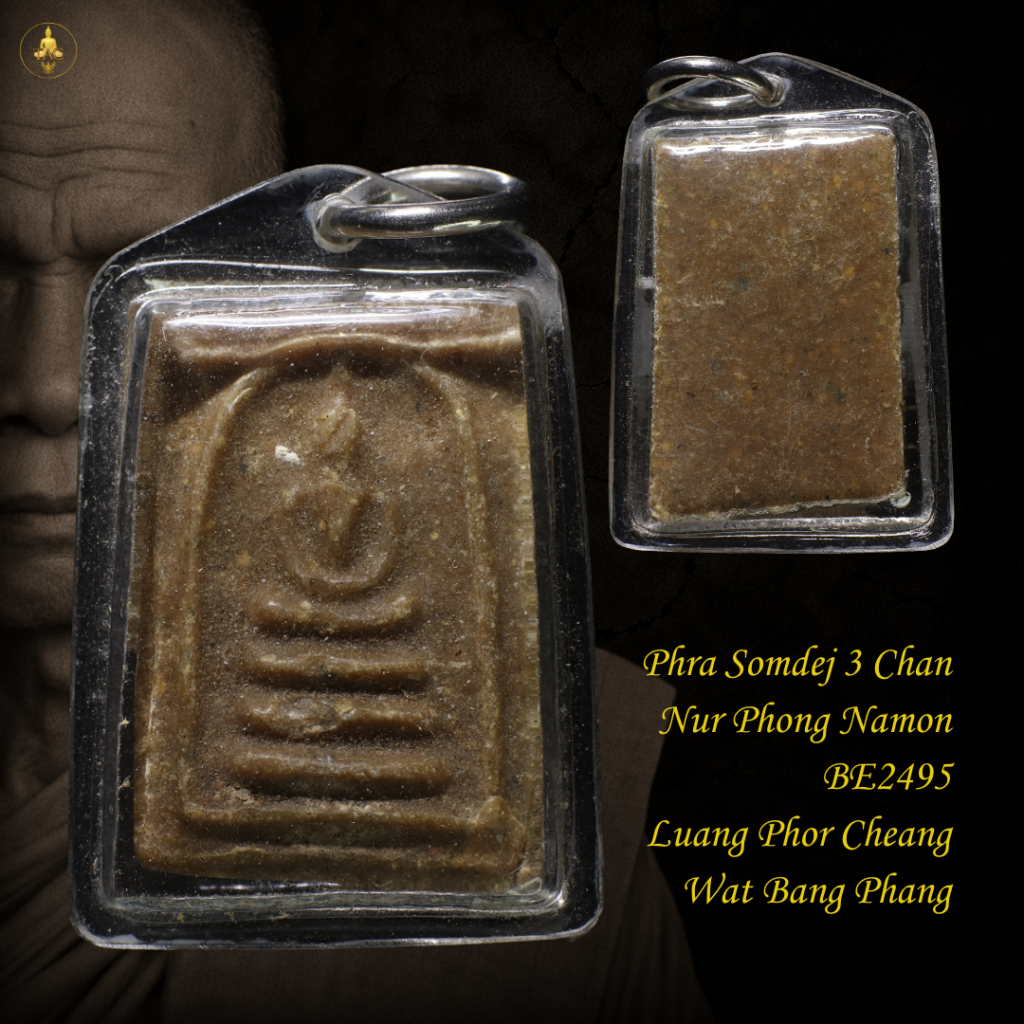
| Type | Phra Somdej 3 Chan |
| Monk | Luang Phor Cheang |
| Temple | Wat Bang Phang |
| B.E. Year | 2495 |
| Material | Nur Phong Namon |
| Condition | Good |
| SKU | TAC-PhraSomdej3Chan-LpCheang-001 |
Luang Phor Sothon, Wat Sothon Wararam Worawihan, Chachoengsao Province, for building the Ubosot BE2535 (with original temple box)
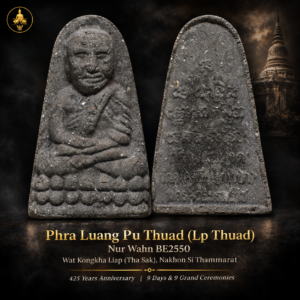 Phra Luang Pu Thuad (Lp Thuad) Nur Wahn BE2550 Wat Kongkha Liap (Tha Sak), Nakhon Si Thammarat (425 Years Anniversary, 9 Days & 9 Grand Ceremonies)
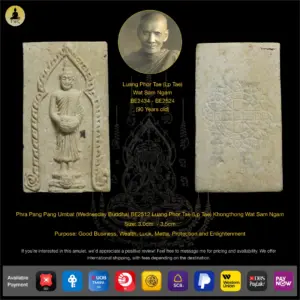 Phra Pang Umbat (Wednesday Buddha) BE2512 Luang Phor Tae (Lp Tae) Khongthong Wat Sam Ngam
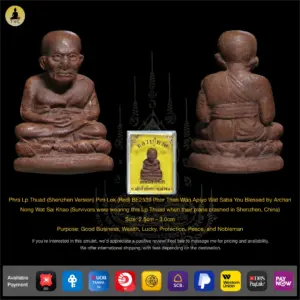 Phra Lp Thuad 龙婆托 (Shenzhen Version) Pim Lek (RED) BE2539 Phor Than Wan Apiyo Wat Saba You Blessed by Archan Nong Wat Sai Khao
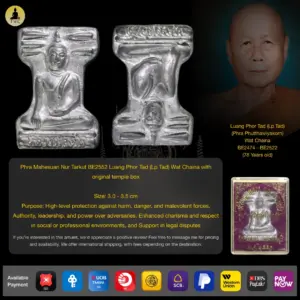 Phra Mahesuan Nur Tarkut BE2552 Luang Phor Tad (Lp Tad) Wat Chaina with original temple box
Each adds this amulet plus the offer at the bundle price — ready at checkout, or mention it when you enquire on WhatsApp.
Phra Somdej 3 Chan Luang Phor Cheang, Wat Bang Phang, BE 2495. Pressed in Nur Phong Namon. A classical-era Somdej from a master who trained under LP Parn and LP Suk.
The Phra Somdej 3 Chan Luang Phor Cheang is a three-tiered Somdej amulet produced at Wat Bang Phang in BE 2495, pressed from Nur Phong Namon — a sacred powder-based nuea (material). LP Chaeng studied under several of Thailand’s most respected masters of that era, including Luang Phor Parn Wat Bang Nom Kho and Luang Phor Suk Wat Pak Klong Makam Tao, and had over 55 years of active meditation practice behind him by the time this piece was made.
Luang Phor Cheang was born on 18 December BE 2428 and ordained at the age of 20 under the monastic name Cheng Silaphanyo. He was drawn early to deep meditation practice and to learning directly from master monks. That drive took him on a lengthy river journey — over 80 km along the Chao Phraya — to study under Luang Phor Parn Wat Bang Hia. By most accounts the trip itself became part of his story: other passengers on the boat reportedly witnessed a visible aura surrounding him as a sudden storm hit, and the vessel came through unscathed. Whether you read that literally or not, it tells you something about how people around him perceived his practice even then.
His lineage is the reason collectors pay attention. He trained under Luang Phor Parn Wat Bang Nom Kho, Luang Phor Suk Wat Pak Klong Makam Tao, Luang Phor Khai Wat Choeng Lane, Luang Phor Chay Wat Phananchoeng, and Luang Phor Chong Wat Natangnok — a serious set of teachers for any monk of that period. His connection to Luang Phor Suk is particularly noted: LP Suk once sent a devotee who had travelled far to see him back to Wat Bang Phang instead, telling the man that LP Chaeng had absorbed his methods fully and could handle any request. That is not a small endorsement in the Thai amulet tradition.
During the Indochina War, LP Chaeng produced amulets and protective items distributed to 15,000 soldiers. All of them returned home safely — a fact that spread his name well beyond his home province. He passed away on 26 July BE 2500 at the age of 72. The pieces dated to BE 2495 therefore come from the final active years of his life, when his practice and reputation were at their peak.
Wat Bang Phang sits along the Chao Phraya river corridor — the same waterway LP Chaeng travelled to reach his teachers decades earlier. Temples in this stretch of central Thailand were deeply embedded in the classical amulet-making tradition; the geography kept them connected to masters in Ayutthaya and Bangkok while maintaining their own lineage. For more background on the broader tradition these pieces belong to, see the Thai Buddhist amulet tradition on Wikipedia.
The nuea here is Phong Namon — a pressed powder material made from consecrated ingredients blended into what collectors call the muan sarn. Phong Namon pieces from this era tend to age with a distinctive surface quality: the powder compacts gradually and the face definition either holds cleanly or shows controlled wear consistent with age. What you want to check first is whether the three tiers of the pim (mould) read clearly and whether the base markings are consistent with known Wat Bang Phang examples. With a BE 2495 piece, genuine age patina and powder texture are your first reference points.
Devotees and collectors associate this piece primarily with metta, personal authority, and protection — qualities that connect directly to LP Chaeng’s own biography and the contexts in which his amulets were originally made and distributed.
A piece like this suits daily wear for anyone whose work depends on human relationships — sales, negotiation, management, client-facing roles. The metta and maha saneh qualities make it practical for people who need to be liked and trusted rather than simply feared. The klaew klaad association means it is also favoured by those who travel frequently or work in unpredictable environments. For collectors who sit in meditation, LP Chaeng’s own 55-year practice gives this piece a particular resonance — it is not just carried, it is a reference point for the kind of sustained effort his biography represents. All of this is in the realm of tradition and devotee belief; what it means to you is your own call.
This is a BE 2495 Phra Somdej 3 Chan by Luang Phor Cheang of Wat Bang Phang — a monk whose teachers included LP Parn Wat Bang Nom Kho and LP Suk Wat Pak Klong Makam Tao, two names that any serious collector of central Thailand amulets will know. The wartime distribution history (15,000 soldiers, all returned safely) is well documented and gives this piece a biographical anchor that goes beyond the standard Somdej narrative. For a Phong Namon Somdej of this age and lineage, what a collector wants to confirm first is clean mould definition and consistent powder texture — both of which tell you more than any surface story.
Attributes reflect Thai Buddhist devotional tradition and are not measurable claims.