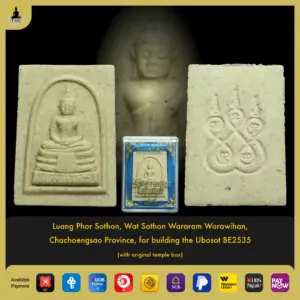
 Luang Phor Sothon, Wat Sothon Wararam Worawihan, Chachoengsao Province, for building the Ubosot BE2535 (with original temple box)
S$10
S$18save S$8 (44%)
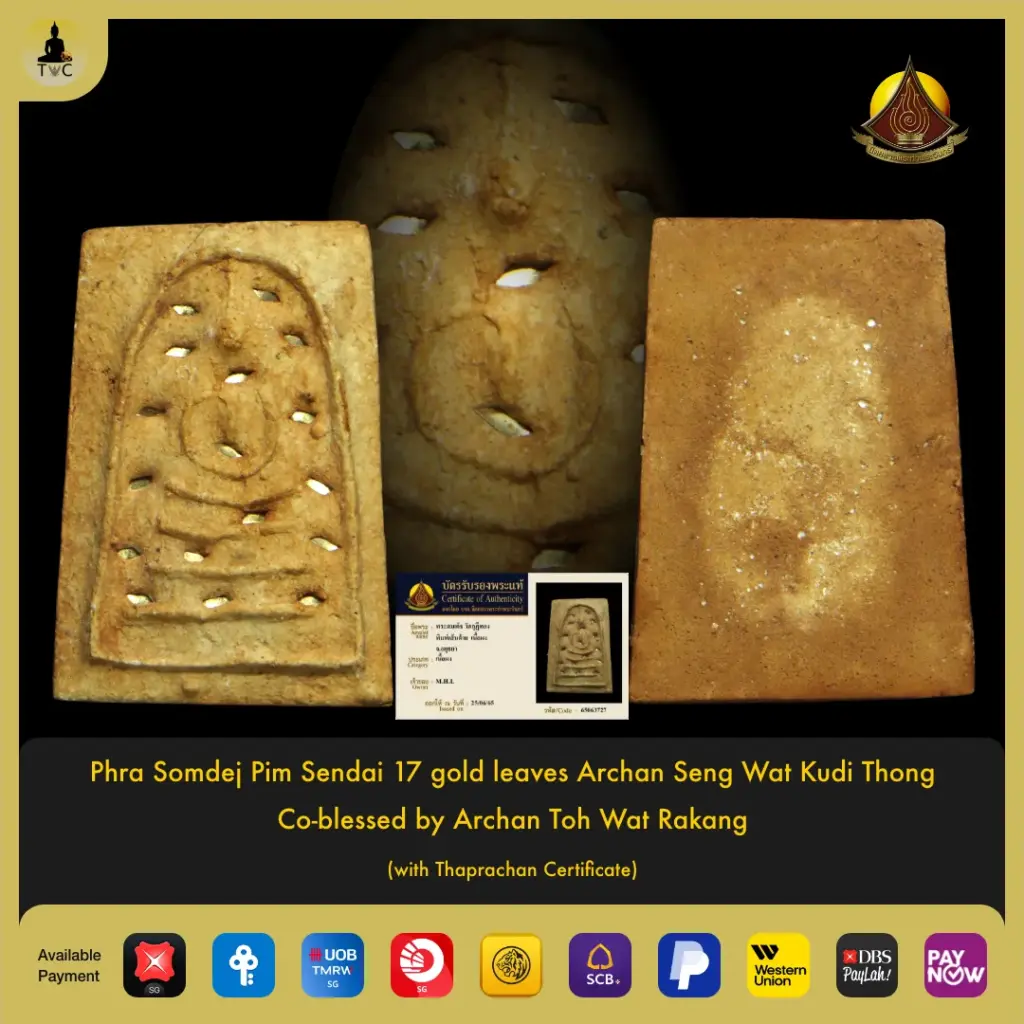
| Type | Phra Somdej |
| Monk | Archan Seng |
| Temple | Wat Kudi Thong |
| SKU | TAC-0434 |
Luang Phor Sothon, Wat Sothon Wararam Worawihan, Chachoengsao Province, for building the Ubosot BE2535 (with original temple box)
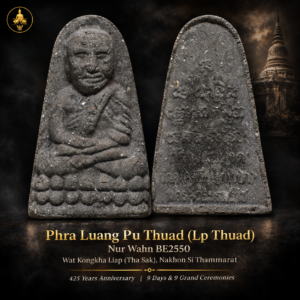 Phra Luang Pu Thuad (Lp Thuad) Nur Wahn BE2550 Wat Kongkha Liap (Tha Sak), Nakhon Si Thammarat (425 Years Anniversary, 9 Days & 9 Grand Ceremonies)
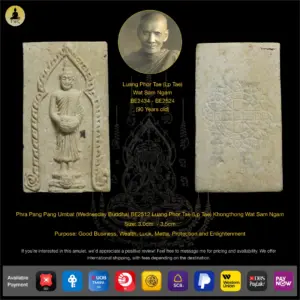 Phra Pang Umbat (Wednesday Buddha) BE2512 Luang Phor Tae (Lp Tae) Khongthong Wat Sam Ngam
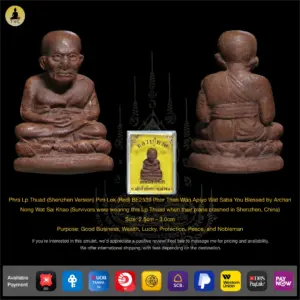 Phra Lp Thuad 龙婆托 (Shenzhen Version) Pim Lek (RED) BE2539 Phor Than Wan Apiyo Wat Saba You Blessed by Archan Nong Wat Sai Khao
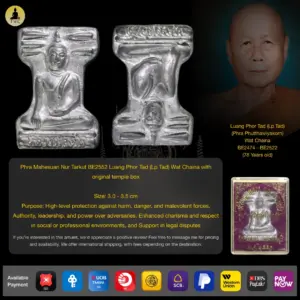 Phra Mahesuan Nur Tarkut BE2552 Luang Phor Tad (Lp Tad) Wat Chaina with original temple box
Each adds this amulet plus the offer at the bundle price — ready at checkout, or mention it when you enquire on WhatsApp.
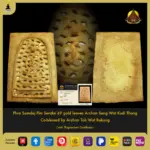
Authentic Phra Somdej Pim Sendai by Archan Seng, Wat Kudi Thong, Rattanakosin era. Sacred powder with gold leaf. Co-blessed lineage attributed to Somdej Toh.
The Phra Somdej Pim Sendai by Archan Seng is a Rattanakosin-era sacred powder amulet from Wat Kudi Thong in Ayutthaya, pressed from nuea phong (sacred powder blend) with gold leaf fragments pressed into the surface. This example is identified in collector references as the “17 gold leaves” version, accompanied by a Thaprachan certificate. Co-blessing lineage is attributed to Somdej Toh of Wat Rakang in collector tradition.
Archan Seng — also recorded as Ajahn Saeng — was the presiding master at Wat Kudi Thong, an active temple north of the old Ayutthaya city island, in the Khlong Sra Bua and Tha Wasukri area. The site retains ancient chedi remains and older masonry layers that reflect Ayutthaya’s long religious continuity. It is not a tourist landmark. It is a working temple with a distinct place in the provincial collector map.
The name “Kudi Thong” — กุฎีทอง, meaning “Golden Kuti” — carries a local legend: a royal figure vowed to gild a monk’s kuti if a prophecy was fulfilled, and the subsequent gilding became part of the temple’s identity. Whether the details hold across every retelling is another matter, but the legend follows a recognisable Thai pattern of faith, vows, and the social standing of respected monks in both royal and community life.
In collector tradition, Somdej Toh of Wat Rakang — already the central figure in the broader Thai Buddhist amulet tradition — is said to have resided at Wat Kudi Thong for a period, during which the Pim Sendai line was created and empowered. Collectors describe Pim Sendai as a prototype influence on the later Somdej aesthetic that Wat Rakang became famous for. That dual-lineage reading — Ayutthaya heritage through Archan Seng, Somdej tradition through co-blessing attribution to Somdej Toh — is what gives the Sendai pim (mould type) its particular standing among serious collectors.
The muan sarn (sacred powder blend) in Pim Sendai pieces is discussed in collector circles as drawing on Phong Itthijay and Phong Pattamang — traditional sacred powder categories — alongside herbal powders from temple ceremonies and material from older Buddha images and chedi-related sources. These components are consistent with mid-to-late 19th century Rattanakosin-era practice as commonly cited in collector references.
The defining feature of this version is the gold leaf. In Thai Buddhist practice, gold leaf is closely tied to merit-making and temple restoration offerings — it signals auspicious intent and purity, and it was typically reserved for higher-offering tiers used for senior patrons and devotees. The “17 gold leaves” designation is a collector identifier for this specific variant within the Sendai set. Pieces with clearly visible, well-preserved leaf fragments carry more weight at the authentication table.
Archan Seng oversaw the moulding process, according to collector accounts. The co-blessing is attributed to Somdej Toh in the final empowerment stage, described in two phases: an initial consecration within Wat Kudi Thong’s ritual cycle, followed by a grand pluk sek (consecration ceremony) with extended chanting, during which gold leaf was pressed to “seal” the empowerment.
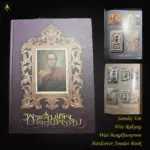
Authentication for a piece of this age and lineage rests on a combination of physical characteristics and documentation. The Thaprachan certificate shown with this piece positions it as a collector-grade example. No certificate eliminates all risk, but Thaprachan documentation gives a concrete reference point and is recognised across the Singapore, Malaysian, and Thai collector communities.
Key authentication points collectors check:
Gold-leaf Pim Sendai examples are regarded as genuinely scarce. The combination of the Sendai prototype story, Ayutthaya provenance, gold leaf designation, and a Thaprachan certificate in one piece is not common in the current market.
This Pim Sendai gold-leaf piece is one of the more layered Somdej items we carry — it sits at the crossroads of Ayutthaya provincial tradition through Archan Seng and the broader Somdej lineage through the co-blessing attribution to Somdej Toh of Wat Rakang, which is exactly the profile serious collectors look for when building a historically grounded set. The Thaprachan certificate shown with this piece gives it a clear reference point for both new and experienced collectors in our market.
Attributes reflect Thai Buddhist devotional tradition and are not measurable claims.