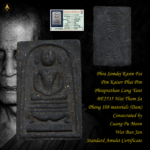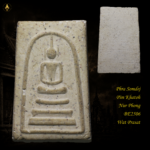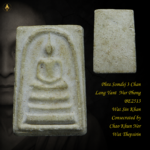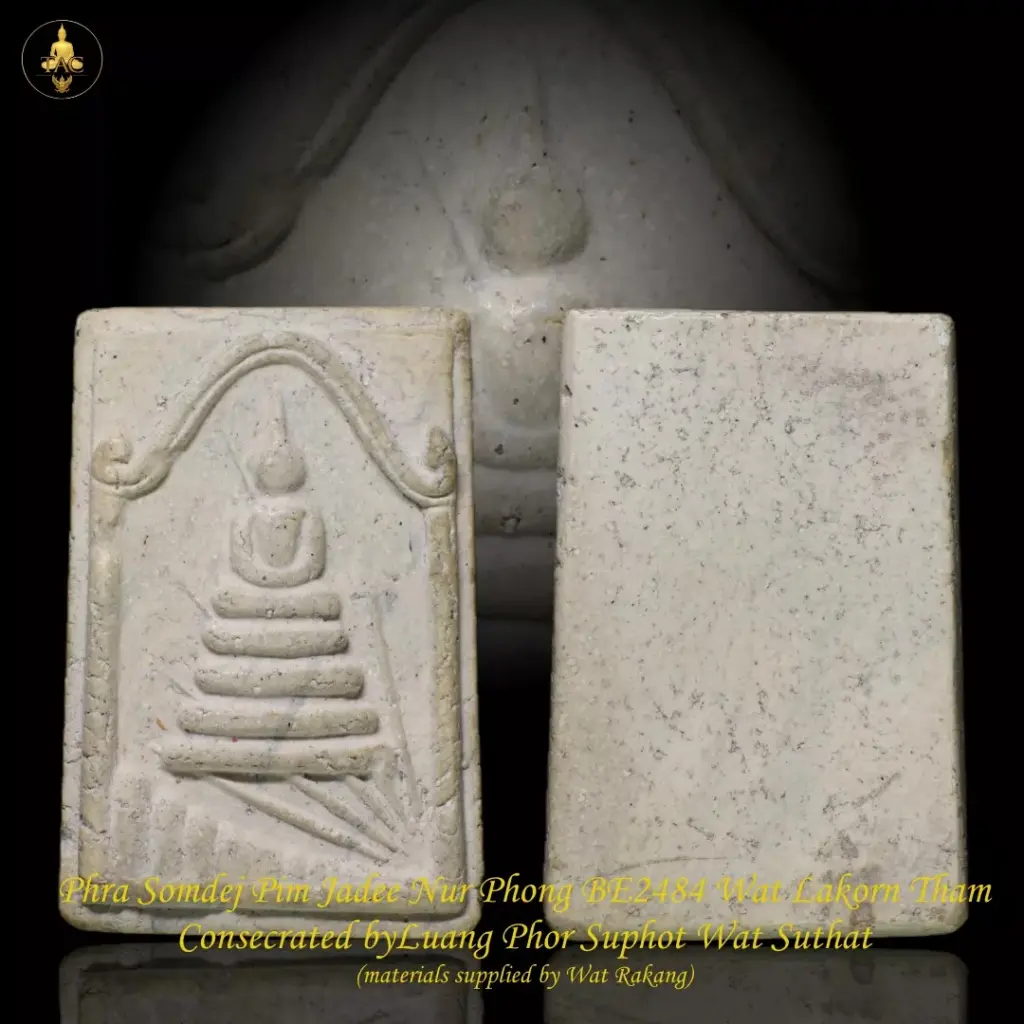
Phra Somdej Pim Jadee Nur Phong BE2484 Wat Lakorn Tham Consecrated by Luang Phor Suphot Wat Suthat
| Type | Phra Somdej |
| Monk | Luang Phor Suphot |
| Temple | Wat Lakorn Tham |
| B.E. Year | 2484 |
| Material | Phong |
| SKU | TAC-0212 |
Phra Somdej Pim Jadee • Nur Phong BE2484 • Wat Lakorn Tham • Consecrated at Wat Suthat by Luang Phor Suphot • Materials supplied from Wat Rakhang (Somdej fragments) Somdej “Pim Jadee” (พิมพ์เจดีย์) in old-style s
Phra Somdej Pim Jadee • Nur Phong
BE2484 • Wat Lakorn Tham • Consecrated at Wat Suthat by Luang Phor Suphot • Materials supplied from Wat Rakhang (Somdej fragments)
Somdej “Pim Jadee” (พิมพ์เจดีย์) in old-style sacred powder (เนื้อผง / Nur Phong) — valued for lineage notes and classic Somdej character.
Amulet Information
Name: Phra Somdej Pim Jadee Nur Phong
Material: Nur Phong (เนื้อผง) • sacred powder with Wat Rakhang Somdej fragments
Year (BE): 2484 (1941)
Temple: Wat Lakorn Tham
Consecration: Wat Suthat • Luang Phor Suphot
SKU: TAC-SDJ-2484-LAKORNTHAM
Price:
SGD 199
History & Lineage Context
This Phra Somdej reclining pagoda-type piece from Wat Lakorn Tham is dated to BE2484 (1941), during the Indochina period. The listing notes that the consecration was conducted at Wat Suthat under Luang Phor Suphot — a monk remembered as quiet in public, but highly capable in sacred powder work and old manuscript knowledge.
Luang Phor Suphot was based at Wat Suthat during the time of Somdej Phra Sangkharat Pae and Phra Khru Mul. Within that circle, he was known for understanding traditional powder formulation (ผงวิเศษ / pong wised) and the older temple methods of preparing sacred materials. A key lineage point recorded in collector talk is his close ties with Luang Pu Nak of Wat Rakhang, from whom he is said to have received broken fragments of Somdej Wat Rakhang amulets.
In that era, damaged amulets were not treated like “collectibles.” Devotees often returned broken pieces to temples out of respect. Luang Phor Suphot reportedly gathered these fragments, ground them into fine powder, and reconstituted them into new presses — following the older principle that sacred material should not be wasted, but respectfully “reborn” into a new form. Because of this, many collectors believe his powder amulets carry a meaningful amount of genuine Somdej Wat Rakhang material, even though exact ratios cannot be proven today.
The Somdej set associated with his line appears across multiple moulds, both small and large. Some pieces are seen with mantra-style overlaps at the back (often described by collectors as Phut Son / Tri Yantra-like stamps), while others are left plain. The variety also reflects how old Thai amulet design language blended across classic families — Somdej-inspired profiles alongside other well-known traditional forms.
Another detail passed down is that permission was reportedly sought from Somdej Phra Sangkharat Pae to include these amulets in broader consecrations together with other sacred objects. After blessing, many pieces were distributed to soldiers, police officers, and civil servants during the wartime period. Over time, protective stories circulated, demand grew, and Luang Phor Suphot was said to have continued giving them out until none remained.
Although he kept a low profile, Luang Phor Suphot’s name is also mentioned among monks connected to several major ceremonies later on, including the Twenty-Five Buddhist Century commemorative blessings, the Wat Prasat ceremony in 1963, and a Chonburi provincial consecration in 1966. He is likewise associated by collectors with Wat Suthat’s Phra Kring lineages, with some accounts suggesting he contributed sacred plates or materials in certain rites.
The Wat Prasat ceremony in 1963 is frequently remembered because it gathered an unusually wide assembly of respected masters from across Thailand, which gives historical weight to the overall ritual environment connected to that era of consecrations.
One point worth keeping in mind: in the 1930s–1940s, Somdej Wat Rakhang fragments did not carry today’s market value. Their importance was devotional, not commercial. Grinding and reforming them into new presses was viewed as preserving sacred continuity — not “creating something new” for trade.
Collector Summary (3 Key Layers)
- Material lineage: Wat Rakhang Somdej fragments (ผงเก่า) used as admixture (as recorded in the listing / collector tradition).
- Ritual connection: Wat Suthat consecration environment under Luang Phor Suphot.
- Historical context: Indochina-period timeframe, with documented distribution themes linked to wartime service groups.
About the Material
“Nur Phong” (เนื้อผง) is the broad collector term for pressed sacred powder amulets. For Somdej-style pieces, collectors typically look at powder texture, ageing tone, press definition, and how the surface settles over decades — then weigh that against the recorded story of the piece.
Traditional Spiritual Attributes & Metaphysical Properties
In Thai amulet culture, Somdej pieces are often treated as “ครูพระ” — a teacher-Buddha style amulet associated with steady protection and composure. Most seasoned collectors will tell you: wear it with good conduct, make merit, and treat the amulet as a reminder of practice rather than a shortcut.
- คุ้มครอง (Protection): General safeguarding and peace of mind.
- เมตตา (Metta): Social harmony and being well-received.
- แคล้วคลาด (Avoidance): Sometimes associated with “narrow escape” themes in old powder lines.
Front view — Pim Jadee impression and press character.
Back view — surface tone and powder ageing cues.
Attributes reflect Thai Buddhist devotional tradition and are not measurable claims.