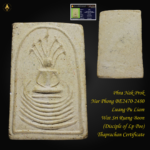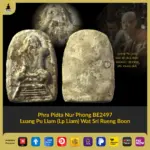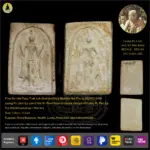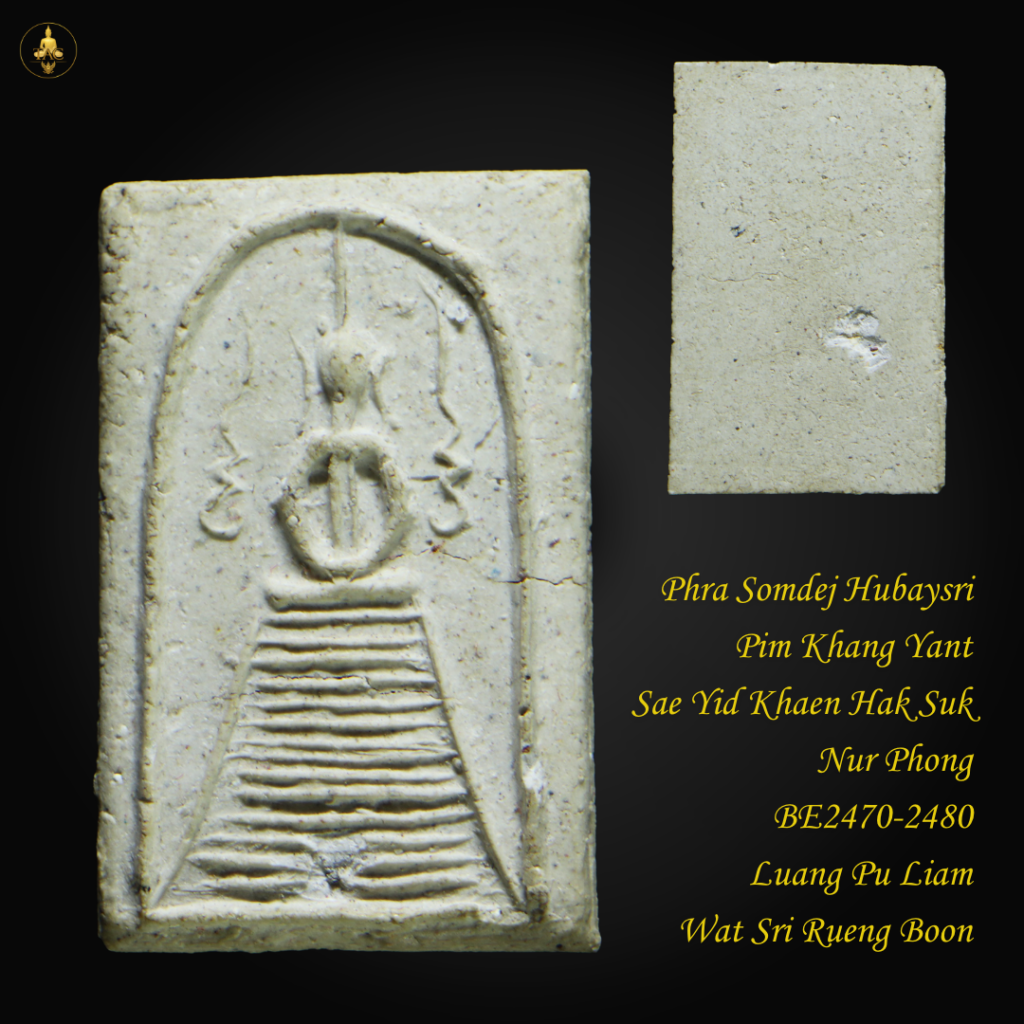
Phra Somdej Hubaysri Pim Khang Yant Sae Yid Khaen Hak Suk Nur Phong BE2470-2480 Luang Pu Liam Wat Sri Rueng Boon
| Type | Phra Somdej Hubaysri Pim Khang Yant Sae Yid Khaen Hak Suk |
| Monk | Luang Pu Liam (Lp Liam) Wat Sri Rueng Boon |
| Temple | Wat Sri Rueng Boon |
| B.E. Year | 2470-2480 |
| Material | Nur Phong |
| Size | 3cm mm |
| Condition | Fair |
| SKU | TAC-PhraSomdejHubaysriPimKhangYantSaeYidKhaenHakSuk-LpLiam-001 |
Authentic Phra Somdej Hubaysri Pim Khang Yant Sae Yid Khaen Hak Suk Luang Pu Liam, Sri Rueng Boo BE 2470-2480. Nur Phong. Rare early-era amulet. Singapore dealer.
What is the Phra Somdej Hubaysri Pim Khang Yant Sae Yid Khaen Hak Suk amulet by Luang Pu Liam?
The Phra Somdej Hubaysri Pim Khang Yant Sae Yid Khaen Hak Suk Luang Pu Liam is a sacred Nur Phong amulet produced at Wat Sri Rueang Bun, Nonthaburi province, between BE 2470 and BE 2480. Pressed from a special blessed powder mixed with crushed seashells and banana pulp, it is regarded by devotees as one of the most revered amulets from the early Rattanakosin era.
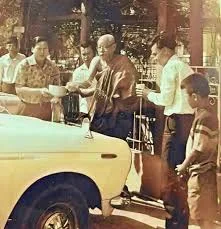
Luang Pu Liam served as the abbot of Wat Sri Rueang Bun from BE 2457 to BE 2480 and passed away in BE 2488 at the age of 82. Originally from eastern Thailand, he spent many decades on pilgrimage before arriving in the Nonthaburi area and establishing his meditation hut beside the temple. The villagers, who held him in the highest regard, unanimously invited him to accept the abbotship when he was around 55 years old.
Luang Pu Liam was celebrated not only for his deep meditative attainment but also for his mastery of traditional medicine. His holy water was especially renowned for curing rabies — even patients who were delirious and howling were said by devotees to have recovered completely after treatment. This extraordinary reputation drew widespread faith and generous support from the local community.
It was out of gratitude to those who helped him renovate Wat Sri Rueang Bun that Luang Pu Liam chose to create amulets for distribution. Feeling unable to repay the community in any other way, he began pressing amulets from powdered materials in over 20 different molds continuously from BE 2470. The Phra Somdej Hubaysri Pim Khang Yant Sae Yid Khaen Hak Suk Luang Pu Liam stands as one of the most distinctive pieces from this celebrated series.
Phra Somdej Hubaysri Pim Khang Yant Sae Yid Khaen Hak Suk and Sri Rueng Boo Heritage
Sri Rueng Boo (Wat Sri Rueang Bun) is a small, peaceful temple in Nonthaburi province, historically surrounded by gardens and described in temple records as highly suitable for spiritual practice. At the time Luang Pu Liam arrived, the temple was dilapidated and without a resident abbot, making his acceptance of the position a turning point in its history. Under his stewardship, the temple was fully renovated through the communal effort of devoted villagers.
The Phra Somdej Hubaysri Pim Khang Yant Sae Yid Khaen Hak Suk Sri Rueng Boon series was produced within this revitalised temple environment, imbued with the sincere gratitude and pure intention of its creator. Luang Pu Liam would close the door of his kuti while grinding the powder to prevent it from blowing and causing harm — a detail that reflects the meticulous care invested in each piece. This conscientious approach is widely cited by collectors as evidence of the amulets’ exceptional spiritual integrity.
The broader Thai Buddhist amulet tradition holds that sacred intent and rigorous ritual preparation are inseparable from an amulet’s efficacy — principles that Luang Pu Liam embodied throughout the decade-long production of this series. Fewer amulets were distributed than were created, and the surplus was stored in tin containers rather than buried in a vault. This preservation method means that surviving examples remain relatively clean and largely free of the staining typically associated with vault-stored amulets of the same era.
Nur Phong Phra Somdej Hubaysri Pim Khang Yant Sae Yid Khaen Hak Suk — Composition and Craftsmanship
The Nur Phong Phra Somdej Hubaysri Pim Khang Yant Sae Yid Khaen Hak Suk was produced from a carefully prepared powder base blended with crushed seashells, ground in a mortar and pestle, and bound with banana pulp. Luang Pu Liam incorporated a special powder known for its benevolent properties into the mixture, reflecting his expertise in both traditional medicine and sacred material preparation. This combination of ingredients is regarded by collectors as characteristic of the Nonthaburi school of amulet-making from the BE 2470–2480 period.
The molds used to press these amulets were hand-carved by Luang Pu Liam’s skilled disciples. Some designs were modelled on the Somdej forms of Wat Intharam and Wat Chalerm Phra Kiat, as well as the style of Luang Pho Kram of Wat Phra Ngoen, while others were uniquely original to Wat Sri Rueang Bun. This diversity across more than 20 mold types makes the Phra Somdej Hubaysri Pim Khang Yant Sae Yid Khaen Hak Suk BE 2470-2480 series one of the most varied and collectible of its generation.
Now approximately 80 years old, surviving examples display a vibrant, age-consistent texture that specialist collectors recognise as authentic to this era. Their age is considered comparable to that of Somdej amulets associated with Luang Pu Phu, and their beauty, fine craftsmanship, and evident purity of intent are consistently noted by experienced appraisers.
Spiritual Benefits of Phra Somdej Hubaysri Pim Khang Yant Sae Yid Khaen Hak Suk by Luang Pu Liam
Devotees and collectors in Singapore, Malaysia, and across Greater China associate the Phra Somdej Hubaysri Pim Khang Yant Sae Yid Khaen Hak Suk Luang Pu Liam with a wide range of protective and auspicious qualities. These beliefs are rooted in the monk’s extraordinary reputation during his lifetime, particularly his widely documented ability to heal the sick through blessed water and his decades of dedicated meditative practice.
The Luang Pu Liam amulet is traditionally venerated for the following qualities, as expressed within collector and devotee communities:
- Protection and personal safety — collectors regard this amulet as a powerful protective talisman, associated with warding off harm and misfortune.
- Health and well-being — in keeping with Luang Pu Liam’s renowned healing abilities, devotees traditionally venerate this piece for its association with physical health and recovery.
- Metta and goodwill — the amulet is regarded by its devotees as an aid to cultivating kindness, harmonious relationships, and favour from others, consistent with the Phra Somdej tradition.
Phra Somdej Hubaysri Pim Khang Yant Sae Yid Khaen Hak Suk BE 2470-2480 — Authentication and Collector Value
The Phra Somdej Hubaysri Pim Khang Yant Sae Yid Khaen Hak Suk BE 2470-2480 is considered a rare and historically significant piece among serious collectors. The series was consecrated continuously over a full decade, and because the surplus was stored above ground in tin containers, well-preserved examples retain the vivid surface texture and clean edges that authenticators look for. Collectors are advised to source examples from reputable Thai amulet Singapore dealers who can provide verifiable provenance documentation.
As an authentic Thai amulet from the early Rattanakosin period, this piece commands collector attention for its age, material integrity, and the documented reputation of its creator. The diversity of mold types — more than 20 recorded variants — means that each example should be cross-referenced against known reference specimens to confirm the specific Pim (mold type) designation. Specialist appraisal by an experienced collector or recognised Thai amulet association is strongly recommended before any significant acquisition.
Attributes reflect Thai Buddhist devotional tradition and are not measurable claims.