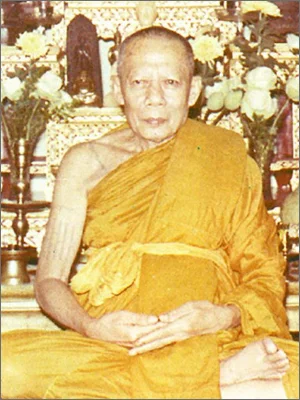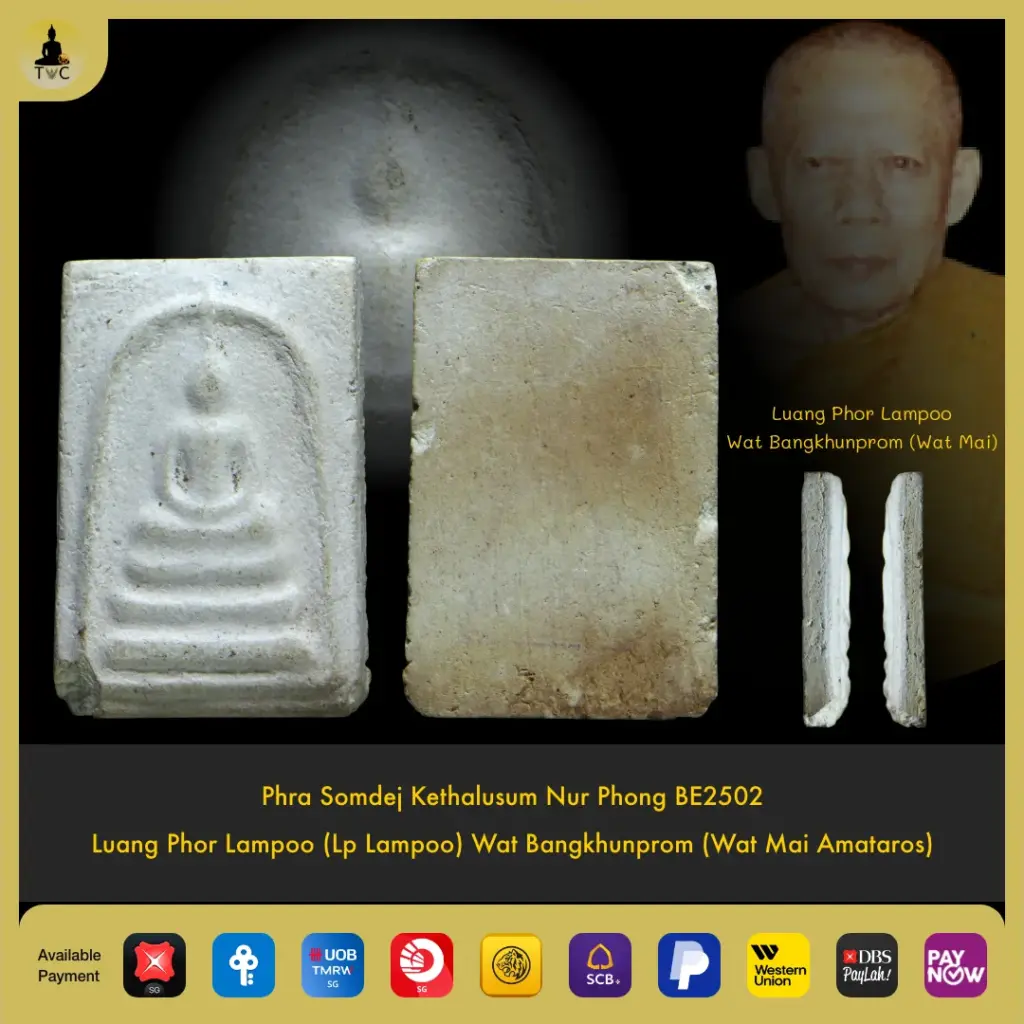
Phra Somdej Kethalusum BE2502 Luang Phor Lampoo Wat Bangkhunprom
| Type | Phra Somdej |
| Monk | Luang Phor Lampoo Wat Mai Amataros (Wat Bangkhunprom) |
| Temple | Wat Bangkhunprom (Wat Mai) |
| B.E. Year | 2502 |
| SKU | TAC-0071 |
Authentic Phra Somdej by Luang Phor Lampoo Wat Mai Amataros (Wat Bangkhunprom), Wat Bangkhunprom BE 2502. Nur Phong sacred powder. No cert.
Phra Somdej Luang Phor Lampoo Wat Mai Amataros (Wat Bangkhunprom) — History and Significance
The Phra Somdej Luang Phor Lampoo Wat Mai Amataros (Wat Bangkhunprom) BE 2502 is a post-war sacred powder edition consecrated at Wat Bangkhunprom in Bangkok, sought by collectors in Singapore and across Southeast Asia for its documented connection to the Somdej Toh devotional lineage. Issued in 1959 CE, this batch was created to support temple restoration and monastic education, with empowerment blessings centred on protection, social grace, and good fortune. It remains one of the more studied mid-century Phra Somdej issues within the Bangkok tradition.
The BE 2502 edition continues the wicha (sacred formula) lineage traceable to Somdej Phra Buddhachan (Toh Prommarangsi), the foundational master of the Phra Somdej devotional movement. Wat Bangkhunprom is recognised alongside Wat Rakang and Wat Keaw as one of the three canonical Somdej temples in Bangkok’s amulet scholarship. This historical positioning lends the BE 2502 batch particular documentary weight among serious collectors.
Luang Phor Lampoo Wat Mai Amataros (Wat Bangkhunprom) oversaw the consecration of this edition with disciplined attention to mold work (pim) and doctrinally grounded empowerment ritual. His approach emphasised continuity with Somdej Toh’s baramee (spiritual charisma) while incorporating mid-century temple powder techniques specific to Wat Bangkhunprom. The resulting pieces reflect both lineage fidelity and the practical restoration objectives of the late 1950s.
Phra Somdej and Wat Bangkhunprom (Wat Mai) Heritage
Wat Bangkhunprom (Wat Mai) has preserved the Somdej ritual practice through sustained meditation discipline and systematic scripture recitation across successive abbots. Its standing as one of Bangkok’s three principal Somdej temples is well established in Thai amulet scholarship, lending institutional continuity to every edition issued under its name. The temple’s formal designation, Wat Mai Amataros, reflects its royal-grade status within the Bangkok ecclesiastical hierarchy.
The temple’s production of Phra Somdej amulets draws directly on the foundational methods associated with Somdej Toh, who resided at the nearby Wat Rakang and maintained close ties with Wat Bangkhunprom. Sacred powder formulations used at Wat Bangkhunprom follow the same doctrinal framework, incorporating temple soil, chedi ash, and consecrated herbal powders in proportions preserved within the monastery’s ritual tradition. This lineage continuity is a primary reason collectors assign lasting study value to Bangkhunprom editions.
For collectors seeking to understand the broader context of sacred powder amulets within Thai Buddhism, the Thai Buddhist amulet tradition on Wikipedia offers a reliable introduction to the historical, doctrinal, and material dimensions of this practice. The BE 2502 issue from Wat Bangkhunprom sits firmly within that living tradition, combining institutional heritage with careful craft.
Nur Phong (Sacred Powder) Phra Somdej — Composition and Craftsmanship
The material base of this edition is a Nur Phong (sacred powder) blend incorporating Phong Itthijay, Phong Pattamung, and Phong Wahn (herbal powder), combined with temple soil (Phong Din), fragments of earlier Somdej amulets, and sacred sand and ash drawn from the temple’s chedis. This layered composition is consistent with mid-century Bangkok Somdej production, where recycled sacred material from older amulets was regarded as an important vehicle for transmitting accumulated baramee. The resulting surface exhibits a chalk-matte texture with natural micro-pitting characteristic of the drying process.
The pim (mold type) is the Somdej Kethalusum, presenting a proportional torso and a three-tier lotus base. Collectors familiar with Bangkhunprom work identify crisp tier lines, consistent chalk-matte surface texture, and faint reverse Kethalu yant traces as primary indicators of authentic production from this batch. The pressed edges and visible powder grain are natural features of the hand-pressing technique employed at the temple.
Consecration followed a multi-day Putthapisek (ritual empowerment) ceremony led by Luang Phor Lampoo Wat Mai Amataros (Wat Bangkhunprom) alongside Bangkok elders, with sustained chant cycles directed toward Metta, protection, and the accumulation of baramee. This extended ceremonial structure was standard practice for editions intended to serve both devotional and temple-fundraising purposes in the post-war period.
Spiritual Benefits of Phra Somdej by Luang Phor Lampoo Wat Mai Amataros (Wat Bangkhunprom)
According to Thai Buddhist belief, Phra Somdej amulets consecrated within the Somdej Toh lineage are associated with a specific cluster of protective and social blessings. The Phra Somdej Luang Phor Lampoo Wat Mai Amataros (Wat Bangkhunprom) BE 2502 edition was empowered with chant cycles directed toward protection, grace, and fortune, making it a devotionally complete piece within that framework. Devotees and collectors regard it as suitable for daily wear, valued for both its ritual function and its documented lineage.
- Klaew Klaad — protection during travel and avoidance of harm, a primary blessing associated with the sustained Putthapisek chant cycles of this edition
- Metta Mahaniyom — cultivation of social grace, goodwill, and harmonious relations, consistent with the Somdej Toh devotional tradition
- Maha Lap — the drawing of good fortune and auspicious circumstances, supported by the baramee accumulated through the multi-elder consecration ceremony
Phra Somdej BE 2502 — Authentication and Collector Value
This edition is assessed as collector-grade within the category of late-1950s Bangkok temple issues. No third-party certificate is documented for this specific piece; authentication relies on material analysis and the application of established Bangkhunprom study criteria. Collectors and scholars working with post-war Somdej editions reference the chalk-matte powder surface, tier-line crispness, and faint reverse Kethalu yant traces as the primary physical indicators for this batch.
The Phra Somdej Luang Phor Lampoo Wat Mai Amataros (Wat Bangkhunprom) BE 2502 holds study value as an authenticated documented example of post-war Bangkhunprom production. Well-preserved examples are considered increasingly difficult to source given the passage of over six decades since issue. Collector interest is sustained by the combination of lineage documentation, material integrity, and the temple’s standing as one of Bangkok’s three canonical Somdej institutions.
This BE 2502 Phra Somdej Kethalusum from Wat Bangkhunprom (Wat Mai Amataros) represents a well-documented post-war Bangkok Somdej edition consecrated by Luang Phor Lampoo within the lineage of Somdej Toh — a combination that gives it both study interest and devotional standing for collectors working in this field. We at TAC regard Bangkhunprom BE 2502 examples as increasingly scarce in the secondary market given their age, and collectors focused on canonical late-1950s Bangkok temple issues will find this edition a substantive addition to a serious study collection.
Attributes reflect Thai Buddhist devotional tradition and are not measurable claims.