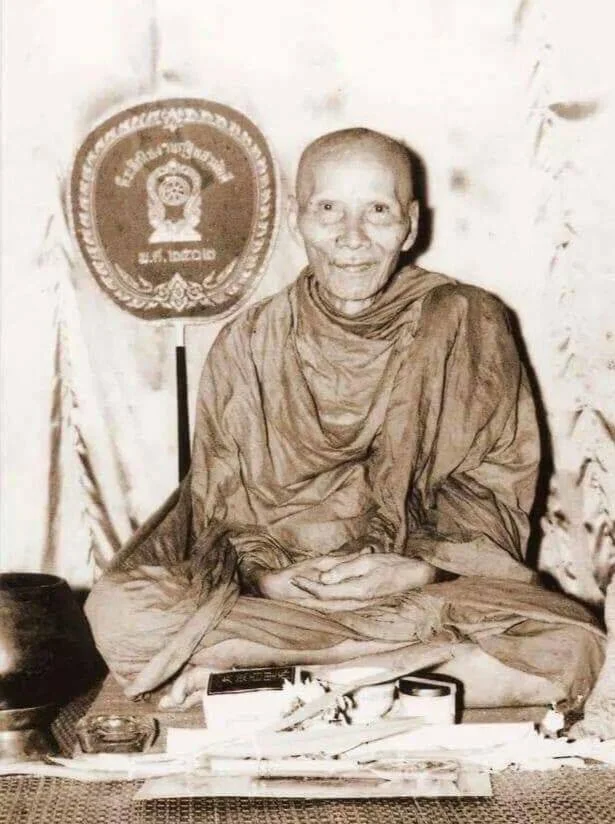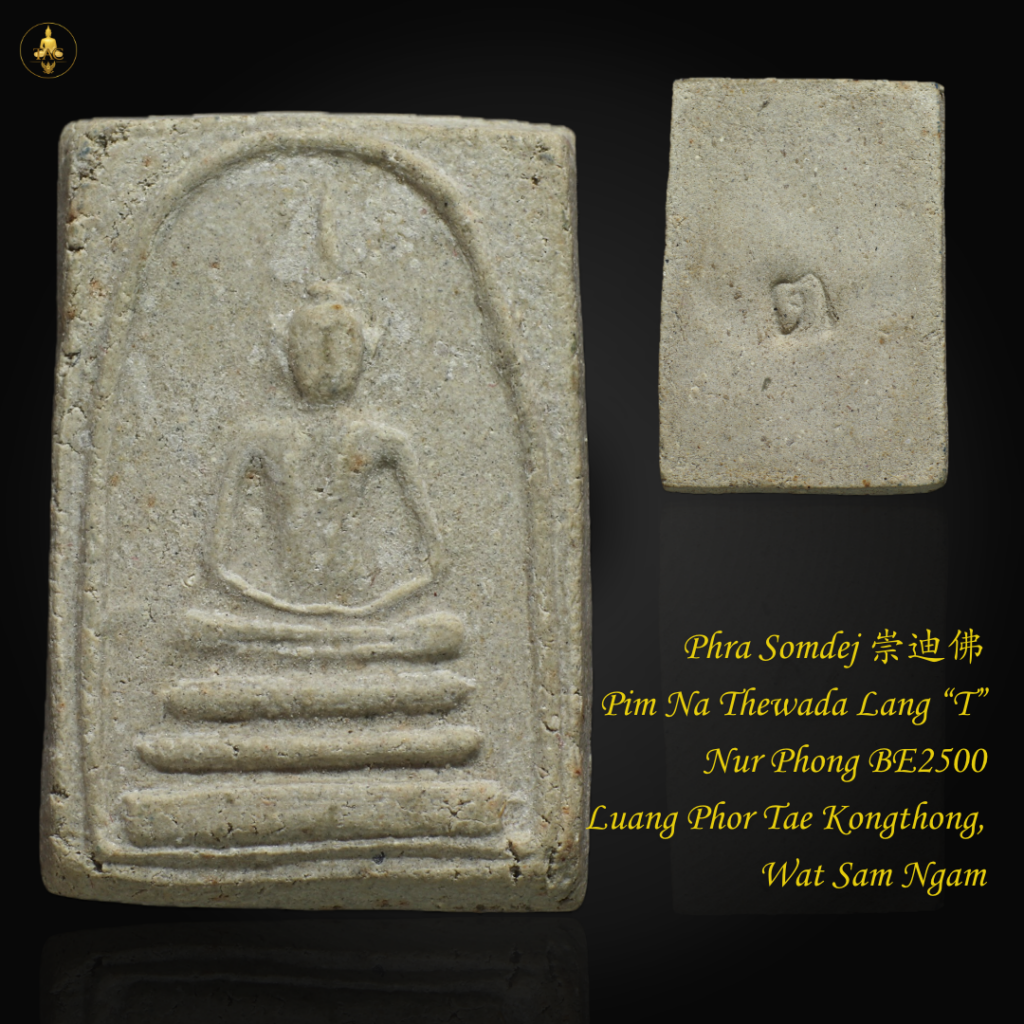
Phra Somdej Pim Na Thewada Lang “T” BE2500 Luang Phor Tae (Lp Tae) Kongthong, Wat Sam Ngam
| Type | Phra Somdej |
| Monk | Luang Phor Tae (Lp Tae) Wat Sam Ngam |
| Temple | Wat Sam Ngam |
| B.E. Year | 2500 |
| Condition | Very Good |
| SKU | TAC-0571 |
The Phra Somdej Luang Phor Tae (Lp Tae) Wat Sam Ngam Pim Na Thewada Lang "T" BE 2500 is among the most revered Somdej amulets available to collectors in…
The Phra Somdej Luang Phor Tae (Lp Tae) Wat Sam Ngam Pim Na Thewada Lang “T” BE 2500 is among the most revered Somdej amulets available to collectors in Singapore, Malaysia, and across the region, prized above all for its formidable protective and merit-bestowing properties. Created in B.E. 2500 (C.E. 1957) to mark the 2500th anniversary of Buddhism, this edition stands as a defining work in the amulet-making legacy of Luang Phor Tae (Lp Tae) Wat Sam Ngam.
In B.E. 2500, Luang Phor Tae produced several sacred editions to commemorate the Buddhist milestone, including the Suan Tao bell and 3rd generation coins. Among these, the Somdej Lang T edition earned the broadest respect from practitioners and seasoned collectors alike.
The pressing of the Lang T amulets was a collaborative effort at Wat Sam Ngam, conducted under the joint supervision of Luang Phor Tae and Luang Phor Suea. Witnesses at the time described a sacred fragrance enveloping the temple during the molding process — regarded by devotees as a sign of the amulets’ inherent spiritual potency even before formal consecration.
The consecration was carried out through a grand Phutthaphisek ceremony in which Luang Phor Tae was joined by other senior monks. Extended chanting, deep meditation, and ritual invocations were performed to empower the entire Lang T batch with lasting protective and benevolent energies.
Phra Somdej and Wat Sam Ngam Heritage
Wat Sam Ngam is a temple of considerable historical standing in Thailand’s amulet tradition, closely associated with the life and practice of Luang Phor Tae Kongthong. The temple served as the principal site where Luang Phor Tae prepared, pressed, and consecrated his most significant amulet editions over several decades.
The Phra Somdej Luang Phor Tae (Lp Tae) Wat Sam Ngam lineage is deeply rooted in the broader Thai Buddhist amulet tradition, which regards sacred powder amulets as vessels of accumulated merit, monastic intention, and protective spiritual force. Wat Sam Ngam’s role as a center of this practice gives the BE 2500 edition its particular historical weight.
The Phra Somdej Pim Na Thewada Lang “T” was not created in isolation; it reflects the temple’s broader mission to preserve ancient Buddhist knowledge and craftsmanship. The incorporation of materials sourced from multiple sacred sites underscores the communal and inter-lineage nature of this consecration.
Sacred Powder Phra Somdej — Composition and Craftsmanship
For the years leading up to B.E. 2500, Luang Phor Tae methodically gathered rare powders and sacred materials intended exclusively for this batch. The composition reflects both the depth of his preparation and his access to highly venerated source materials.
Three primary sacred constituents define this edition. First, substance from Somdej Bang Khun Phrom — comprising broken amulets and sacred powders gifted by Phra Khru Amorn Khanachan (Seng), former abbot of Wat Mai Amataros, including powder from the BE 2500 crypt and earlier Somdej fragments. Second, Na Phathamang Powder, produced by repeatedly writing and erasing sacred scripts (Na Phatthakappa), molded into sticks and re-processed nine times, with each cycle blessed by Luang Phor Tae to build concentrated potency. Third, ground powder derived from Dvaravati Buddha fragments — ancient relics sourced from Mueang Tum and the Wat Sam Ngam area — incorporated directly into the pressed mixture.
Monks, novices, and lay devotees all participated in the physical pressing under Luang Phor Tae’s supervision, making the craftsmanship of the Phra Somdej Luang Phor Tae (Lp Tae) Wat Sam Ngam an act of collective devotion as much as individual mastery.
Spiritual Benefits of Phra Somdej by Luang Phor Tae (Lp Tae) Wat Sam Ngam
The Phra Somdej Luang Phor Tae (Lp Tae) Wat Sam Ngam BE 2500 is recognized for a range of specific spiritual qualities that have been consistently attributed to this edition by practitioners and experienced collectors. These properties stem from the quality of sacred materials used and the depth of the Phutthaphisek consecration ceremony.
- Klaew Klaad: Protection from danger, accidents, and physical harm, regarded as one of the foremost properties of this edition.
- Kongkrapan: Invulnerability and resilience, particularly valued by those who face physically demanding or high-risk circumstances.
- Metta Mahaniyom: Enhancement of personal charm, goodwill, and favorable conditions for business and social relationships.
- Great Fortune: Attraction of prosperity, blessings, and auspicious outcomes for the devotee and their household.
Phra Somdej BE 2500 — Authentication and Collector Value
This example of the Phra Somdej Luang Phor Tae (Lp Tae) Wat Sam Ngam Pim Na Thewada Lang “T” BE 2500 is offered without a third-party certificate. Collectors should note that the absence of certification does not diminish an amulet’s authenticity, but it does place greater emphasis on direct physical examination and provenance assessment when evaluating the piece.
The BE 2500 Lang T edition is widely acknowledged within collector circles as one of Luang Phor Tae’s most significant creations. Its rarity is compounded by the extraordinary sourcing of its sacred materials — including genuine Dvaravati-period relic powder and substance from Somdej Bang Khun Phrom — which are not easily replicated or substituted.
Collector demand for the Phra Somdej Luang Phor Tae (Lp Tae) Wat Sam Ngam BE 2500 remains sustained across markets in Singapore, Malaysia, Thailand, China, Taiwan, and Hong Kong. Its combination of documented historical context, rare sacred composition, and the prestige of the Luang Phor Tae lineage positions it as a serious long-term collectible.
Attributes reflect Thai Buddhist devotional tradition and are not measurable claims.