Luang Phor Klin Wat Suphan Sung
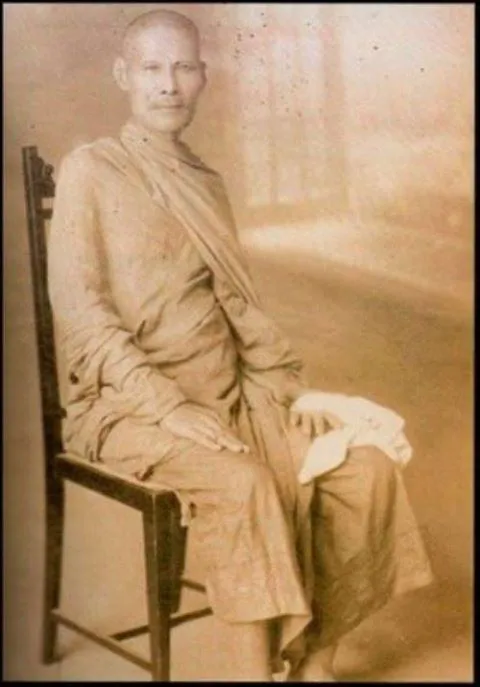
Who Was Phra Khru Sophon Sasanakit? Phra Khru Sophon Sasanakit (พระครูโสภณศาสนกิจ), also respectfully known as Luang Pu Klin (หลวงปู่กลิ่น), was born as Klin Chanplian (กลิ่น จันทร์เปลี่ยน) on 4 October BE 2408 (AD 1865) in Bang Phraek Subdistrict, Nonthaburi Province, and became the long-serving abbot of Wat Saphan Sung (วัดสะพานสูง), Pak Kret District, Nonthaburi. He was ... Read more ↓
Amulets by Luang Phor Klin Wat Suphan Sung 1 total · 1 available
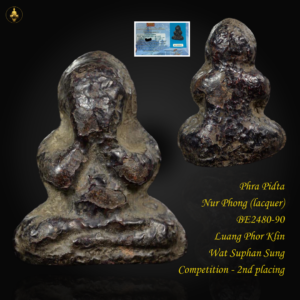
Biography
Who Was Phra Khru Sophon Sasanakit?
Phra Khru Sophon Sasanakit (พระครูโสภณศาสนกิจ), also respectfully known as Luang Pu Klin (หลวงปู่กลิ่น), was born as Klin Chanplian (กลิ่น จันทร์เปลี่ยน) on 4 October BE 2408 (AD 1865) in Bang Phraek Subdistrict, Nonthaburi Province, and became the long-serving abbot of Wat Saphan Sung (วัดสะพานสูง), Pak Kret District, Nonthaburi. He was a respected monk-scholar, Vipassanā meditation practitioner, traditional medicine master, astrologer, temple builder, and monastic administrator whose life was closely tied to the growth of Wat Saphan Sung. In Thai amulet history, Luang Pu Klin is remembered for his sacred knowledge in wicha (วิชา), incantation, astrology, and amulet consecration, including his participation in official ceremonies for the Nine Auspicious Rings and amulets depicting the Supreme Patriarch.
Early Life and Ordination
Phra Khru Sophon Sasanakit (พระครูโสภณศาสนกิจ), whose original name was Klin Chanplian (กลิ่น จันทร์เปลี่ยน), was born on Tuesday, the 13th day of the waxing moon in the 11th lunar month, Year of the Ox, corresponding to 4 October BE 2408 (AD 1865). His father was Mr. Plian Chanplian, and his mother was Mrs. Im Chanplian. His ancestral home was in Bang Phraek Subdistrict, Nonthaburi District, Nonthaburi Province, a central Thai riverside community where temple education, chanting, literacy, and monastic learning formed an important part of local life.
At the age of 11, he began studying literacy at Wat Thaimueang (วัดท้ายเมือง) in Talat Khwan Subdistrict, Nonthaburi Province. His early education focused on the Thai alphabet, giving him the basic foundation required for deeper religious and textual learning. At the age of 17, he entered the novice life and studied Khmer and Pali scripts at the school of Master In at Wat Hong Ratthanaram (วัดหงส์รัตนาราม) in Thonburi Province. This was an important stage in his development because Khmer and Pali scripts were widely used in Buddhist chanting texts, old ritual manuals, traditional medicine formulas, astrological references, and sacred wicha (วิชา), or esoteric knowledge.
At the age of 19, his mother passed away, and he left the novice life to return to his original home. In BE 2426 (AD 1883), he moved to live with Phra Ajarn Eiam (พระอาจารย์เอี่ยม) at Wat Saphan Sung (วัดสะพานสูง), Ban Laem Yai Subdistrict, Pak Kret District, Nonthaburi Province. This marked the beginning of his lifelong connection with Wat Saphan Sung and placed him under the guidance of a respected master whose influence shaped his religious discipline, traditional medicine knowledge, and sacred studies.
In BE 2428 (AD 1885), at the age of 21, he was fully ordained on the 13th day of the waxing moon of the second 8th lunar month, Year of the Rooster, corresponding to 24 July. The ordination took place at the ubosot (อุโบสถ), or ordination hall, of Wat Saphan Sung. His preceptor was Phra Ajarn Rung (พระอาจารย์รุ่ง) of Wat Thong Khung, and his karma-vachariya was Phra Ajarn Noi (พระอาจารย์น้อย) of Wat Salek, also known as Wat Salikho. After ordination, he received the monastic name Chansongsi (จันทส่องศรี). From that point onward, Wat Saphan Sung became the centre of his monastic life, practice, teaching, administration, and later reputation among devotees and collectors.
Spiritual Development and Practice
Luang Pu Klin (หลวงปู่กลิ่น) remained at Wat Saphan Sung throughout his life and became deeply devoted to Vipassanā (วิปัสสนา), or insight meditation. His spiritual path was not built on public display, but on discipline, study, service, and steady temple responsibility. In the old central Thai monastic tradition, a learned monk was expected to cultivate scriptural understanding, moral conduct, meditation, community service, and practical knowledge that could benefit laypeople. Luang Pu Klin’s life reflects this broad model of monastic excellence.
Under the guidance of Phra Ajarn Eiam (พระอาจารย์เอี่ยม), he studied traditional medicine in depth. In that period, temple medicine was an important part of community life, especially before modern healthcare became widely accessible. Monks who understood herbs, formulas, chanting, astrology, and ritual timing often served as spiritual and practical healers. The records state that after Phra Ajarn Eiam passed away, Luang Pu Klin’s formal study of medicine gradually diminished, but his reputation for knowledge remained strong among disciples and local people.
He was also known for what the old record describes as psychic medicine, which in traditional Thai Buddhist culture refers to healing practices linked with concentration, mantra, ritual knowledge, and spiritual discipline. Such traditions should be understood within their cultural setting rather than as modern medical claims. Devotees remembered him as a monk whose knowledge brought comfort and benefit to many who were ill. His reputation was further strengthened by his knowledge of astrology, incantations, spells, and amulets. These fields were commonly grouped under wicha (วิชา), meaning sacred or specialised knowledge passed through teacher-disciple lineages.
Luang Pu Klin’s practice therefore combined Vipassanā meditation, Buddhist learning, traditional medicine, astrology, and sacred ritual knowledge. For collectors, this makes him especially significant because his amulet-related reputation did not arise from commercial production, but from a broader foundation of monastic learning, discipline, community trust, and recognised spiritual authority.
Major Amulet Consecrations and Ceremonies
Specific chronological records of all amulet batches personally created by Phra Khru Sophon Sasanakit (พระครูโสภณศาสนกิจ), including exact BE years, batch names, and material compositions, are not widely documented in English sources. The available biography records that he was well known among disciples for incantations, spells, and amulets, and that he participated in several official ceremonies for the consecration of the Nine Auspicious Rings and the amulet depicting the Supreme Patriarch. Collectors generally associate Luang Pu Klin with traditional sacred objects connected to Wat Saphan Sung, including rian (เหรียญ), roop muean (รูปเหมือน), and temple-related phim (พิมพ์) amulets, while detailed batch verification usually requires Thai-language temple sources, old cremation booklets, specialist catalogues, or recognised collector references.
Legacy and Temple Significance
Luang Pu Klin’s legacy is inseparable from Wat Saphan Sung (วัดสะพานสูง) in Pak Kret District, Nonthaburi Province. In BE 2438 (AD 1895), he was appointed abbot of Wat Saphan Sung by unanimous agreement from both the public and the monastic community, with approval from Phra Preecha Chalerm (Kaew) of Wat Chalerm Phra Kiat. His appointment reflected the trust placed in him by monks and lay supporters, and he used that trust to develop the temple with patience, order, and restraint.
As abbot, he was remembered for modesty, contentment, and freedom from greed. He did not seek unnecessary possessions and was known for peaceful governance. He organised the monks’ quarters into neat rows, built the main chapel, developed the sermon hall, and gradually restored Wat Saphan Sung into a more orderly and flourishing monastery. His leadership was not merely physical construction; it reflected a disciplined temple culture where study, practice, and community benefit were placed at the centre.
He also placed strong emphasis on education. He established a primary school to provide young people with good basic learning, arranged teachers and study spaces for Buddhist scriptures, and acquired a large collection of scriptural books to support students. This educational role is important because many older Thai temples functioned as centres of both religious and general learning for the local community.
His official appointments further show the respect he received. In BE 2447 (AD 1904), he became head of the monastic district of Ban Laem. On 9 November BE 2467 (AD 1924), he received the ecclesiastical title Phra Khru Sophon Sasanakit. In BE 2479 (AD 1936), he was appointed a member of the education committee of Pak Kret District. In BE 2482 (AD 1939), he was appointed as a monastic preceptor, and in BE 2487 (AD 1944), he joined the district monastic committee as public affairs officer. He passed away on 8 January BE 2490 (AD 1947), aged 82, after 61 years in the monkhood.
For Thai amulet collectors, Luang Pu Klin represents an older generation of temple masters whose authority came from long monastic service, sacred learning, and community trust. His name remains important not only because of amulet consecration, but because he belonged to a living culture where Dhamma practice, healing knowledge, astrology, chanting, and temple education were woven together.