Luang Phor Somchit
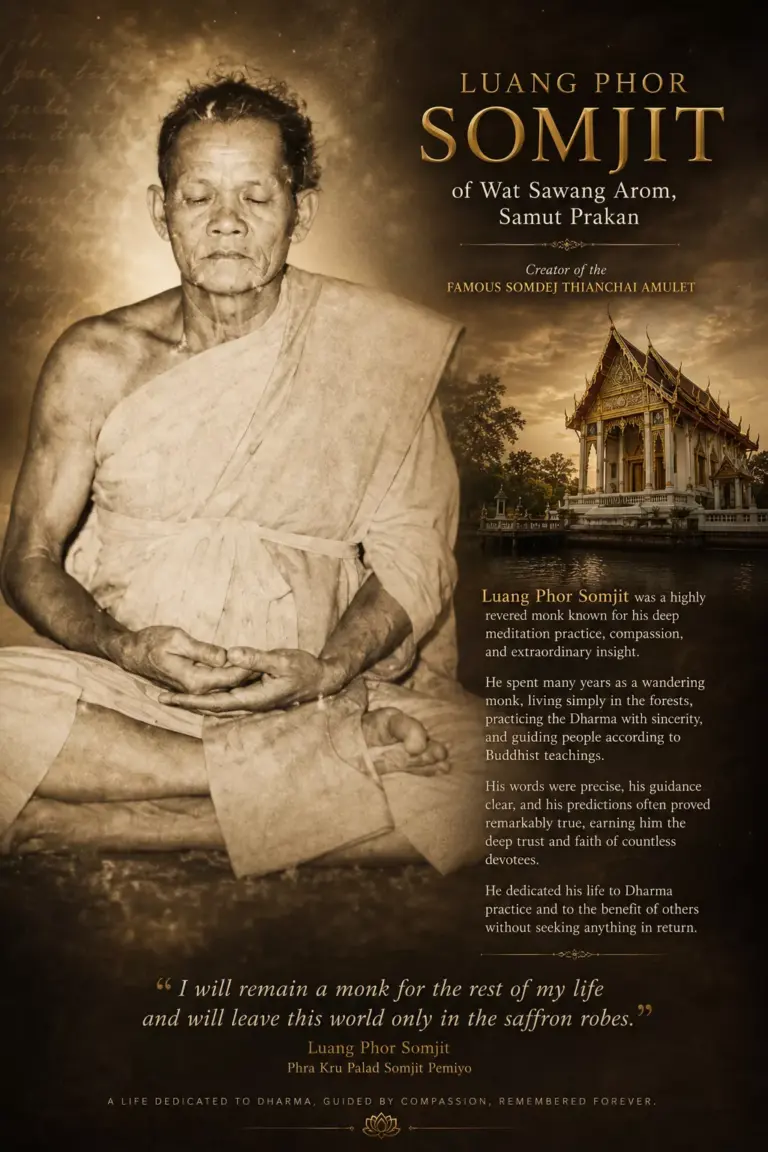
Luang Phor Somchit (หลวงพ่อสมจิตต์), formally known as Phra Kru Palad Somjit Pemiyo (พระครูปลัดสมจิตต์ เปมิโย), was born on 19 June BE 2462 (AD 1919) into the Yaemkhwanyuen family in the Yannawa area of Thonburi, Bangkok. He served as the fifth abbot of Wat Sawang Arom (วัดสว่างอารมณ์), Khlong Dan, Samut Prakan (สมุทรปราการ), and is best known among collectors as the creator of the revered Somdej Thianchai (สมเด็จเทียนชัย) amulet. Read more ↓
Amulets by Luang Phor Somchit 1 total · 1 available
Biography
Who Was Luang Phor Somchit?
Luang Phor Somchit (หลวงพ่อสมจิตต์), formally known as Phra Kru Palad Somjit Pemiyo (พระครูปลัดสมจิตต์ เปมิโย), was born on 19 June BE 2462 (AD 1919) into the Yaemkhwanyuen family in the Yannawa area of Thonburi, Bangkok. He served as the fifth abbot of Wat Sawang Arom (วัดสว่างอารมณ์), Khlong Dan, Samut Prakan (สมุทรปราการ), and is best known among collectors as the creator of the revered Somdej Thianchai (สมเด็จเทียนชัย) amulet.
Early Life and Ordination
Phra Kru Palad Somjit Pemiyo, formerly known as Mr. Somjit Yaemkhwanyuen (นายสมจิตต์ แย้มขวัญยืน), was born on 19 June BE 2462 (AD 1919). His father was Mr. Taem Yaemkhwanyuen (นายแตม แย้มขวัญยืน) and his mother was Mrs. Banjong Yaemkhwanyuen (นางบรรจง แย้มขวัญยืน). He had one younger brother, Mr. Boonjuea Yaemkhwanyuen (นายบุญเจือ แย้มขวัญยืน). The family lived in the Yannawa (ยานนาวา) area of Thonburi (ธนบุรี), Bangkok.
At the age of 12, young Somjit left home and disappeared without any news. His family searched for him but eventually, after many years, came to believe that he had passed away. Then, in BE 2497 (AD 1954), a monk appeared at the family home asking for Mr. Taem and Mrs. Banjong. He introduced himself as Somjit — the eldest son who had been missing for approximately 24 years. The family was stunned by his return. His mother, Mrs. Banjong, had by that time completely lost her eyesight and was unable to see him. She reached out with both hands to touch his face and confirm that the monk standing before her was truly her son. Overcome with emotion, he made a solemn vow at that moment: “I will remain a monk for the rest of my life and will leave this world only in the saffron robes.” Exact details of the date and location of his formal ordination are not widely documented in English sources.
Spiritual Development and Practice
Following his emotional reunion with his family in BE 2497 (AD 1954) and the solemn vow he made to remain in robes for life, Luang Phor Somjit (หลวงพ่อสมจิตต์) devoted himself fully to the practice of Dharma (ธรรม) and undertook strict ascetic journeys known in Thai tradition as thudong (ธุดงค์). He dedicated the spiritual merit earned from these wanderings to his parents and relatives as a way of repaying them for the worry and suffering caused by his long disappearance.
During his years as a wandering monk, Ajarn Somjit (อาจารย์สมจิตต์) would settle in remote meditation huts built far from villages and communities. Despite the isolation, local villagers would hear of his presence and travel to offer alms and daily necessities. His practice combined deep meditative concentration with the cultivation of compassionate guidance for lay followers, reflecting a tradition common among revered forest-lineage masters of central and lower-central Thailand. He was widely recognised for the precision of his forecasts and guidance — qualities that his disciples attributed to the depth of his meditation and accumulated barami (บารมี), or spiritual perfection. His teachers and the specific lineage transmission he received are not widely documented in English sources, though his conduct and abilities place him firmly within the respected kammatthana (กัมมัฏฐาน) meditation tradition.
Major Amulet Consecrations and Ceremonies
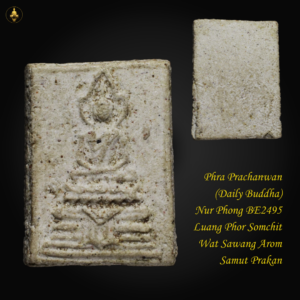
Luang Phor Somjit is most celebrated in the amulet collector community as the creator of the Somdej Thianchai (สมเด็จเทียนชัย) amulet, which remains the amulet type most closely associated with his name and with Wat Sawang Arom. General amulet types known to have been produced under his authority include phra somdej (พระสมเด็จ), roop muean (รูปเหมือน), and rian (เหรียญ) coin-style amulets. Specific batch records — including BE year of consecration, detailed batch names, materials composition, and ceremony particulars — are not widely documented in English sources. Collectors seeking verified batch-level information are advised to consult Thai-language temple records at Wat Sawang Arom or specialist Thai amulet periodicals. TAC will update this record as authenticated documentation becomes available.
Legacy and Temple Significance
Luang Phor Somjit served as the fifth abbot of Wat Sawang Arom (วัดสว่างอารมณ์), located near the mouth of Ban Lang Bay (อ่าวบ้านหลาง) in Khlong Dan (คลองด่าน), Samut Prakan (สมุทรปราการ). Upon taking up the abbotship in BE 2500 (AD 1957), he found the original ordination hall — built during the era of Luang Phor Pan (หลวงพ่อปาน), an earlier abbot — in a state of severe deterioration. Recognising the need for renewal, he initiated the construction of a new ordination hall at the location where it stands to this day, leaving a lasting architectural and spiritual mark on the temple.
The temple fire of BE 2517 (AD 1974), in which Luang Phor Somjit remained seated in meditation as flames consumed the main pavilion while his own quarters survived, became one of the most widely recounted stories among his disciples and strengthened the profound faith that devotees held in him. He received the ecclesiastical title of Phra Kru Palad (พระครูปลัด) in recognition of his religious standing. Throughout his life, disciples travelled from both nearby and distant provinces to seek his guidance. Today, he is venerated at Wat Sawang Arom, and his memory is maintained by a dedicated community of devotees and collectors who regard his amulets as objects of both spiritual potency and significant collector value.