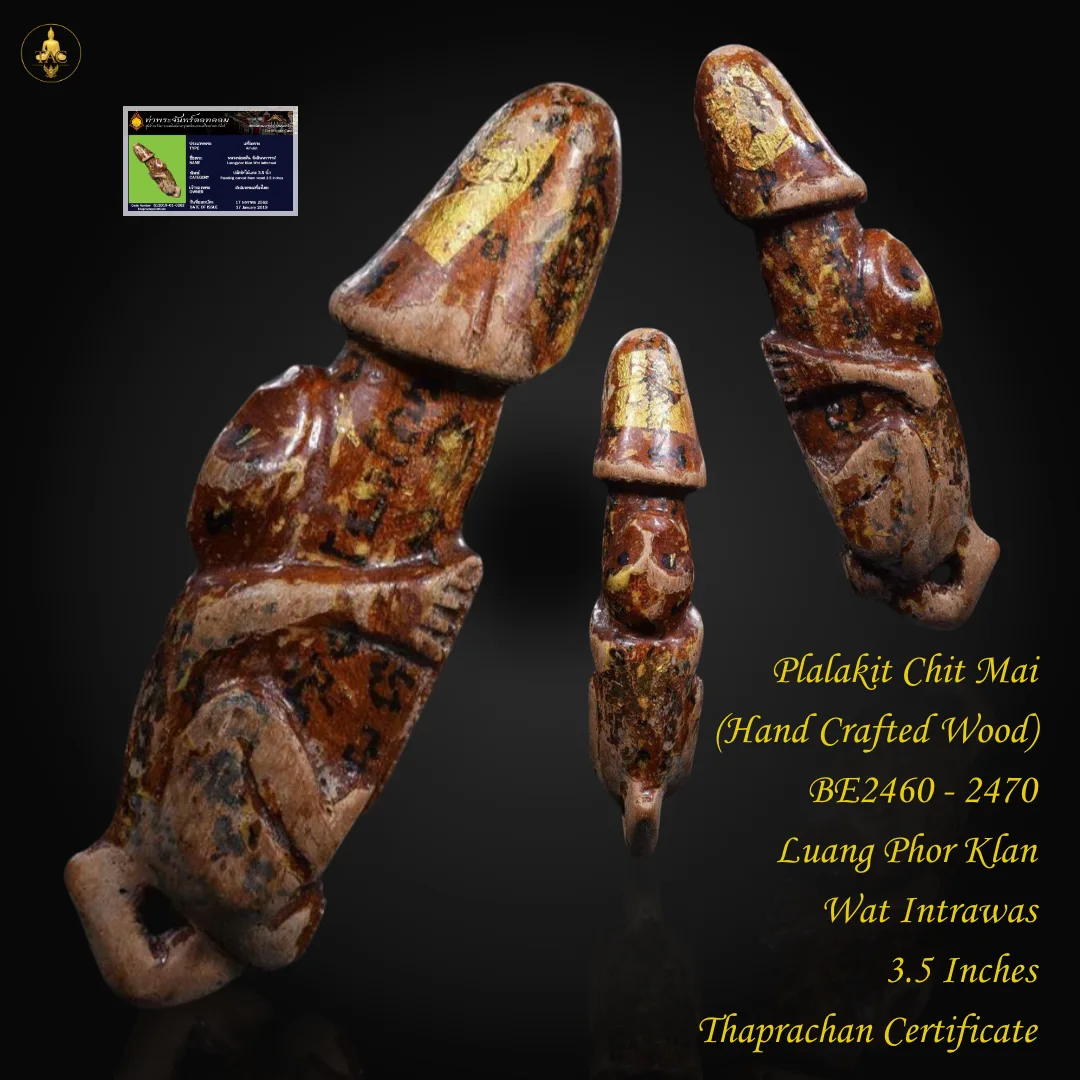
Palakit Chit Mai (Hand Crafted Wood) BE2460 – 2470 Luang Phor Klan Wat Intrawas 3.5 Inches
$688.00
Plalakit Chit Mai • Hand Crafted Wood
BE2460–2470 / circa CE1917–1927 • Wat Intrawas • Associated with Luang Phor Klan • Old hand-carved Palad Khik lineage
Overview of the antique han
Description
Plalakit Chit Mai • Hand Crafted Wood
BE2460–2470 / circa CE1917–1927 • Wat Intrawas • Associated with Luang Phor Klan • Old hand-carved Palad Khik lineage
Overview of the antique hand-crafted wooden Plalakit attributed to Luang Phor Klan of Wat Intrawas, presented together with Thaprachan certification.
What This Piece Represents (Collector Lens)
Old hand-carved wooden Plalakit pieces occupy a distinctive place in Thai amulet culture because each example carries not only ritual identity but also the marks of direct workmanship. Unlike later cast pieces, a carved chit mai specimen preserves the hand of the maker through knife lines, asymmetry, wood grain behavior, and age-worn contours. Collectors value these details because they turn the object into both a sacred amulet and a material record of early craftsmanship. When such a piece is associated with Luang Phor Klan and Wat Intrawas, it gains added importance within the study of old Palad Khik lineages.
Amulet Information
Name: Plalakit Chit Mai
Material: Hand Crafted Wood (old wood carving)
Year: BE2460–2470 / circa CE1917–1927
Temple: Wat Intrawas
Monk: Luang Phor Klan
Size: Approximately 3.5 inches
Authentication: Thaprachan certificate
Lineage Note: An early old-wood Plalakit associated with Luang Phor Klan’s traditional hand-carved Palad Khik current.
SKU: TAC-LPKlan-PlalakitChitMai-BE2460-2470-001
Price:
SGD 688
History & Lineage — Plalakit Chit Mai (Wat Intrawas)
This wooden Plalakit is presented as an early piece from around BE2460–2470, associated with Luang Phor Klan of Wat Intrawas. In Thai amulet history, older Palad Khik pieces are often studied through material, handwork, shape vocabulary, and lineage reputation rather than modern factory consistency. That is especially true for wood-carved examples, where the individuality of each piece becomes part of the evidence and the appeal.
Luang Phor Klan’s name carries weight among devotees and collectors who study older protective and charisma-oriented amulet traditions. A hand-carved wooden specimen from this era is significant because it reflects a period when sacred objects were still frequently shaped one by one, rather than produced as standardized series. In collector language, that makes each genuine old example a more intimate witness to the ritual and workshop culture of its time.
Wat Intrawas is therefore important not merely as a location but as a lineage anchor. For older amulets, temple identity often provides the framework through which material, era, and devotional use are understood. In this case, the Thaprachan certificate further supports the presentation of the piece within a recognized collector context.
About the Material — Old Hand-Crafted Wood
Wood is a particularly revealing amulet material because it records age differently from metal or clay. Old wooden amulets may show grain movement, natural darkening, oxidation from handling, micro-shrinkage, softened edges, and surface polish from long devotional contact. These are not flaws in the collector sense. On the contrary, they are often precisely the features that make a genuinely old wooden piece feel convincing and alive.
Because this is described as hand crafted, the carving itself becomes part of the study. Collectors typically examine cutting rhythm, transitions between carved planes, proportional irregularities, and how the wood grain interacts with the sculpted form. A real old carved piece rarely feels mechanically perfect, and that absence of rigid symmetry is often part of its authenticity language.
- Old wood body with hand-carved individuality rather than cast uniformity.
- Collectors commonly look for age-consistent grain behavior, darkening, wear, and tactile maturity.
- Knife work and proportion shifts can act as evidence cues of genuine hand craftsmanship.
Design / Form / Variant Notes
The form follows the traditional Palad Khik vocabulary but is expressed here in old carved wood rather than later metal or resin-based formats. That matters because the wooden body gives the piece a softer and more organic visual presence. Instead of crisp industrial boundaries, the amulet reads through contour, touch, and the natural language of the material itself. This is one reason old wooden Plalakit pieces can feel especially intimate and highly personal in a collection.
Alternate side angle helping collectors observe carving rhythm, wood aging, and structural balance.
Front view reference showing the central carved profile and the mature surface tone of the old wood.
Thaprachan certificate accompanying the piece, supporting collector documentation and provenance presentation.
Traditional Spiritual Attributes & Metaphysical Properties
In Thai amulet culture, old Plalakit pieces are traditionally approached as sacred objects associated with protection, courage, personal confidence, and persuasive presence. Wooden examples often carry an especially intimate devotional feeling because they are materially warm, tactile, and visibly handmade. These qualities are part of traditional belief and collector interpretation rather than measurable claims.
- Protection: Devotees often keep older Plalakit amulets for safeguarding and spiritual resilience.
- Confidence & Presence: Traditional belief associates Palad Khik lineages with steadier courage and stronger personal bearing.
- Metta & Favorable Relations: Some devotees value such pieces for supportive human interactions and social goodwill.
Rarity & Collector Significance — Plalakit Chit Mai
The rarity of this piece lies in three converging factors: old age, hand-carved wooden material, and attribution to a respected lineage associated with Luang Phor Klan. Wooden amulets are inherently vulnerable to time, humidity, wear, and handling, which means genuinely old surviving examples are often much scarcer than later metal counterparts. When a piece still shows coherent structure, convincing age, and certificate-supported presentation, it naturally draws stronger collector interest.
Conclusion
This Plalakit Chit Mai attributed to Luang Phor Klan of Wat Intrawas is important not only as a devotional amulet, but also as an old carved object that preserves the physical language of earlier Thai craftsmanship. Its age range, 3.5-inch carved form, old wood body, and Thaprachan certificate give it both collector credibility and strong traditional presence. For students of Thai amulet culture, it offers a concise example of how material, workmanship, lineage, and devotional history can meet in one surviving object.
Reviews
There are no reviews yet.