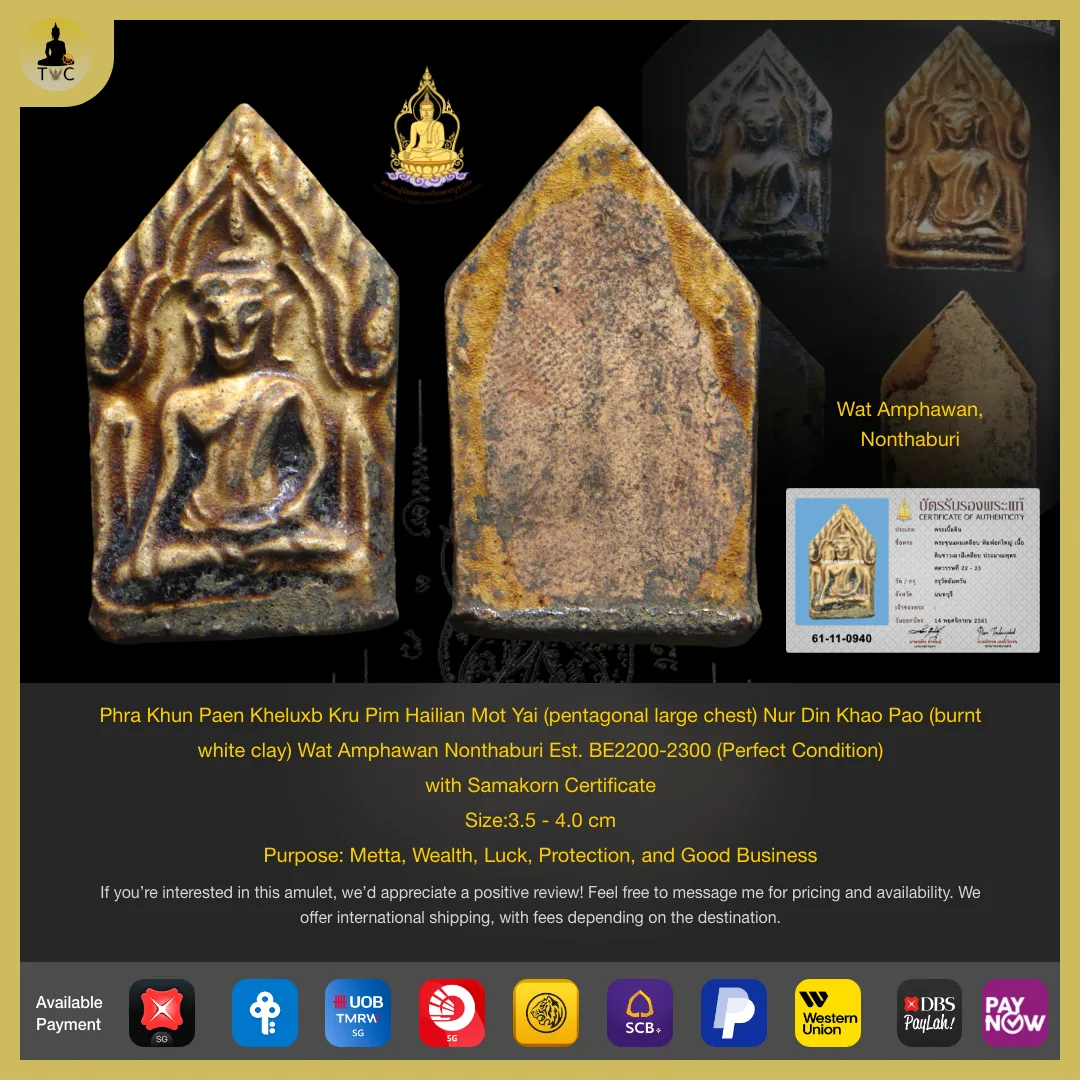
Phra Khun Paen Kheluxb Kru Pim Hailian Mot Yai (pentagonal large chest) Nur Din Khao Pao Wat Amphawan Nonthaburi BE2200-2300 (Perfect Condition)
$1,638.00
Phra Khun Paen Kheluxb Kru Pim Hailian Mot Yai • Nur Din Khao Pao
BE2200-2300 • Wat Amphawan, Nonthaburi • Samakorn certificate • Perfect Condition
Overview of an old Phra Khun Paen Kheluxb K
Description
Phra Khun Paen Kheluxb Kru Pim Hailian Mot Yai • Nur Din Khao Pao
BE2200-2300 • Wat Amphawan, Nonthaburi • Samakorn certificate • Perfect Condition
Overview of an old Phra Khun Paen Kheluxb Kru identified in the listing as the Pim Hailian Mot Yai variation from Wat Amphawan, Nonthaburi, with Samakorn certification and perfect-condition note retained in the listing presentation.
What This Piece Represents (Collector Lens)
In Thai amulet culture, Phra Khun Paen pieces are among the most studied and admired amulet families, especially when they appear in old kru (กรุ, crypt-find) form. This example is identified in the listing as a Phra Khun Paen Kheluxb Kru Pim Hailian Mot Yai, a pentagonal large-chest variant associated with Wat Amphawan, Nonthaburi and dated to the late Ayutthaya period range of BE2200-2300.
Collectors typically approach a piece like this through three layers: its old crypt-find identity, the specific pim or form, and the clay body described as nur din khao pao (เนื้อดินขาวเผา, burnt white clay). The combination of old-period dating, preserved detail, named variant, and Samakorn certificate makes it a serious collector piece rather than a decorative amulet alone.
Amulet Information
Name: Phra Khun Paen Kheluxb Kru Pim Hailian Mot Yai
Type / Pim / Variant: Pentagonal large chest (Pim Hailian Mot Yai)
Material: Nur Din Khao Pao (burnt white clay)
Year (BE): 2200-2300
Monk / Ajahn (primary): Not available
Temple: Wat Amphawan
Province: Nonthaburi
Certification / Proof: Samakorn certificate
Key Spiritual Focus: Traditionally associated in Thai amulet culture with charm, protection, influence, and auspicious support
SKU: TAC-WatAmphawan-PhraKhunPaenKheluxbKru-001
Price:
SGD 1638
About Material
The listing identifies the material as nur din khao pao, or burnt white clay. In collector terms, this points to a fired clay body with old-age texture, mineral dryness, and a naturally settled surface. For ancient kru pieces, collectors usually look for maturity in the clay, protected recess tone, firing character, and how the surface sits consistently across the full body of the amulet.
- เนื้อดิน (Din): Clay-body amulets are often studied through compression, dryness, mineral grain, and age-consistent patina.
- เผา (Pao): A fired body typically shows a more durable structure and mature surface behaviour than unfired earth material.
- Collectors usually compare edge stability, recessed areas, and the natural spread of age rather than relying on one single evidence point alone.
Design / Pim / Variant
The variant named here is Pim Hailian Mot Yai, described in the listing as a pentagonal large-chest form. In Thai amulet culture, pim differences matter because they help distinguish one recognized crypt-find type from another. Collectors typically study the chest proportion, silhouette, border geometry, and the balance of the seated Khun Paen figure when comparing this variation against other old Wat Amphawan finds.
Traditional Spiritual Attributes & Metaphysical Properties
In Thai amulet culture, Phra Khun Paen pieces are often spoken of through traditional attributes such as เมตตา (metta, goodwill / affectionate regard), คุ้มครอง (khumkhrong, protection), and มหาลาภ (mahalap, great fortune). Devotees often wear Khun Paen amulets as part of bun (บุญ, merit), devotional remembrance, and disciplined personal faith rather than as guarantees of outcome.
- เมตตา (Metta): Traditionally linked with warmth, social ease, and favourable human interaction.
- คุ้มครอง (Khumkhrong): Commonly associated with protective presence and guarded well-being.
- มหาลาภ (Mahalap): In Thai amulet language, often used for auspicious support, opportunity, and fortunate flow.
Rarity Assessment & Collector Significance
The collector significance of this piece comes from several layers working together: old-period attribution, kru status, a clearly named variant, strong preservation, and Samakorn certification. The listing also notes perfect condition, which matters because old clay crypt-find amulets often survive with varying degrees of wear, edge loss, mineral erosion, or softened details.
In collector practice, well-preserved ancient Khun Paen pieces from Wat Amphawan are not treated casually. Even without exact surviving population figures, pieces that combine named pim, coherent old clay character, and respected certification are typically placed in the higher-interest category for serious old-amulet collectors.
Conclusion
This is a strong collector example of an old Wat Amphawan Phra Khun Paen Kheluxb Kru in nur din khao pao, presented with an identified Pim Hailian Mot Yai variation, perfect-condition note, and Samakorn certificate. For collectors, its appeal lies in the combination of age, form, material discipline, and preserved evidence rather than in modern hype.
Front view for studying body balance, frame shape, and preserved relief.
Reverse view for reading clay maturity, backing texture, and overall condition consistency.
Samakorn certificate image retained with the listing as part of the provenance presentation.
Reviews
There are no reviews yet.