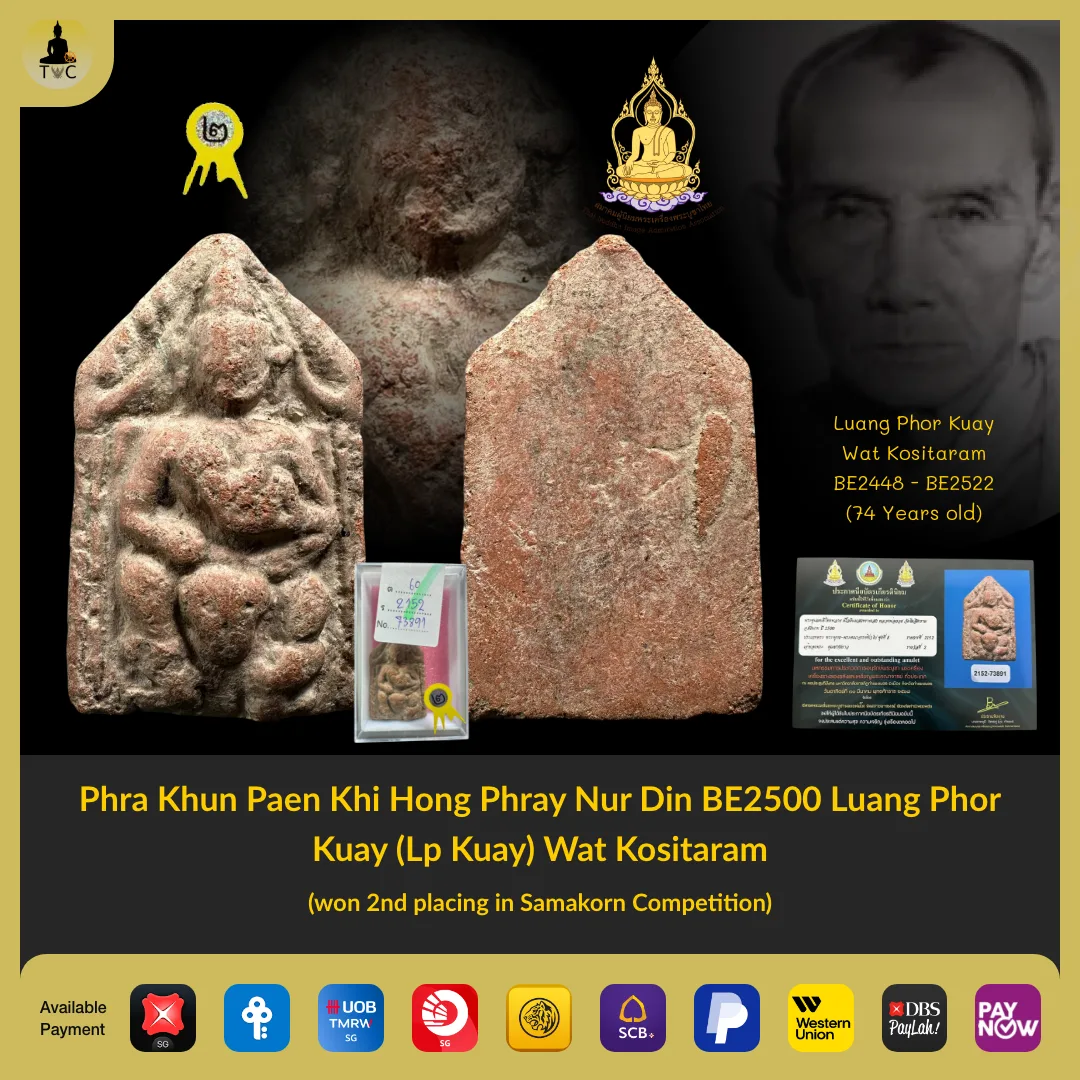
Phra Khun Paen Khi Hong Phray Nur Din BE2500 Luang Phor Kuay (Lp Kuay) Wat Kositaram
$488.00
Phra Khun Paen Khi Hong Phray • Nur Din
BE2500 / CE1957 • Wat Kositaram, Chai Nat • Consecrated by Luang Phor Kuay • Associated with the Wat Kositaram Khun Paen lineage
Overview of th
Description
Phra Khun Paen Khi Hong Phray • Nur Din
BE2500 / CE1957 • Wat Kositaram, Chai Nat • Consecrated by Luang Phor Kuay • Associated with the Wat Kositaram Khun Paen lineage
Overview of the amulet together with supporting presentation images and certificate reference for collector study.
What This Piece Represents (Collector Lens)
Among the Khun Paen issues associated with Luang Phor Kuay, the Phra Khun Paen Khi Hong Phray stands out for both imagery and spiritual reputation. The image of Khun Paen riding the mystical Hong bird gives the amulet an elevated symbolic character, linking it with nobility, presence, movement, and commanding charisma. For collectors, this is not merely a decorative variation. It is a phim that carries narrative force, one that blends the romance and authority of the Khun Paen legend with the distinctive ritual reputation of LP Kuay. Pieces of this kind are especially appreciated when the clay body remains stable, the molded details still read clearly, and the overall aura retains the old-school Wat Kositaram character that devotees know so well.
Amulet Information
Name: Phra Khun Paen Khi Hong Phray
Material: Nur Din (sacred clay composite)
Year: BE2500 / CE1957
Temple: Wat Kositaram, Chai Nat
Province: Chai Nat
Monk: Luang Phor Kuay (LP Kuay)
Lineage Note: A respected Khun Paen issue in the ritual lineage of Luang Phor Kuay, associated with charm, protection, prosperity, and support from benefactors.
Competition Note: Presented with Samakorn competition recognition in the supplied image set.
SKU: TAC-LPKuay-KhunPaenKhiHongPhray-BE2500-001
Price:
SGD 488
History & Lineage — Phra Khun Paen Khi Hong Phray (Wat Kositaram, Chai Nat)
The BE2500 period sits within one of the most admired eras of Luang Phor Kuay’s amulet production. Devotees remember LP Kuay not only as a monk of deep compassion, but also as an expert in practical sacred arts whose amulets were made to help ordinary people navigate the realities of life. Wat Kositaram, his temple in Chai Nat, became widely respected because its amulets were seen as grounded in real ritual discipline rather than market ornament. That reputation continues to shape collector demand today.
Within that broader legacy, Khun Paen amulets hold a special place. In Thai amulet culture, Khun Paen is not simply a literary hero. He represents courage, worldly intelligence, attraction, and social influence. When such imagery is combined with LP Kuay’s blessing lineage, the result is an amulet long associated with metta mahaniyom, authority, and practical support in dealings with others. The “Khi Hong Phray” variation adds another layer of distinction through the dynamic image of the sacred bird mount, enhancing the amulet’s status as a memorable and symbolically rich issue.
Collectors often place this amulet among the more interesting Khun Paen-related presentations from LP Kuay because of the strength of its iconography, the age period, and the continuing esteem surrounding Wat Kositaram material. When accompanied by documentation or competition recognition, such examples become even more desirable as study pieces within a serious LP Kuay collection.
About the Material — Nur Din Composition
The amulet is described as nur din, an earth-based sacred clay composition. In collector practice, that term usually suggests more than ordinary pottery clay. It often refers to a ritual mixture incorporating selected soil, sacred powders, older devotional fragments, and other temple substances brought together for consecration use. A well-aged nur din body is typically appreciated for its dry maturity, natural pore structure, slight texture variation, and overall coherence of the pressed form. These qualities help distinguish old temple-made clay amulets from later reproductions that can appear too uniform or too fresh.
- Nur Din clay matrix associated with sacred powders and ritual admixtures.
- Traditional references include phong bailan and other temple-blessed substances in the composition narrative.
- Collector interest focuses on age-consistent clay character, natural texture, and honest mold definition.
Design / Pim / Variant Notes
What gives this piece its immediate identity is the unusual and compelling image of Khun Paen riding the Hong bird. In amulet study, such a design is memorable because it communicates movement, rank, and auspicious elevation at a glance. The front composition is more than symbolic decoration; it is part of the amulet’s collector language. The reverse, with its yantra-based presentation, reinforces the sacred function of the piece by balancing visual mythic imagery on one side with ritual geometry on the other. Together, the two sides create a complete devotional object: narrative in front, sacred structure behind.
Consecration & Ritual Empowerment
According to the provided information, the batch was consecrated under Luang Phor Kuay’s direct supervision and formed part of the temple’s sacred amulet tradition in BE2500. In Thai amulet culture, the importance of consecration lies not only in ceremonial formality, but in the monk’s meditative attainment, intention, and continuity of blessing. LP Kuay’s amulets are especially treasured because devotees believe his empowerment work was sincere, disciplined, and spiritually effective. This explains why even decades later, his amulets continue to attract both seasoned collectors and believers who value function as much as history.
Traditional Spiritual Attributes & Metaphysical Properties
Within Thai devotional belief, this amulet is traditionally associated with a blend of charisma, protection, prosperity, and influential support. Khun Paen amulets are widely linked to metta and social magnetism, while LP Kuay’s reputation adds a further dimension of practical spiritual protection and good fortune. The image of the Hong bird also strengthens the symbolic reading of elevation, prestige, and recognition. These meanings belong to the living culture of Thai amulet belief and should be understood as matters of faith and tradition rather than measurable guarantees.
- เมตตามหานิยม (metta mahaniyom): Traditionally valued for charm, attraction, goodwill, and smoother human relationships.
- แคล้วคลาด (klaew klad): Understood as protective blessing and avoidance of danger or misfortune.
- โชคลาภ (chok larp): Associated with prosperity, fortunate opportunities, and beneficial outcomes.
- ผู้ใหญ่สนับสนุน: A traditional belief that influential people, benefactors, or superiors may offer support more readily.
Rarity & Collector Significance — Phra Khun Paen Khi Hong Phray BE2500
This amulet is considered desirable because it brings together several strong collector factors in one piece: Luang Phor Kuay attribution, the respected Wat Kositaram lineage, the BE2500 era, an unusual Khun Paen-on-Hong motif, and competition-related presentation in the supplied images. These points matter because advanced collectors increasingly look for amulets that offer more than generic scarcity. They look for pieces with identifiable character, strong temple association, and meaningful symbolism. The inclusion of Samakorn competition recognition in the photo set further strengthens presentation value and makes the piece especially appealing as part of a curated LP Kuay collection.
Conclusion
Phra Khun Paen Khi Hong Phray Nur Din BE2500 is the kind of LP Kuay amulet that speaks to both heart and scholarship. It carries vivid imagery, strong ritual identity, and the enduring respect of Wat Kositaram’s sacred tradition. For devotees, it is a piece long associated with charm, protection, prosperity, and noble support. For collectors, it offers typological interest, age-period significance, and a memorable place within the broader study of Luang Phor Kuay amulets.
Front detail highlighting Khun Paen riding the Hong bird, one of the defining visual features of this respected phim.
Reverse side showing the sacred yantra arrangement, an important feature for both devotional and collector study.
Competition-related presentation image showing Samakorn recognition, reinforcing the amulet’s collector appeal.
Additional presentation image of the amulet with competition certificate display for reference.
Reviews
There are no reviews yet.