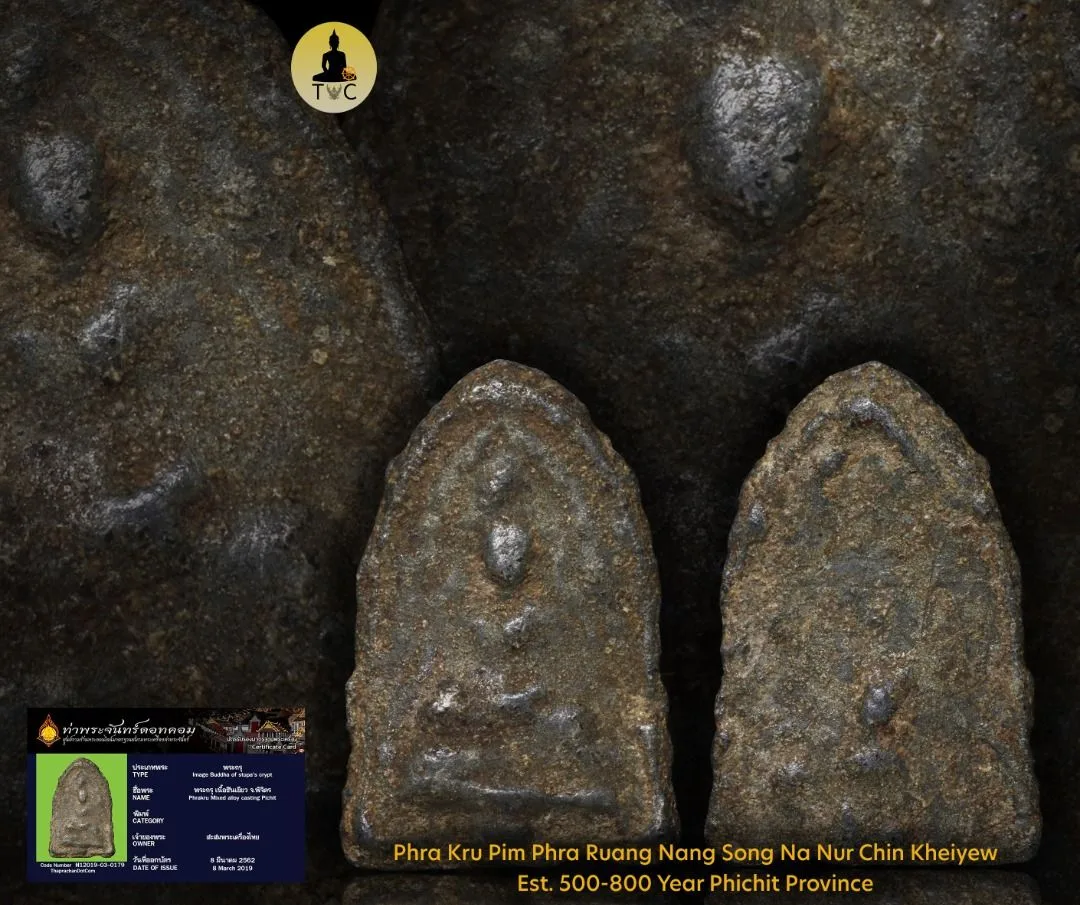
Phra Kru Pim Phra Ruang Nang Song Na Nur Chin Kheiyew Phichit Est 500-800 Year
$588.00
Phra Kru Pim Phra Ruang Nang • Song Na
Sitting Buddha Position • Nur Chin Kheiyew • Phichit provenance (as stated) • Est. 500–800 years • With Thaprachan certificate
Phra Kru Pim Phra Ruan
Description
Phra Kru Pim Phra Ruang Nang • Song Na
Sitting Buddha Position • Nur Chin Kheiyew • Phichit provenance (as stated) • Est. 500–800 years • With Thaprachan certificate
Phra Kru Pim Phra Ruang Nang — Song Na (double-sided) “Sitting Buddha” posture. This post documents the piece in a collector-academic tone.
What This Piece Represents (Collector Lens)
“Song Na” (สองหน้า) amulets are admired because they demand craft discipline: two readable faces on one object, with balanced relief and
stable proportions. In the Phra Ruang family, the visual language tends to be calm and upright — not ornate — and that restraint is exactly
what collectors respect. This piece is presented as Nur Chin Kheiyew (greenish lead-based alloy) and linked to Phichit in the listing,
with an estimated age of 500–800 years. For older material, the collector’s job is to hold two truths together: respect the tradition,
and document what can be verified (surface, patina, pim structure, and certification trail).
Collector Identity Card
Name: Phra Kru Pim Phra Ruang Nang (Sitting Buddha) • Song Na (Double-Sided)
Category: Phra Ruang family-style (traditional/classic category framing)
Material: Nur Chin Kheiyew (greenish alloy) — as stated
Provenance Tag: Phichit (as stated)
Age Estimate: “500–800 years”
Certificate: Thaprachan
SKU: TAC-PRUANG-SONNA-CHK-PHICHIT-EST-500-800
Price:
SGD 588
Historical Context: “Phra Ruang” and Regional Classic Traditions
“Phra Ruang” is a broad collector category used for older, region-linked Buddha images and early-period devotional objects associated with
Northern and Central Thai heritage lines. Because naming conventions can vary across markets, temples, and certification descriptions,
the best approach is practical: document the pim (พิมพ์), confirm the material cues, and rely on the certificate as a reference anchor.
The age statement (500–800 years) should be understood as an informed estimate within the collecting ecosystem. For antique objects,
age is usually triangulated through: material behavior and oxidation, wear patterns, comparative pim studies, excavation/region stories
(when documented), and third-party certification notes. Without full lab reports, it remains an estimate — but it is still useful as a
collector framing when stated carefully.
Material Notes: Nur Chin Kheiyew (Greenish Alloy)
Nur Chin Kheiyew is a traditional collector term often used for older alloy compositions that develop a distinctive aged surface —
sometimes with greenish tonal behavior, deep oxidation, and “quiet” sheen rather than bright shine. For antiques, the surface is not just
appearance; it is a record. Collectors look for natural transitions in tone, micro-pitting consistent with age, and edges that show honest wear.
- What to look for: natural patina layers, stable oxidation, and consistent wear across high points.
- Avoid: aggressive polishing or chemical cleaning that can erase surface history.
- Best practice: store dry, avoid humidity, and handle with clean hands or cloth to preserve the aged skin.
Pim Notes: Song Na (Double-Sided) Structure
“Song Na” pieces are evaluated differently from single-face amulets. A strong example usually shows: (1) readable posture on both sides,
(2) balanced thickness, (3) alignment and symmetry that feels intentional rather than accidental, and (4) stable rim and border behavior.
The sitting posture here reads as “stillness and composure,” a visual signature that collectors often associate with grounded protection.
Traditional Spiritual Attributes & Metaphysical Framing
In Thai devotional culture, older Buddha-form amulets are often approached as “quiet power” pieces — associated with protection, steadiness,
and mental clarity. The belief framing is usually tied to conduct: keeping precepts, practicing generosity, and maintaining composure.
For collectors, it is best to present these benefits respectfully as tradition, not as promises.
- Protection (คุ้มครอง): traditionally linked to safety and warding off misfortune (belief-based).
- Stability: supports calm decision-making, especially during uncertainty.
- Merit alignment: often paired with prayer, mindfulness, and consistent good deeds.
Rarity Assessment & Collector Significance
When a piece is framed as “500–800 years,” rarity is not just “how many exist” — it becomes about survivorship: how many remain in readable
condition, with stable surfaces, and with credible documentation. The Thaprachan certificate (as shown) is therefore a key part of this item’s
collector profile: it provides a reference trail that can be cross-checked in future transfers.
Front: posture clarity, border behavior, and surface “age skin.”
Back: second face readability and balance (Song Na construction).
Certificate reference image (Thaprachan) — key provenance anchor for future verification.
Disclaimer: This post is for education and collector appreciation. “Age estimate” and “benefits” are presented as traditional collector and devotional framing, not guarantees.
Please rely on independent verification and qualified expert opinions where needed.
Reviews
There are no reviews yet.