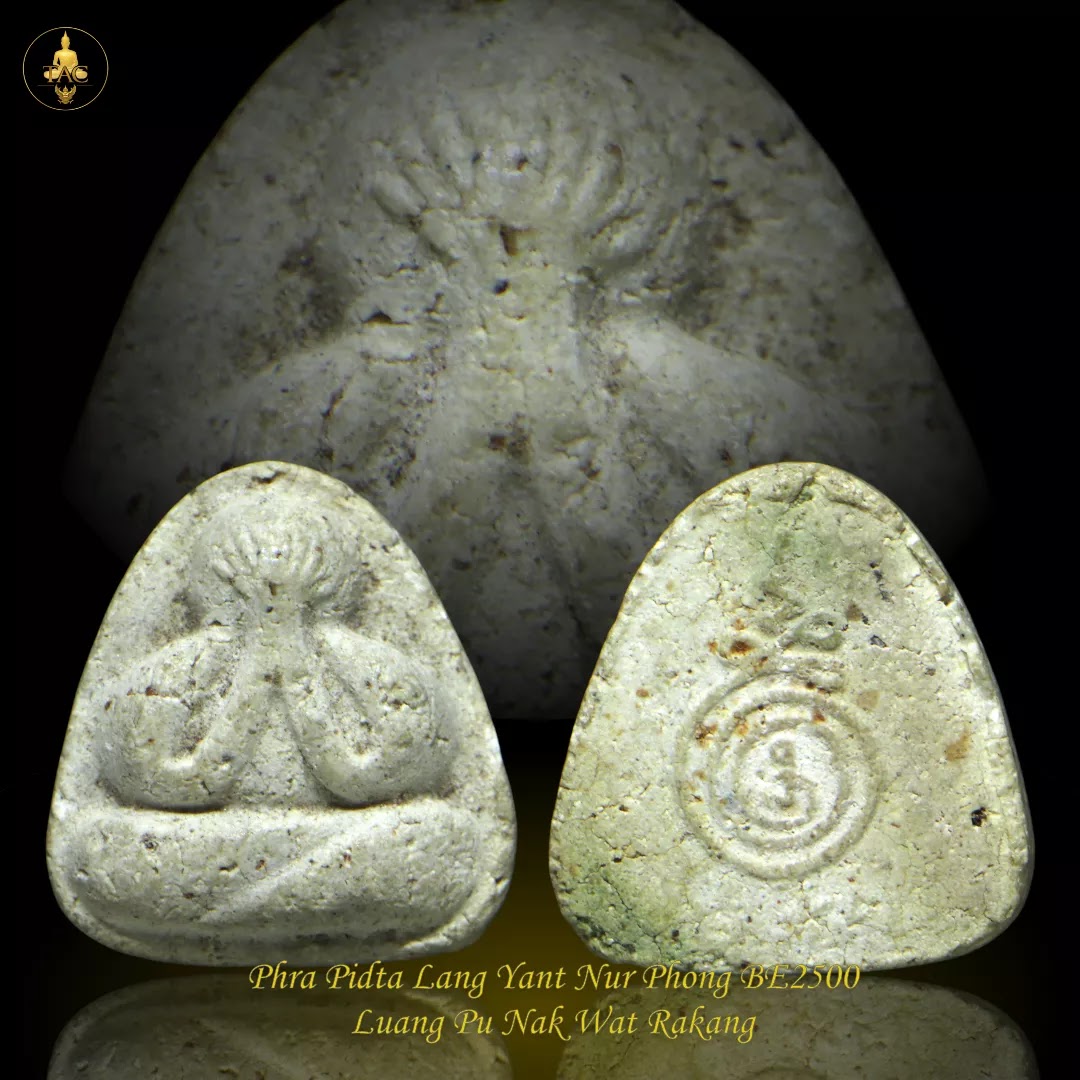
Phra Pidta Lang Yant Nur Phong BE2500 Luang Pu Nak Wat Rakang
$108.00
Phra Pidta Lang Yant • Nur Phong
BE2500 • Wat Rakang Kositaram (วัดระฆังโฆสิตาราม), Bangkok • Old-era Rakang powder line in the Luang Pu Nak (หลวงปู่นาค โสภโณ) period • “Lang Yant” back-marked
Phra Pidta (พระปิดต
Description
Phra Pidta Lang Yant • Nur Phong
BE2500 • Wat Rakang Kositaram (วัดระฆังโฆสิตาราม), Bangkok • Old-era Rakang powder line in the Luang Pu Nak (หลวงปู่นาค โสภโณ) period • “Lang Yant” back-marked
Phra Pidta (พระปิดตา) — the “closing off” Buddha form treasured for calm, protection, and inner steadiness; this piece is in Nur Phong (เนื้อผง) with Lang Yant (หลังยันต์) marking, attributed to the Wat Rakang line in BE2500.
What This Piece Represents (Collector Lens)
For collectors, “Pidta + Rakang + old powder + Lang Yant” is a very specific flavour. It’s not about loud design — it’s the temple identity and the era. BE2500 sits in that mid-century window when Wat Rakang pieces tied to senior monks became highly collectable, especially those in powder material that shows honest ageing. The Lang Yant back is also a collector cue: it signals a deliberate “wicha” presentation, where the yant is part of the identity, not an afterthought.
Amulet Information
Name: Phra Pidta Lang Yant (พระปิดตา หลังยันต์)
Material: Nur Phong (เนื้อผง)
Year (BE): 2500
Temple: Wat Rakang Kositaram, Bangkok
Monk: Luang Pu Nak Sophoṇo (หลวงปู่นาค โสภโณ) — period attribution commonly used by collectors for this line
Lineage Note: Collected under Wat Rakang’s famed sacred-text and Somdej-era heritage; Lang Yant pieces are typically appreciated as “wicha-forward” formats where the back yant is part of the amulet’s identity.
SKU: TAC-PIDTA-NAK-2500-PHONG-001
Price:
SGD 108
History & Lineage Context
Wat Rakang (วัดระฆังโฆสิตาราม) is a cornerstone name in Thai amulet history — not only because of its Somdej legacy, but because the wat continued producing collectable sacred objects across later eras, with senior monks overseeing blessings and transmission of temple wicha. Pidta is one of the classic “practical life” forms in Thai amulet culture, and when it appears in Rakang context, collectors often read it as a blend of temple heritage plus a focused personal-format amulet for daily carry.
Luang Pu Nak Sophoṇo is remembered among collectors as a major elder of the wat in the modern era. Biographical sources commonly describe him as born on 1 August 2427 BE (1884 CE), ordained at Wat Rakang in 2448 BE (1905 CE), and passing away in 2514 BE (1971 CE). Within Thai amulet circles, his name is frequently linked to Rakang-period powder lines and the careful handling of old texts and traditional methods that devotees associate with the wat’s “serious” side.
For a BE2500 Lang Yant Pidta in Nur Phong, collectors usually focus on three things: (1) the mould character (พิมพ์) and how the front lines sit, (2) the yant presence and clarity on the back, and (3) whether the powder surface shows coherent ageing across front/back/edge. This is why full-angle photos matter — they allow a proper collector read instead of relying on one glamour shot.
About the Material
Nur Phong (เนื้อผง) is a broad category for powder-based sacred material. In temple practice, powder amulets are often appreciated not only for iconography, but for how the material carries “age language” — dryness, patina, and natural wear that builds over decades. For Rakang-associated powder pieces, collectors also tend to pay attention to the overall “clean discipline” of the press: crispness where it should be crisp, and softening where time would naturally soften it.
- Collector cue: old Nur Phong often shows a calm, dry surface rather than a “fresh chalk” look.
- Handling cue: consistent wear across front and back usually reads more believable than uneven random rubbing.
- Format cue: Lang Yant pieces are often judged by yant presence + overall harmony with the front mould, not just one side alone.
Design / Pim / Variant Notes
Phra Pidta is recognised by the “closed eyes” posture — symbolically associated with shutting out distraction and steadying the mind. “Lang Yant” indicates the reverse carries a yantra (ยันต์), giving the piece a second layer of identity. In collector talk, this is often treated as a more “wicha-marked” variant compared to plain-back examples.
Traditional Spiritual Attributes & Metaphysical Properties
In Thai amulet tradition, Phra Pidta is commonly carried for protective, calming, and “shielding” intentions — not as a promise, but as a focus object for discipline and composure. When devotees describe a good Pidta, they often use everyday words: “quiet the mind,” “block off negativity,” and “keep things from disturbing you.” The Lang Yant back is typically viewed as reinforcing the protective framing through yantra symbolism.
- Protection framing: commonly associated with warding off negative influence and unseen disturbance (กันสิ่งไม่ดี / กันอัปมงคล).
- Inner steadiness: often carried to support calm focus, especially when life feels noisy or stressful.
- Barrier & privacy energy: many devotees like Pidta for “don’t let trouble enter,” paired with mindful conduct and merit.
Rarity Assessment & Collector Significance
BE2500-era Wat Rakang pieces linked to Luang Pu Nak are firmly within “serious collector territory,” especially when the presentation includes clear Lang Yant characteristics and coherent powder ageing. Rarity, in practice, is usually judged by how often comparable examples surface with similar mould feel and back-mark consistency, plus whether the surface tells a believable long-term storage story. This set is documented with overview plus front/back photos, which is the minimum collectors typically want before making a confident call.
Conclusion
This Phra Pidta Lang Yant in Nur Phong (BE2500) is a clean, classic Rakang-style collector piece — the kind valued for temple identity, mid-century era, and the “wicha-forward” Lang Yant format. It’s quiet in appearance, but culturally heavy in meaning: calm mind, protective framing, and Rakang lineage presence — exactly why Pidta remains a staple in serious Thai amulet collections.
Front view — mould lines (พิมพ์) and overall press character.
Back view — Lang Yant (หลังยันต์) marking and powder surface ageing.
Reviews
There are no reviews yet.