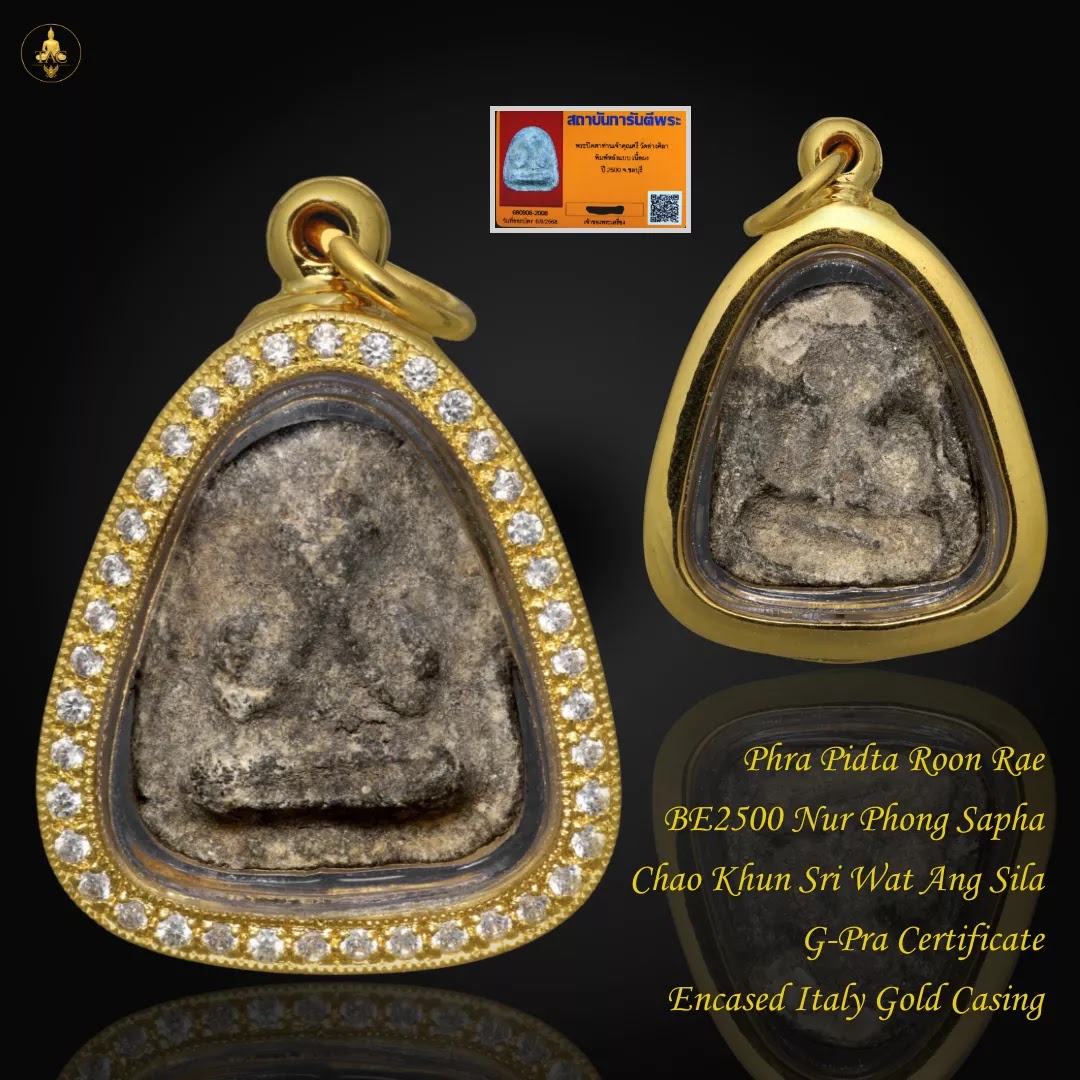
Phra Pidta Roon Rae Nur Phong Sapha BE2500 Nur Phong Sapha Chao Khun Sri Wat Ang Sila
$568.00
Phra Pidta Roon Rae • Nur Phong Sapha
BE2500 • Wat Ang Sila • Chao Khun Sri • G-Pra certified • Italy gold casing
Overview of the amulet in fitted casing, useful for studying overall form, surface
Description
Phra Pidta Roon Rae • Nur Phong Sapha
BE2500 • Wat Ang Sila • Chao Khun Sri • G-Pra certified • Italy gold casing
Overview of the amulet in fitted casing, useful for studying overall form, surface tone and collector presentation in the Thai amulet context.
What This Piece Represents (Collector Lens)
This piece represents a classic Phra Pidta collecting line from the mid-BE2500 period, presented here as a Nur Phong Sapha example linked in the listing to Wat Ang Sila and Chao Khun Sri. In Thai amulet culture, Phra Pidta images are often appreciated not only for devotional meaning but also for their compact sacred form, old-surface character and recognisable collector identity. For many collectors, the appeal here comes from the combination of period dating, named roon, powder material, third-party certification and a finished Italy gold casing that makes the piece ready for careful preservation.
Amulet Information
Name: Phra Pidta Roon Rae
Material: Nur Phong Sapha
Year (BE): 2500
Temple: Wat Ang Sila
Monk: Chao Khun Sri
Lineage Note: Listing notes present this as a Roon Rae example from Wat Ang Sila associated with Chao Khun Sri, accompanied by G-Pra certification and Italy gold casing.
SKU: Not available
Price:
SGD 568
History & Lineage Context
From the listing details, this amulet is identified as Phra Pidta Roon Rae, dated BE2500 and linked to Wat Ang Sila. Within collector language, a named early roon usually serves as an important reference point because it helps place the piece within a specific release identity and makes comparison with other examples more structured.
The listing attributes the piece to Chao Khun Sri. In Thai amulet study, such lineage notes matter because collectors often organise their research around the issuing temple, the senior monk named in the release, and the consistency of physical characteristics seen across surviving examples.
This example also comes with a G-Pra certificate. For many modern collectors, certification does not replace study, but it does add a useful layer of market confidence when viewed together with the amulet’s form, material character, casing fit and overall photographic record.
About the Material
Nur Phong Sapha refers to a powder-based composition. In collector practice, powder amulets are usually appreciated through surface softness, density, age expression, edge character and how the material responds to long-term handling and storage. Compared with metal pieces, this category often invites closer attention to texture and natural maturity of the surface.
- Powder material is typically studied through texture, compression marks and overall ageing character.
- Collectors often look at edges, recesses and protected areas to understand how the material has settled over time.
- When housed in casing, the visual balance between material tone and frame presentation also becomes part of collector appreciation.
Design / Pim / Variant Notes
As a Phra Pidta piece, the design belongs to a long-standing Thai iconographic family centred on the closed posture associated with inward composure and guarded stillness. For this example, collectors would normally study the silhouette, body proportions, surface flow, reverse character and the relationship between the amulet and its fitted casing. The Roon Rae naming in the listing gives the piece a clearer variant identity within its own collecting line.
Traditional Spiritual Attributes & Metaphysical Properties
In Thai amulet culture, Phra Pidta pieces are traditionally regarded as amulets of inward restraint, protection and composed awareness. Devotees often associate this form with คุ้มครอง (protective care), แคล้วคลาด (safe avoidance of harm) and เมตตา (gentle interpersonal goodwill). These meanings belong to devotional tradition and collector understanding, and are usually approached together with personal conduct, merit and respectful intention.
- Traditionally linked with protective symbolism and calm-minded presence in daily life.
- Often worn by devotees who value steadiness, discretion and a sense of spiritual shelter.
- Collectors typically frame such attributes as matters of faith, lineage respect and disciplined practice rather than guaranteed outcomes.
Rarity Assessment & Collector Significance
Based on the listing alone, the strongest points of collector significance are the BE2500 date, the named Roon Rae identity, the Nur Phong Sapha material, the Wat Ang Sila attribution, and the inclusion of G-Pra certification. Rather than making a hard rarity claim, it is more accurate to say this is the kind of piece that draws attention from collectors who prefer identifiable period powder amulets with supporting documentation and finished presentation. The Italy gold casing adds an extra layer of display and wearability, which can matter to collectors who want both preservation and refined visual framing.
Conclusion
This Phra Pidta Roon Rae example brings together several features collectors usually notice straight away: a clear period date, named release identity, powder composition, temple-linked listing details and third-party certification. Taken as a whole, it is a neat collector-format piece that sits comfortably within both devotional appreciation and traditional amulet study.
Front view for studying overall posture, massing and powder surface character.
Back view for checking reverse surface, contour and overall preservation.
Certificate image included in the listing as supporting reference documentation.
Reviews
There are no reviews yet.