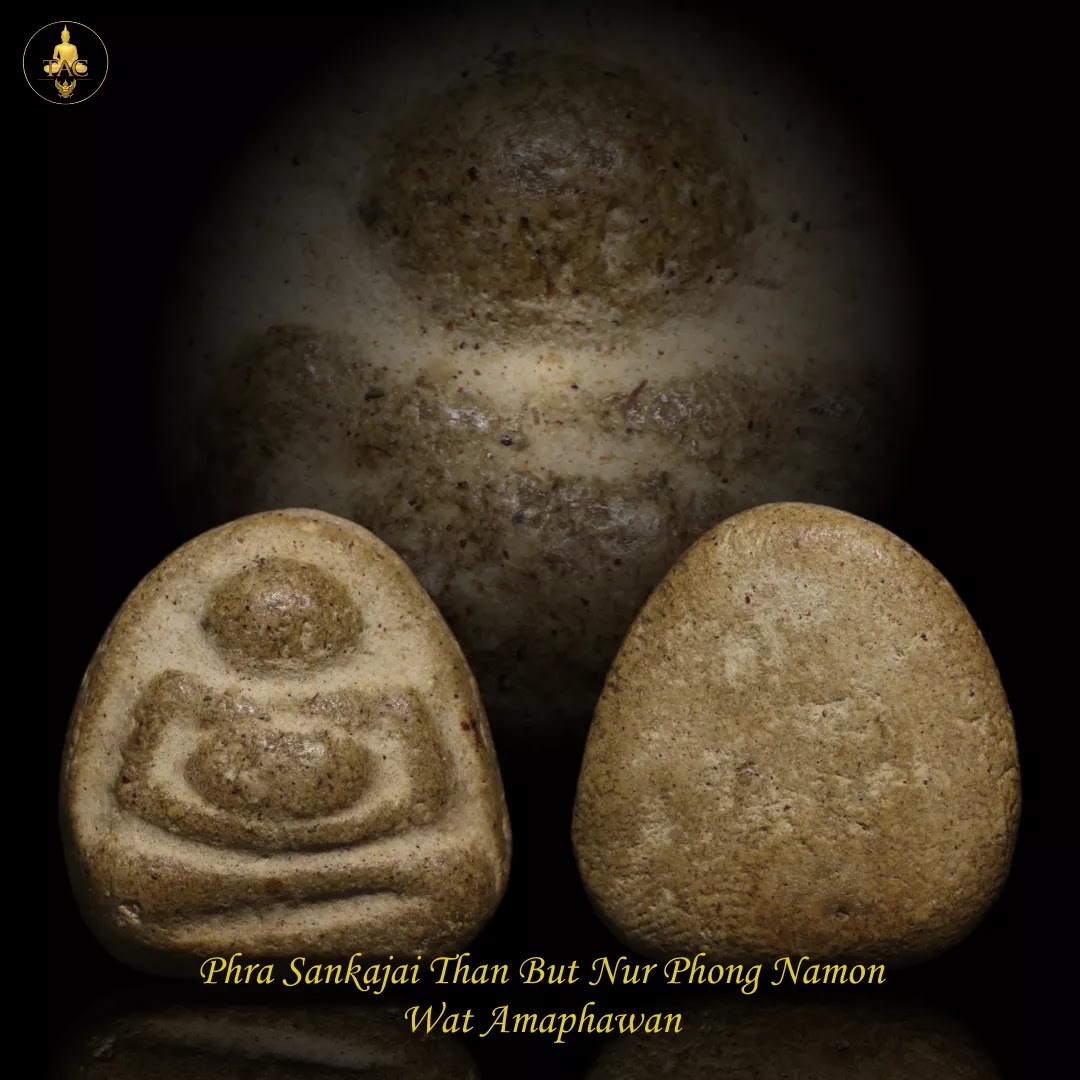
Phra Sankajai Than But Nur Phong Namon Wat Amphawan
$288.00
Phra Sangkatchai (Wat Amphawa) • Sacred Powder (Phong Namon)
BE2450 • Wat Amphawa (Thonburi, Bangkok) • Traditionally attributed around 1907 • Linked to Somdej Phra Phuttha Kosacharn (Rit)
Phra Sangkatchai (พระสั
Description
Phra Sangkatchai (Wat Amphawa) • Sacred Powder (Phong Namon)
BE2450 • Wat Amphawa (Thonburi, Bangkok) • Traditionally attributed around 1907 • Linked to Somdej Phra Phuttha Kosacharn (Rit)
Phra Sangkatchai (พระสังกัจจายน์) • round “Than But” style • Phong Namon (ผงน้ำมัน) pressed powder with natural aged sheen
What This Piece Represents (Collector Lens)
This is one of those old Thonburi-side powder pieces that feels “right” the moment you study the surface: compact, slightly glossy from oil binding, and aged in a natural way instead of looking freshly handled. The charm is its modest size and honest temple condition—an understated Phra Sangkatchai that carries early sacred-powder character without needing loud mould details to impress.
Amulet Information
Name: Phra Sangkatchai (พระสังกัจจายน์) • Wat Amphawa (round “Than But” style)
Material: Oil-infused sacred powder (Phong Namon / ผงน้ำมัน) with holy powder tradition (ผงวิเศษ)
Year (BE): 2450
Temple: Wat Amphawa (Thonburi, Bangkok)
Monk: Somdej Phra Phuttha Kosacharn (Rit) (traditionally attributed)
Lineage Note: Wat Amphawa lineage is said to have produced sacred powder amulets around 1907 under Somdej Phra Phuttha Kosacharn (Rit). The temple is best known for cicada-shaped Phra Pidta, while Phra Sangkatchai types are encountered far less often.
SKU: N/A
Price:
SGD 288
History & Lineage Context
This small, round amulet comes from Wat Amphawa on the Thonburi side of Bangkok. It is a Phra Sangkatchai type, pressed from oil-infused sacred powder — a style that reflects the early powder traditions of that period.
Wat Amphawa amulets from this lineage are said to have been created around 1907 under Somdej Phra Phuttha Kosacharn (Rit), a senior monk of high standing. He was widely respected in his time and is remembered for his deep knowledge of sacred scripts and ritual practice. These pieces are now well over a century old.
Wat Amphawa produced a surprisingly wide range of powder amulets — collectors estimate at least sixty different designs. The most well-known from the temple are the cicada-shaped Phra Pidta pieces, which are highly sought after. Compared to those, the Phra Sangkatchai type is far less commonly encountered and does not appear on the market often.
About the Material
The material itself follows traditional methods of that era. Crushed seashells formed the base powder. Sacred yantra inscriptions were written and ritually erased to create holy powder (ผงวิเศษ), which was then blended with cooked rice and other auspicious substances. Tung oil was used as a binder before the mixture was pressed into moulds. The method is similar to how early Phra Somdej of Wat Rakhang and Wat Phlab were made in nearby temple circles.
- The tone commonly settles into a warm nut-like colour over time—many collectors describe it as a crushed-peanut shade when the patina is clean and natural.
- Natural ageing may show as a thin exterior “skin” and soft, even oxidation—one of the visual cues collectors associate with older Rattanakosin-era powder pieces.
Design / Pim / Variant Notes
This is a small-format, round “Than But” presentation of Phra Sangkatchai—roughly the size of a large lotus seed. In this type, collectors usually focus on the powder character, density, and natural surface ageing more than sharp mould lines. The compact size also makes it easy to wear daily without feeling bulky, which is part of why old round pieces stayed popular in Bangkok-area circles.
Traditional Spiritual Attributes & Metaphysical Properties
In Thai amulet tradition, Phra Sangkatchai is associated with abundance, harmony, and เมตตา (loving-kindness). Devotees often wear this type for good fortune and smoother relationships—especially when one wants daily interactions to feel lighter, friendlier, and less “stuck.” These meanings are shared as traditional belief culture and collector understanding rather than guaranteed outcomes.
- เมตตา (Metta): warmth, approachability, and smoother social flow in work and family settings.
- Abundance symbolism: a supportive “good fortune” theme tied to ease, contentment, and harmony.
- Relationship smoothness: often chosen by devotees who value calm negotiations and fewer misunderstandings.
Rarity Assessment & Collector Significance
Within Wat Amphawa’s broader output, the market spotlight usually goes to the cicada-shaped Phra Pidta, so Phra Sangkatchai types are seen less often and are less frequently documented in mainstream collector chatter. That scarcity is practical rather than hype-driven: small old powder pieces get worn, handled, and lost easily, and oil-bound surfaces show contact quickly. A clean, unused example with natural patina—like this one—tends to attract collectors who value preservation and authentic ageing cues over “flashy” presentation.
Conclusion
For collectors who appreciate old Thonburi temple lineage, this is a quiet but meaningful Phra Sangkatchai—modest in size, rich in texture, and increasingly difficult to find in such well-preserved, untouched condition.
Front
Back
Reviews
There are no reviews yet.