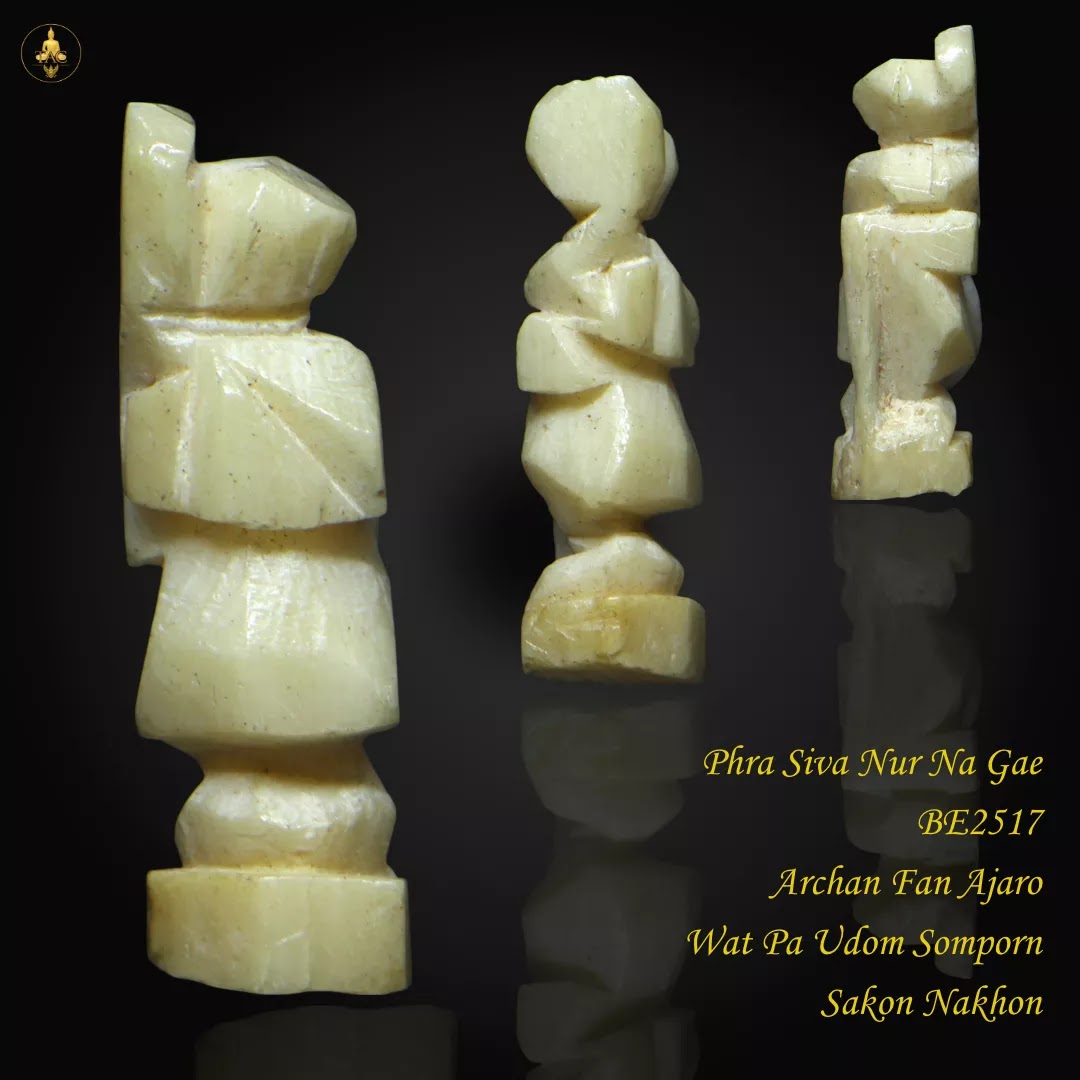
Phra Sivali Nur Na Gae BE2517 Archan Fan Ajaro Wat Pa Udom Somporn Sakon Nakhon
$238.00
Phra Sivali • Nur Na Gae
BE2517 • Archan Fan Ajaro • Wat Pa Udom Somporn • Sakon Nakhon • A sacred ivory amulet associated with the Sivali image in the forest-lineage temple context
Overview of a Phra Sivali-for
Description
Phra Sivali • Nur Na Gae
BE2517 • Archan Fan Ajaro • Wat Pa Udom Somporn • Sakon Nakhon • A sacred ivory amulet associated with the Sivali image in the forest-lineage temple context
Overview of a Phra Sivali-format amulet in na gae (นวะแก่), a sacred alloy category collectors often associate with a darker, mature metal presence and a more classical temple-issued feel.
What This Piece Represents (Collector Lens)
Phra Sivali amulets hold a special place in Thai amulet culture because the Sivali image is traditionally associated with abundance, support, smooth journeys, and favourable provision. Collectors usually approach such pieces through a mix of devotional meaning and lineage significance. Here, the combination of the Phra Sivali image, Nur Na Gae alloy, B.E. 2517 dating, and the Archan Fan Ajaro / Wat Pa Udom Somporn association gives the amulet a clear identity within the wider world of forest-lineage sacred objects.
Amulet Information
Name: Phra Sivali (พระสิวลี)
Material: Nur Na Gae (เนื้อนวะแก่)
Year (BE): 2517
Monk: Archan Fan Ajaro
Temple: Wat Pa Udom Somporn
Province: Sakon Nakhon
Lineage Note: Listing notes identify this as a B.E. 2517 Phra Sivali amulet in Nur Na Gae associated with Archan Fan Ajaro and Wat Pa Udom Somporn, Sakon Nakhon.
SKU: TAC-ArchanFanAjaro-PhraSivali-001
Price:
SGD 238
History & Lineage Context
Listing notes place this amulet in B.E. 2517 and associate it with Archan Fan Ajaro of Wat Pa Udom Somporn in Sakon Nakhon. In collector reading, that is significant because Archan Fan Ajaro is one of the most respected monks connected with the Thai forest tradition. Amulets linked with his period often draw attention not only for their collector interest, but also for the strong devotional reverence attached to his name.
Wat Pa Udom Somporn is closely tied to Archan Fan Ajaro’s legacy, and pieces associated with this temple are often appreciated for their spiritual austerity and lineage weight. In Thai amulet culture, forest-lineage amulets are frequently approached with a more restrained collector lens: the focus is on monk association, sacred intent, and temple context rather than on flashy design alone. That gives this Phra Sivali piece a particularly grounded profile.
Where exact batch-purpose records or ceremony details for this specific Phra Sivali Nur Na Gae issue are not available in the listing, the most careful approach is to remain anchored to the documented facts: Phra Sivali image, Nur Na Gae material, B.E. 2517 period note, and the Archan Fan Ajaro / Wat Pa Udom Somporn association.
About the Material
Nur Na Gae refers to a sacred alloy category that collectors usually read within the broader nawa metal family. In Thai amulet culture, Na Gae pieces are often appreciated for their darker alloy tone, mature surface expression, and classical sacred-metal character. Instead of studying softness and compression as one would with a powder amulet, collectors generally focus on patina, metal tone, edge integrity, and how the alloy settles across the relief and recesses.
- Collectors typically look for natural alloy tone in protected areas and recessed parts of the design.
- Dark or warm surface character can be part of normal age expression rather than a flaw by itself.
- Sacred metal amulets are usually judged through overall body consistency, patina balance, and relief definition.
Design / Pim / Variant Notes
The key identity of this piece is the Phra Sivali image itself. In Thai sacred-object culture, Sivali is a highly recognisable arhat figure and is often represented in a walking or standing devotional posture linked with travel and provision. That immediately sets the amulet apart from more common Buddha-form issues. Collectors typically study the front image, the reverse pattern, the relief depth, and the metal field together, because the overall harmony of image and alloy is central to how such a piece is read.
Traditional Spiritual Attributes & Metaphysical Properties
In Thai amulet culture, Phra Sivali is traditionally associated with abundance, support, smooth travel, and favourable sustenance. Devotees often keep Sivali amulets with the belief that they are auspicious for those who travel frequently, do business, or hope for smoother opportunities and better flow in daily life. These are traditional attributions rather than guarantees. In a temple-linked context, the strongest framing remains devotional: merit, reverence, and respectful faith-based use.
- Chok lap and support: devotees may associate Phra Sivali with provision and smoother life flow.
- Travel blessing: Sivali imagery is often linked with journeying, movement, and protected passage.
- Suitable for devotional wearing, respectful altar placement, and daily remembrance in belief-based practice.
Rarity Assessment & Collector Significance
Exact production figures for this specific Phra Sivali Nur Na Gae issue are not available in the provided listing, so the most careful collector position is to avoid overstating rarity. Even so, the collector significance is clear. The amulet combines a respected Phra Sivali image, a mature sacred alloy body, a B.E. 2517 period note, and a strong Archan Fan Ajaro / Wat Pa Udom Somporn association. That gives the piece a more specialised profile than a generic later commemorative issue and makes it especially relevant to collectors focused on forest-tradition temple amulets or auspicious Sivali imagery.
Conclusion
Phra Sivali Nur Na Gae B.E. 2517 is a distinctive temple-lineage amulet whose appeal lies in its auspicious Sivali image, mature sacred alloy body, and association with Archan Fan Ajaro of Wat Pa Udom Somporn, Sakon Nakhon. For collectors, it is a meaningful piece that combines spiritual symbolism with strong lineage character.
Front view showing the main Phra Sivali image and the overall balance of the metal field.
Back view for reading the reverse design, surface tone, and metal maturity.
Side profile for observing thickness, rim character, and the body structure of the alloy piece.
Additional angle view for closer reading of edge condition, relief depth, and surface consistency.
Reviews
There are no reviews yet.