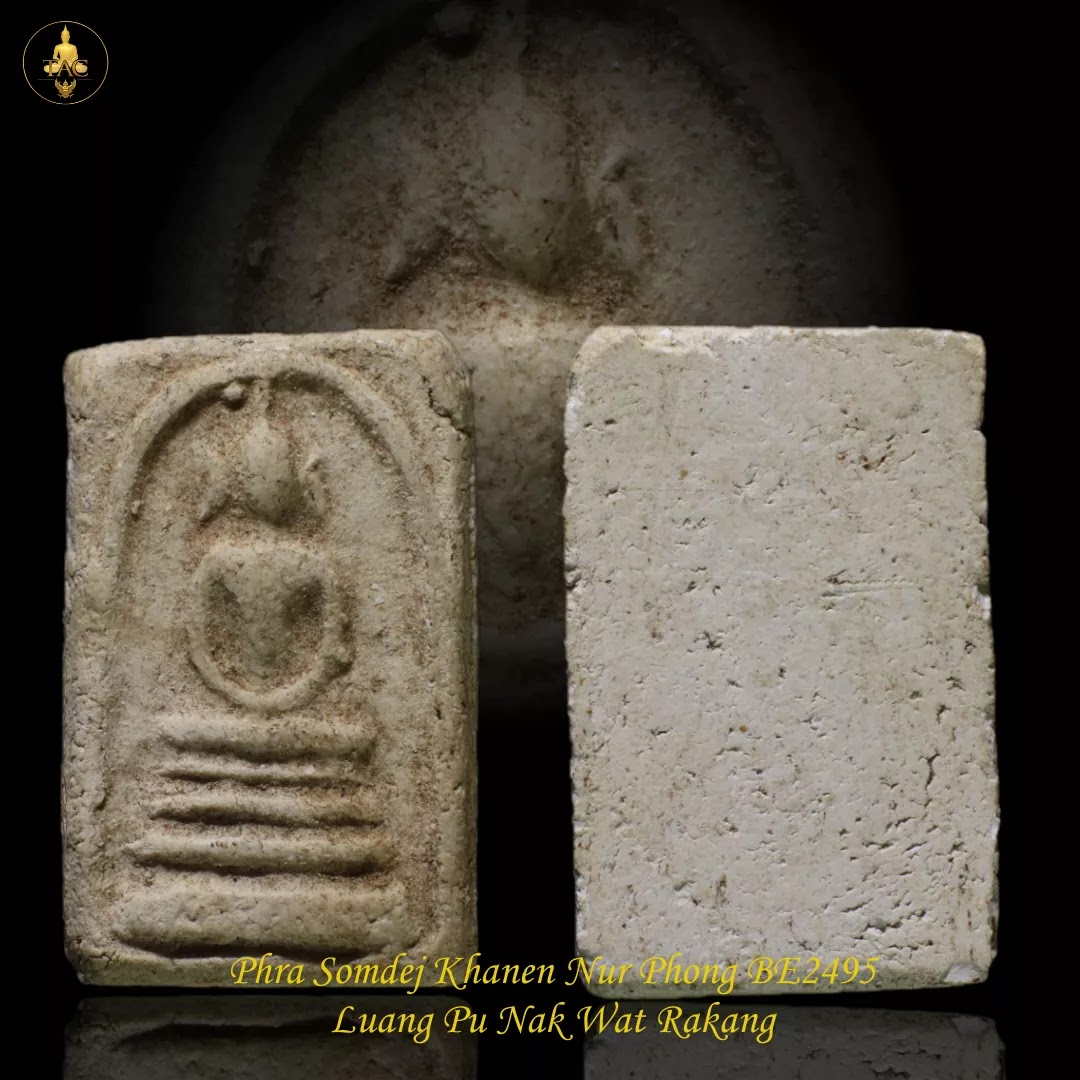
Phra Somdej Khanen Nur Phong BE2495 Luang Pu Nak Wat Rakang
$80.00
Phra Somdej Khanen • Nur Phong
BE2495 • Wat Rakang Kositaram (วัดระฆังโฆสิตาราม), Bangkok • Issued in the Luang Pu Nak (หลวงปู่นาค โสภโณ) period • Classic Rakang “Somdej”
Phra Somdej (พระสมเด็จ) “Khanen” style in
Description
Phra Somdej Khanen • Nur Phong
BE2495 • Wat Rakang Kositaram (วัดระฆังโฆสิตาราม), Bangkok • Issued in the Luang Pu Nak (หลวงปู่นาค โสภโณ) period • Classic Rakang “Somdej”
Phra Somdej (พระสมเด็จ) “Khanen” style in Nur Phong (เนื้อผง) — a Rakang-linked powder piece where collectors usually read the pim (พิมพ์), the surface age, and that calm old-wat feel more than anything else.
What This Piece Represents (Collector Lens)
If you collect Wat Rakang, you’ll know the attraction is rarely about “showy.” It’s that temple backbone — the Somdej heritage, the Bangkok old-school energy, and the way Rakang powder pieces age with a very recognisable texture. A BE2495 Somdej in Nur Phong sits nicely in the “daily-keep, collector-keep” zone: humble profile, but still carries the Rakang name that people respect across generations (especially among Singapore/Malaysia collectors who grew up hearing “Rakang” as the benchmark).
Amulet Information
Name: Phra Somdej Khanen (พระสมเด็จ)
Material: Nur Phong (เนื้อผง)
Year (BE): 2495
Temple: Wat Rakang Kositaram (วัดระฆังโฆสิตาราม), Bangkok
Monk: Luang Pu Nak Sophoṇo (หลวงปู่นาค โสภโณ)
Lineage Note: Collected under Wat Rakang’s Somdej-era heritage; “Khanen” mould naming is commonly used by collectors to describe this style.
SKU: TAC-SOMDEJ-KHANEN-2495-RKG-001
Price:
SGD 60
History & Lineage Context
In Thai amulet culture, Wat Rakang (วัดระฆังโฆสิตาราม) is not just “a famous wat” — it’s one of the reference points for Somdej tradition, and the name itself carries weight in collector circles. That’s why even later-period Rakang issues still get attention: the temple identity is strong, and the Somdej form remains the signature that collectors keep coming back to.
Luang Pu Nak (หลวงปู่นาค โสภโณ) is widely remembered as a major elder of Wat Rakang in the modern era, and his name is often used by collectors to anchor mid-century Rakang pieces. When a listing presents “BE2495” alongside his name, most collectors treat it as a “period attribution” and then rely on the amulet itself — pim character, powder body, and overall ageing — to decide how it sits in their Rakang reference set.
This is where the photo set matters. With Somdej, a single photo never tells the full story. Collectors usually want to see repeated front/back shots because small differences in lighting and angle help reveal the true depth of the pim lines, the natural powder grain, and whether the surface looks consistently aged rather than “too fresh.”
About the Material
Nur Phong (เนื้อผง) is a powder-based material category. For Somdej collectors, powder isn’t just “what it’s made of” — it’s part of the story. The way the surface dries, the softness at the edges, and the calm, matte texture over time are often what give old powder pieces their “real” feel in hand (even before you talk about lineage).
- Collector cue: a believable old powder surface usually looks dry, calm, and naturally settled — not glossy or overly white.
- Reading cue: pim depth + line flow should stay coherent across different angles, not disappear once lighting changes.
- Practical cue (SG weather): powder pieces are best kept away from humidity; stable storage helps preserve surface character.
Design / Pim / Variant Notes
“Khanen” here refers to the mould style naming used by collectors. With Somdej, the main read is always pim structure: the throne lines, the body silhouette, and how the overall proportions sit. This piece is presented in a straightforward, classic Somdej look — exactly the kind people keep for “baseline Rakang reference,” not for trendy hype.
Traditional Spiritual Attributes & Metaphysical Properties
In Thai amulet tradition, Phra Somdej is commonly respected as a “high-ground” Buddha form — carried for general protection, steady luck, and a calmer mind in daily life. Most devotees describe it in simple terms: feel more grounded, fewer unnecessary obstacles, and better mental composure — always understood as belief-based and supported by one’s conduct and merit.
- General protection: a classic “daily shield” intention (กันภัย / กันอุปสรรค) in mainstream Thai practice.
- Stability & composure: often kept to support calm decision-making and steadier mood.
- Baramee (บารมี) framing: many collectors feel Somdej carries a dignified, “clean” energy suited for respectful daily wear.
Rarity Assessment & Collector Significance
For a BE2495 Rakang Somdej in Nur Phong, rarity is usually judged less by “how many were made” (often unclear publicly) and more by how convincing the piece is when compared against known references. The value is in evidence cues: consistent pim structure across multiple shots, coherent powder ageing, and a surface that looks naturally settled over time. The fact that you have repeated front/back angles here is already the right way to document a Somdej — it allows a proper collector read rather than a guess.
Conclusion
A Phra Somdej “Khanen” in Nur Phong from Wat Rakang (BE2495) is the kind of piece that stays relevant no matter what trend is hot this year — quiet, classic, and anchored by a temple name collectors respect. If you’re building a Rakang-based reference set, this is exactly the sort you keep for the long run.
Front 01 — pim lines and overall proportion reference.
Back 01 — powder surface, texture, and ageing cues.
Front 02 — angle variation to read depth and line flow.
Back 02 — second angle for surface consistency check.
Front 03 — pim clarity and natural wear read.
Back 03 — texture and tone variation under different lighting.
Front 04 — additional angle for collector cross-check.
Back 04 — final angle for surface consistency.
Reviews
There are no reviews yet.