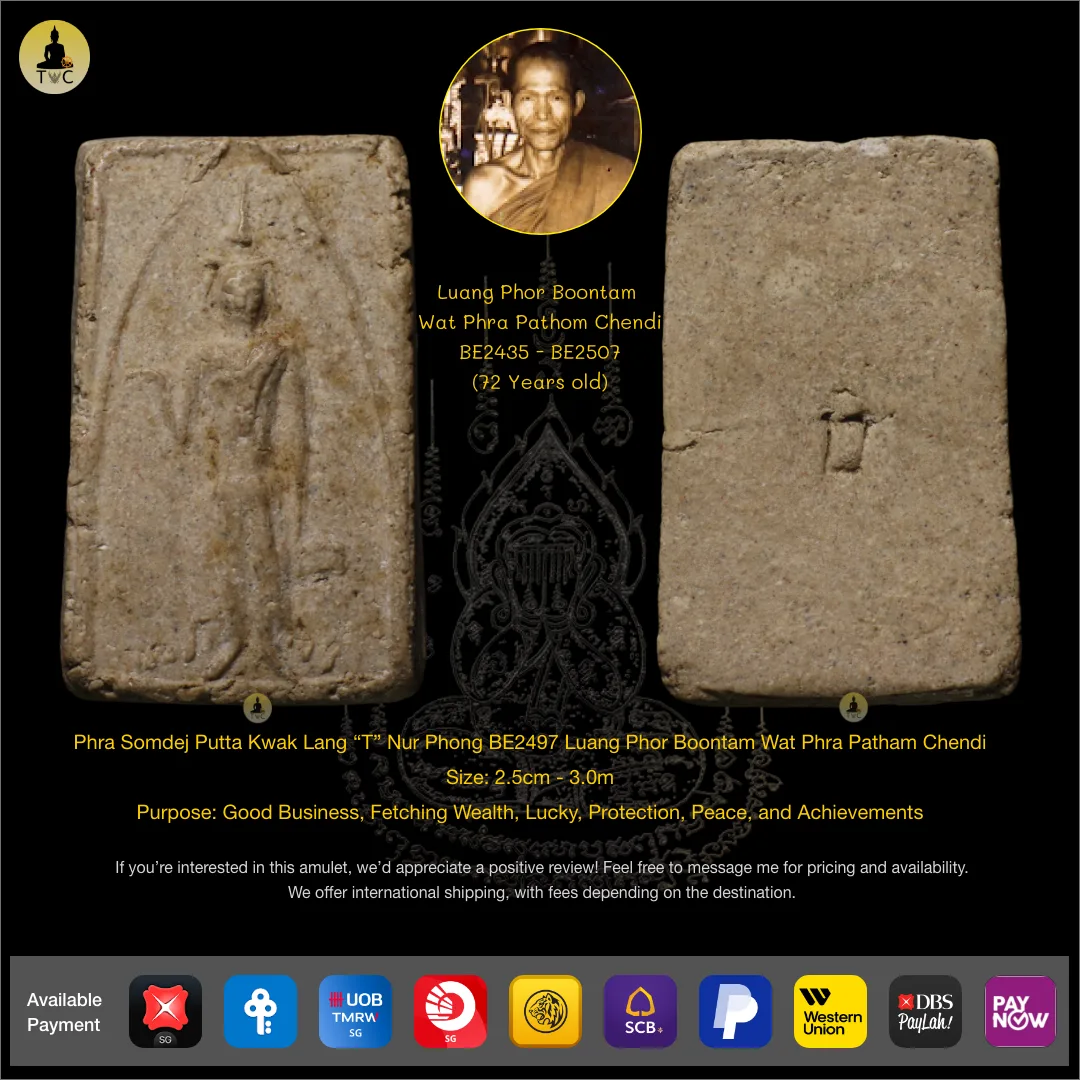
Phra Somdej Putta Kwak Lang “T” Nur Phong BE2497 Luang Phor Boontam (Lp Boontam) Wat Phra Patham Chendi
$188.00
Phra Somdej Putta Kwak Lang “T” • Nur Phong
BE2497 / CE1954 • Wat Phra Pathom Chedi • Associated with Luang Phor Boontam • Prosperity-oriented Somdej with distinctive “T” reverse mark
Description
Phra Somdej Putta Kwak Lang “T” • Nur Phong
BE2497 / CE1954 • Wat Phra Pathom Chedi • Associated with Luang Phor Boontam • Prosperity-oriented Somdej with distinctive “T” reverse mark
Overview of Phra Somdej Putta Kwak Lang “T” in sacred nur phong, associated with Luang Phor Boontam of Wat Phra Pathom Chedi.
Amulet Information
Name: Phra Somdej Putta Kwak Lang “T”
Material: Nur Phong (sacred powder body)
Year: BE2497 / CE1954
Temple: Wat Phra Pathom Chedi
Monk: Luang Phor Boontam
Variant: Putta Kwak with “Lang T” reverse marking
Lineage Note: A prosperity-oriented Somdej issue associated with Luang Phor Boontam and the devotional current of Wat Phra Pathom Chedi.
SKU: TAC-LPBOONTAM-SOMDEJ-PUTTAKWAK-LANGT-BE2497-001
Price:
SGD 188
What This Piece Represents (Collector Lens)
This amulet is compelling because it combines the visual familiarity of a Somdej with a more specialized prosperity-oriented identity. The Putta Kwak posture gives it a different devotional emphasis from conventional seated Somdej types, while the reverse Lang “T” marking gives the piece a clearer identifying feature for collectors. In practical collecting terms, named reverse marks matter. They make a listing easier to classify, compare, and remember. For devotees, the beckoning Buddha gesture gives the amulet an especially approachable reputation, linked to blessing, invitation, and auspicious support.
History & Lineage — Phra Somdej Putta Kwak Lang “T” (Wat Phra Pathom Chedi)
Dated to BE2497, this amulet belongs to a post-war period in which many Thai temples were serving not only as religious centers but also as anchors of social reassurance and rebuilding. Within that context, an amulet emphasizing prosperity, good fortune, and support for working people makes immediate historical sense. The association with Luang Phor Boontam of Wat Phra Pathom Chedi gives the piece a defined sacred context rather than leaving it as an anonymous prosperity charm.
Wat Phra Pathom Chedi carries substantial historical and devotional prestige. An amulet tied to the temple naturally benefits from that wider sacred atmosphere. In collector terms, temple recognition matters because it helps place the object within a broader devotional geography. In devotional terms, it deepens the perceived blessing power of the piece.
About the Material — Nur Phong Composition
The use of nur phong is especially suitable for an amulet of this type because sacred powder bodies preserve ritual intention in a direct and tactile way. Powder amulets are often studied through their grain, body density, natural age tone, and molded clarity. They tend to feel quieter and more devotional than high-gloss metallic issues, which suits the Somdej family well. Collectors usually observe whether the body feels naturally settled, whether the reverse is structurally coherent, and whether the powder composition appears visually consistent.
- Sacred powder body: Nur Phong supports the amulet’s devotional identity and ritual-made character.
- Collector observation: Texture, molding, and settled surface tone are the main reading points.
- Somdej compatibility: Powder bodies preserve the calm and approachable mood that makes Somdej amulets enduringly popular.
Design / Pim / Variant Notes
The defining element of this piece is the Putta Kwak gesture, which frames the Buddha image as one of invitation and auspicious beckoning rather than purely static stillness. That gives the amulet a more openly fortune-attracting interpretation. The reverse “T” mark is just as important for collectors. It acts as a recognizable identifier and helps distinguish this issue from other Somdej-related pieces that might otherwise appear broadly similar in format.
|
Front view — Putta Kwak posture and overall Somdej composition. |
Back view — reverse field and Lang “T” identifying mark. |
|---|
Traditional Spiritual Attributes & Metaphysical Properties
In Thai devotional culture, amulets of the Putta Kwak type are commonly associated with prosperity, customer attraction, favorable opportunity, and benevolent life support. When combined with the Somdej format, devotees may also read the amulet as one that brings calmness, metta, and protective steadiness rather than wealth alone. These meanings belong to Thai sacred belief and should be understood as devotional interpretations rather than measurable claims.
- Prosperity: The beckoning Buddha gesture is widely linked with calling in fortune and favorable conditions.
- Metta: Many devotees value the amulet for smoother relationships and supportive human interactions.
- Protection: Somdej-based forms are often treated as spiritually steadying and benevolently protective.
Rarity Assessment & Collector Significance
The collector appeal of this piece lies in its blend of familiarity and specificity. It is familiar because it belongs to the Somdej family, one of the most deeply recognized amulet categories in Thailand. It is specific because the Putta Kwak gesture and Lang “T” reverse mark make it easier to identify and archive. That balance often helps a piece remain interesting over time, especially when supported by clear front and back image documentation.
Conclusion
Phra Somdej Putta Kwak Lang “T” Nur Phong BE2497 associated with Luang Phor Boontam of Wat Phra Pathom Chedi is a distinctive prosperity-oriented Somdej with strong devotional character and good collector readability. The beckoning Buddha posture gives the piece a clear fortune-calling identity, while the reverse “T” mark strengthens its recognition value. For devotees, it is a meaningful amulet of blessing, support, and calm protection. For collectors, it is a readable mid-century Somdej variant with lasting interest.
Reviews
There are no reviews yet.