Luang Phor Opasi
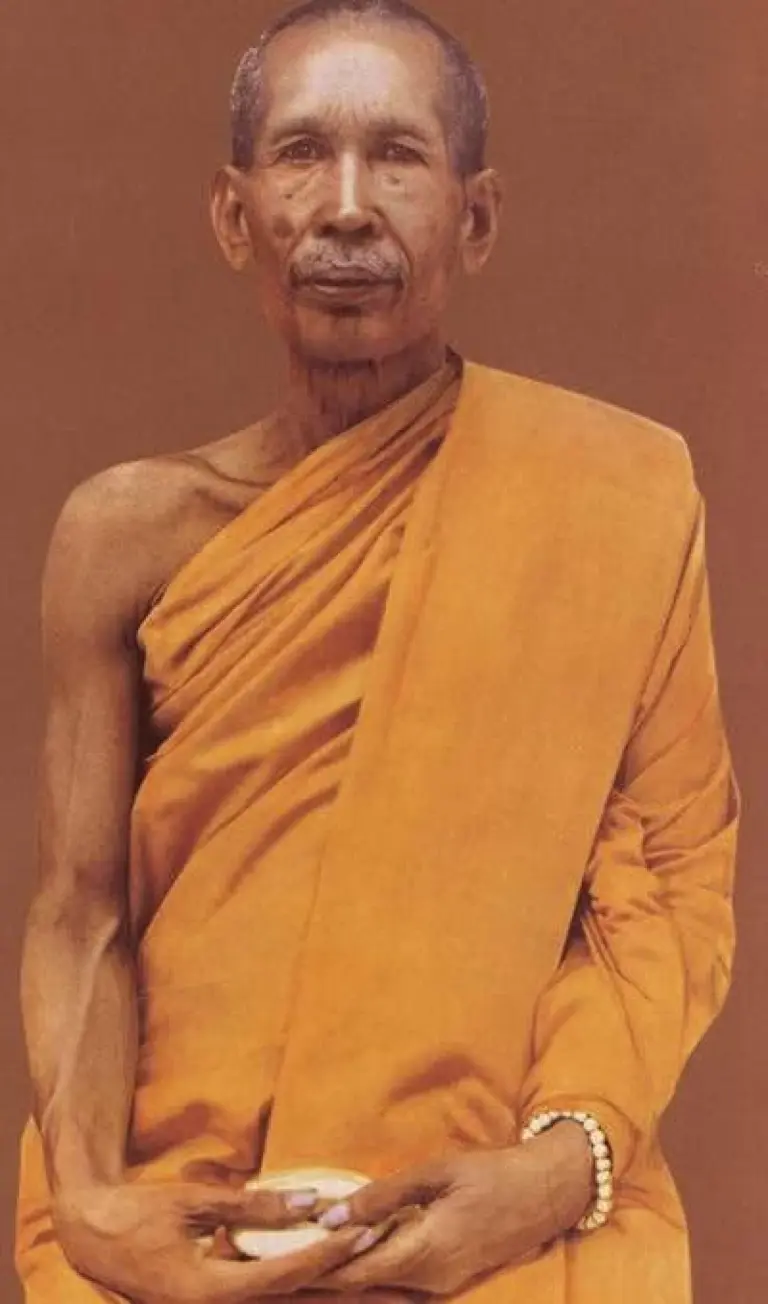
Who Was Luang Pho Opasi? Luang Pho Opasi (หลวงพ่อโอภาสี), originally named Chuan Maliphan (ชวน มาลีพันธ์), was a revered Thai monk from Nakhon Si Thammarat Province who became closely associated with Bang Mod Ashram, later known as Wat Luang Pho Opasi (วัดหลวงพ่อโอภาสี), in Bangkok. He is remembered for his strict spiritual discipline, his practice associated with ... Read more ↓
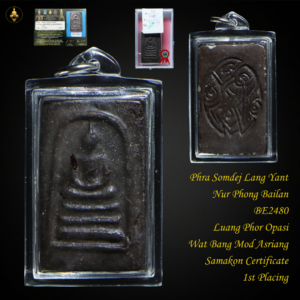
Amulets by Luang Phor Opasi 1 total · 1 available

Biography
Who Was Luang Pho Opasi?
Luang Pho Opasi (หลวงพ่อโอภาสี), originally named Chuan Maliphan (ชวน มาลีพันธ์), was a revered Thai monk from Nakhon Si Thammarat Province who became closely associated with Bang Mod Ashram, later known as Wat Luang Pho Opasi (วัดหลวงพ่อโอภาสี), in Bangkok. He is remembered for his strict spiritual discipline, his practice associated with Tejo Kasina (เตโชกสิณ), or fire meditation, and the sacred fire ritual that continued daily at his hermitage after he moved from Wat Bowonniwet Vihara (วัดบวรนิเวศวิหาร). In Thai amulet history, Luang Pho Opasi is most famous for his powerful protective coins and sacred objects, especially the first edition BE 2495 (AD 1952) coin bearing his portrait and personal yantra.
Early Life and Ordination
Luang Pho Opasi (หลวงพ่อโอภาสี) was born as Chuan Maliphan (ชวน มาลีพันธ์) in Ban Trok Fai Fa, Pak Phanang District, Nakhon Si Thammarat Province. His exact birth year is not widely documented in English sources. From a young age, he showed intelligence, discipline, and a strong inclination toward Buddhist learning. He first studied the alphabet at Wat Tai (วัดใต้) in Nakhon Si Thammarat before entering the monastic education system.
As a novice, Chuan studied diligently at the Buddhist scripture school connected with Wat Pho (วัดโพธิ์). His ability impressed the head of the Pali school, who recognised his potential and wished to send him to Bangkok for higher religious education after he had completed his foundation studies. This was an important stage in his development, because Pali studies were not merely academic. They trained the mind in discipline, memory, scripture, chanting, and Buddhist doctrine.
Novice Chuan was later placed under the patronage of His Holiness Somdej Phra Sangkharaj Chao Krom Luang Vajiranyanawong (สมเด็จพระสังฆราชเจ้า กรมหลวงวชิรญาณวงศ์). He was ordained as a monk at Wat Bowonniwet Vihara (วัดบวรนิเวศวิหาร), one of Thailand’s most important royal monasteries. In some transmitted accounts, the ordination is described with royal involvement and high religious patronage, showing the level of esteem given to his education and monastic path.
After ordination, Phra Chuan continued his study of Buddhist scriptures and eventually passed up to seven levels of religious examination. He received a ceremonial fan and became popularly known as Maha Chuan (มหาชวน), a title reflecting his high level of scriptural learning. This strong scholastic foundation later formed the background for his unusual spiritual practice, which combined scriptural discipline, seclusion, meditation, and ritual acts that became deeply meaningful to his followers.
Spiritual Development and Practice
The spiritual development of Luang Pho Opasi (หลวงพ่อโอภาสี) took a distinctive direction after his period of formal study. Although he was trained in Buddhist scripture, his later reputation was built around meditation, seclusion, symbolic fire practice, and acts that devotees interpreted as signs of deep spiritual attainment. After meeting Luang Pho Kob (หลวงพ่อกบ), Phra Maha Chuan began to withdraw from ordinary temple life. He practised Vipassana meditation throughout the day, went out only for alms, and ate only one meal in the morning.
He opened his kuti, or monk’s dwelling, only in the afternoon. When he opened the kuti, he would burn various objects. At first, the items were small and few. Later, Chinese devotees in the Bang Lamphu area saw this unusual practice and began calling him “Sian” (เซียน), a term often used in Chinese-Thai culture to refer to an immortal, sage, or spiritually accomplished being. More people then began offering items for him to burn as part of Buddhist tribute and merit-making.
This practice became closely associated with Tejo Kasina (เตโชกสิณ), or fire meditation. In Buddhist meditation terminology, kasina refers to a meditation object used to cultivate concentration. Tejo Kasina focuses on the fire element. For Luang Pho Opasi’s devotees, the fire was not merely physical flame. It represented purification, spiritual offering, and the burning away of defilements. Many believed that as the flames consumed offerings, the heaviness of greed, attachment, and inner impurity could also be reduced in the heart.
When more disciples began visiting him at Wat Bowonniwet Vihara, the practice became increasingly difficult to continue inside a royal temple. Many people came to witness his conduct and reported various miraculous events. Feeling that such activities were no longer suitable within that setting, Luang Pho Opasi left for pilgrimage and eventually reached the Bang Mod area on the Thonburi side of the Chao Phraya River.
At that time, around BE 2485 (AD 1942), Bang Mod was still largely filled with orchards and was famous for Bang Mod oranges. A wealthy landowner later donated land for the building of Bang Mod Ashram, inviting Luang Pho Opasi to reside there permanently. The hermitage became a centre for his practice, his disciples, and the continuous fire ritual. Over time, it developed into Wat Luang Pho Opasi (วัดหลวงพ่อโอภาสี).
Major Amulet Consecrations and Ceremonies
Luang Pho Opasi (หลวงพ่อโอภาสี) began creating and distributing sacred objects after settling in the Bang Mod area. This period coincided with Thailand’s involvement in wartime conditions, when people naturally sought protection, courage, and spiritual assurance. His early sacred items included sacred cloths, amulets, and coins. Devotees later reported experiences connected with protection from danger, resistance against weapons, and safety from accidents and harmful forces. These stories helped his amulets become increasingly sought after.
His amulets are especially respected among Thai-Chinese devotees and business families. Many believe they are strong for business prosperity, protection from harm, invincibility, confidence, and overcoming obstacles. Such beliefs should be understood as part of Thai Buddhist and Thai-Chinese devotional culture, where amulets are valued not only as collectibles but also as reminders of faith, merit, and the moral power of a revered teacher.
- Early Bang Mod sacred cloths and amulets, around the wartime period: After Luang Pho Opasi settled in Bang Mod, he began distributing sacred cloths, amulets, and protective objects to followers. The exact BE years and production numbers for these earliest items are not widely documented in English sources. They are historically important because they belong to the beginning of his Bang Mod period, when his reputation for fire meditation and miracles spread strongly among villagers, farmers, merchants, and wealthy patrons.
- Lead and clay amulets, early Bang Mod period: As more people sought his blessings, Luang Pho Opasi created lead and clay amulets. These pieces became popular because devotees believed they carried protective power. In collector culture, such early material amulets are valued for their closeness to Luang Pho’s living period, although authentication can be difficult without strong provenance, accepted mold comparison, or trusted expert review.
- BE 2495 (AD 1952), First Edition Coin: The first edition coin is considered the most famous and desirable Luang Pho Opasi coin. It was created as a commemorative item in BE 2495 (AD 1952). The coin is circular, with a half-body image of Luang Pho on the front. The reverse features the swastika, understood in this Buddhist context as his personal yantra and an auspicious sacred symbol, not in the modern political meaning. Around the reverse edge appears a mantra often taught to his disciples: Itisukato Arahang Buddho Namo Buddhaya Pathavi Khongkha Phra Bhummadeva Khamamihang. The exact number produced is uncertain. The known metal is copper. The front has one mold, while the reverse is known in three similar mold forms, differing mainly in the size of the central yantra and the lettering. This first edition is one of the most valuable and sought-after Luang Pho Opasi amulets in the market.
- BE 2496 (AD 1953), Second Series Coin: The second series was created in BE 2496 (AD 1953). It is rare and is often found among older families and farmers in the Bang Mod area. Many local wearers traditionally believed this series offered strong protection against venomous snake bites. Stories were passed down of people bitten by poisonous snakes whose fangs allegedly failed to penetrate the skin. This series is found in copper and silver, with silver examples considered very rare. The front features a half-body image of Luang Pho. The back displays a sacred yantra with a pair of Naga serpents and the letter “อ”, surrounded by halos, representing an abbreviation connected to his name Opasi.
- BE 2497 (AD 1954), Third Series Coin: The third series was created in BE 2497 (AD 1954) and is known in two main variations. The common version shows Luang Pho in profile on the front. The reverse features a pavilion with a Garuda at the centre, with the year of creation shown at the bottom. Two variations are known: one with a railing on the reverse and one without. The difference may be identified from the vertical lines on the balustrades of the staircase leading to the pavilion. Many of these coins were distributed in his birthplace, Nakhon Si Thammarat Province. They are found in copper, both blackened and unblackened.
- BE 2498 (AD 1955), Final Series Garuda Carrying Sema Coin: The final series is the Garuda carrying a Sema coin, created in BE 2498 (AD 1955). This edition became highly popular among villagers in the Bang Mod area. Luang Pho Opasi instructed followers to keep it as a personal amulet, which many disciples later understood as a subtle indication that it would be his final issue. He passed away shortly afterward on 31 October BE 2498 (AD 1955). This edition is found mainly in copper, both blackened and unblackened. Silver examples exist but are extremely limited and very rare.
Throughout his time at the hermitage, disciples observed that Luang Pho Opasi held deep reverence for Garuda (ครุฑ) and King Rama V (พระบาทสมเด็จพระจุลจอมเกล้าเจ้าอยู่หัว). This helps explain why Garuda imagery appears prominently in his amulet tradition. The Garuda is associated with authority, protection, royal power, victory over obstacles, and spiritual command. In collector culture, Luang Pho Opasi coins bearing Garuda imagery are especially admired for this symbolic strength.
All editions of Luang Pho Opasi’s coins are regarded as highly potent by devotees. The first edition BE 2495 coin remains the top-tier piece, especially for collectors who seek a historically important amulet connected directly to his living period. The later BE 2496, BE 2497, and BE 2498 coins are also respected, each with its own identity, story, and collector following.
Legacy and Temple Significance
Luang Pho Opasi (หลวงพ่อโอภาสี) passed away on 31 October BE 2498 (AD 1955), yet his presence remains deeply felt at Wat Luang Pho Opasi (วัดหลวงพ่อโอภาสี). Devotees continue to visit the temple to pay respects, make offerings, seek blessings, and remember his teachings. Many especially associate him with business success, protection, and the removal of obstacles. These beliefs remain strongest among devotees who inherited stories from earlier generations in Bang Mod, Yaowarat, Sampeng, Bang Lamphu, and other Chinese-Thai communities.
One of the most remarkable aspects of his legacy is the continuous fire at the temple. From the period of his fire practice at Wat Bowonniwet Vihara and later at Bang Mod Ashram, the flame connected with offerings and Buddhist tribute has been remembered as never going out for a single day. Devotees donate large amounts of kerosene, sometimes described as hundreds of litres daily, because they believe the fading and burning of the flames help lessen the defilements in their hearts. The practice is therefore both ritual and symbolic: it represents offering, purification, devotion, and inner transformation.
Many miracle stories continue to surround Luang Pho Opasi. One of the most repeated is the claim that he could appear in different locations at the same time. Devotees said he was seen in multiple provinces during an era when travel between provinces could take days. Other stories relate to the burning of valuable offerings. Some believed that after offering precious items into the fire, their business and wealth grew dramatically. Others said that if a person regretted giving something, the item or money would mysteriously return home. These stories belong to the devotional memory surrounding him and remain part of his living folklore.
Wat Luang Pho Opasi is therefore not only a temple connected to a famous monk. It is a spiritual landmark shaped by fire meditation, Thai-Chinese devotion, business faith, protective amulet culture, and the powerful personality of a monk who chose seclusion over fame. For amulet collectors, the temple’s significance lies in its direct connection to the sacred objects issued during Luang Pho’s lifetime and in the continuing respect shown by devotees long after his passing.