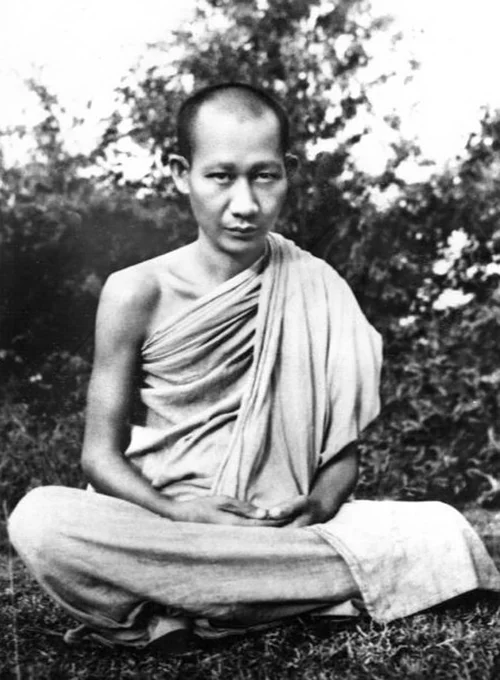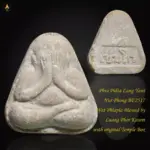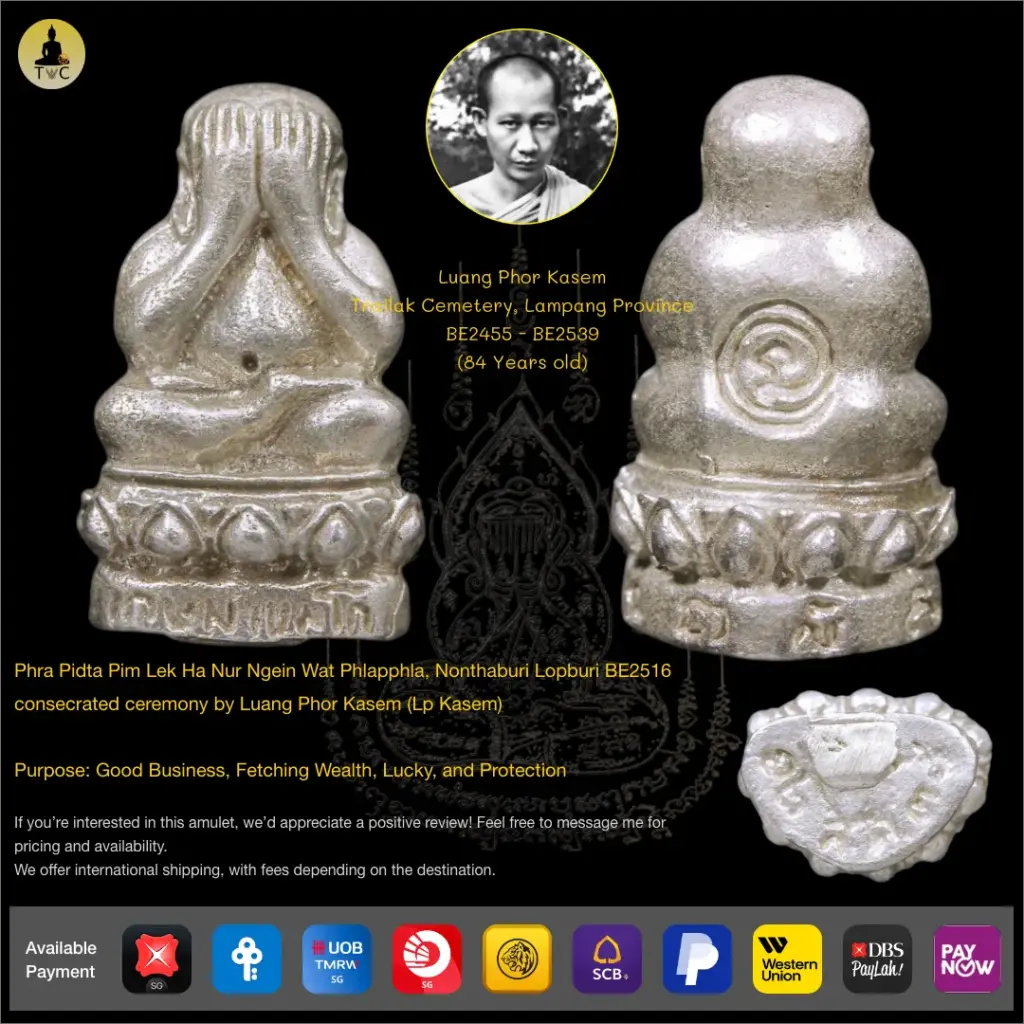
Phra Pidta Pim Lek Ha Nur Ngern Wat Phlapphla, Nonthaburi Lopburi BE2516 consecrated ceremony by Luang Phor Kasem
| Type | Phra Pidta Pim Lek Ha |
| Monk | Luang Phor Kasem Khemako (Lp Kasem) Trilak Cemetery, Lampang |
| Temple | Nonthaburi Lopburi |
| B.E. Year | 2516 |
| Material | Nur Ngern |
| Condition | Very Good |
| SKU | TAC-PhraPidtaPimLekHa-LpKasem-001 |
Authentic Phra Pidta Pim Lek Ha Luang Phor Kasem, Wat Phlapphla Nonthaburi Lopburi BE 2516, Nur Ngern. Prized by Singapore collectors for protection & fortune.
Phra Pidta Pim Lek Ha Luang Phor Kasem — History and Significance
The Phra Pidta Pim Lek Ha Luang Phor Kasem is one of the most sought-after authentic Thai amulets among collectors in Singapore, Malaysia, and Greater China, revered for its powerful protective energies and ability to attract wealth and good fortune. Created at Wat Phlapphla, Nonthaburi Lopburi in BE 2516, this amulet represents a landmark consecration by the respected monk Luang Phor Kasem.
The Phra Pidta — literally “closed-eyed monk” — is one of the most sacred iconographic forms in Thai Buddhist amulet tradition. The image depicts a meditating monk covering both eyes, symbolising a complete shutting out of worldly misfortune and an opening to inner abundance.
The Phra Pidta Pim Lek Ha Luang Phor Kasem specifically refers to the “Pim Lek Ha” mould — the fifth small-sized pressing — making it a distinct and identifiable variation within this consecration batch. Collectors prize this specific mould for its fine detailing and the precise sacred geometry preserved in its design.
Phra Pidta Pim Lek Ha and Wat Phlapphla, Nonthaburi Lopburi Heritage
Wat Phlapphla, Nonthaburi Lopburi is the sacred ground from which the Phra Pidta Pim Lek Ha Luang Phor Kasem originated, lending this amulet both its spiritual lineage and its historical authenticity. Temples in the Nonthaburi and Lopburi regions of central Thailand have long been associated with powerful amulet consecrations deeply rooted in the Thai Buddhist amulet tradition.
The temple’s ritual environment during the BE 2516 consecration provided the conditions necessary for a high-level Buddhist blessing ceremony. Such ceremonies in this era followed strict traditional protocols, with monks maintaining intensive meditation and recitation of sacred Pali sutras over multiple days.
The provenance of the Phra Pidta Pim Lek Ha BE 2516 from Wat Phlapphla, Nonthaburi Lopburi is a critical factor in its authentication and collector value. Amulets from named temple batches of this period carry a verifiable lineage that serious collectors in Singapore, Hong Kong, and Taiwan actively seek.
Nur Ngern Phra Pidta Pim Lek Ha — Composition and Craftsmanship
The Nur Ngern Phra Pidta Pim Lek Ha is cast in Nur Ngern — a Thai term meaning “silver material” — which refers to the use of sacred silver metal as the primary medium for this amulet. Silver has deep symbolic significance in Thai Buddhist amulet craft, associated with lunar energy, purity, and the amplification of protective blessings.
The use of Nur Ngern in the BE 2516 batch reflects a high level of craftsmanship and intentional material selection by the temple and presiding monk. Metal-cast amulets of this type require skilled artisans working in alignment with auspicious Buddhist calendrical timings for the moulding and pouring process.
The Pim Lek Ha mould produces a small but finely detailed figure, with crisp definition in the posture, facial covering, and base inscription — hallmarks that authenticate genuine pieces from this pressing. The Nur Ngern material also provides exceptional durability, ensuring the amulet retains its sacred form across decades of wear.
Spiritual Benefits of Phra Pidta Pim Lek Ha by Luang Phor Kasem
The Phra Pidta Pim Lek Ha Luang Phor Kasem is known for delivering a comprehensive range of protective and prosperity-bringing qualities to the wearer. Devotees across Southeast Asia and Greater China have long worn this amulet for its association with blocking negative forces, attracting financial opportunity, and maintaining personal safety.
The closed-eye iconography of Phra Pidta directly embodies the concept of “closing off” harm and “sealing in” fortune — a spiritual symbolism that resonates strongly with collectors who seek both material and spiritual advancement.
- Protection from harm and misfortune — The Phra Pidta form is traditionally consecrated to shield the wearer from accidents, malicious intent, and negative energies.
- Wealth attraction and financial luck — Luang Phor Kasem amulets of this type are associated with opening pathways to business success and monetary gain.
- Metta (loving-kindness) and charisma — Regular devotion to this amulet is believed to enhance the wearer’s relationships, social standing, and ability to gain favour from others.
Phra Pidta Pim Lek Ha BE 2516 — Authentication and Collector Value
The Phra Pidta Pim Lek Ha BE 2516 from Wat Phlapphla, Nonthaburi Lopburi is a genuine mid-20th century Thai amulet now approaching 50 years of age, placing it firmly within the highly collectible “vintage era” category. Amulets from BE 2516 (1973 CE) are valued both for their age and for the quality of consecration practices common to that period in Thai Buddhist history.
Authentication of the Phra Pidta Pim Lek Ha Luang Phor Kasem relies on careful examination of the Nur Ngern casting quality, the specific Pim Lek Ha mould characteristics, and provenance documentation where available. Collectors in Singapore and Malaysia are advised to source this amulet only from reputable dealers who can provide clear provenance information.
As a Nur Ngern metal-cast amulet from a named temple batch of BE 2516, this piece commands strong interest at amulet fairs and in private collector circles across Singapore, Taiwan, and Hong Kong. Its rarity, material quality, and association with Luang Phor Kasem make it a meaningful addition to any serious collection.
How to identify an authentic Phra Pidta Pim Lek Ha Luang Phor Kasem?
An authentic Phra Pidta Pim Lek Ha Luang Phor Kasem from BE 2516 can be identified by several key characteristics. First, examine the Nur Ngern casting for fine, consistent detail in the Phra Pidta figure’s posture and facial covering — genuine pieces show sharp, well-defined mould lines consistent with the Pim Lek Ha pressing. Second, look for correct base markings and proportions specific to the Wat Phlapphla, Nonthaburi Lopburi batch of BE 2516. Consulting with an experienced Thai amulet dealer in Singapore or seeking comparison with documented reference pieces from this batch is the most reliable authentication method.
What is a Phra Pidta Pim Lek Ha Luang Phor Kasem BE 2516 worth?
The value of a Phra Pidta Pim Lek Ha Luang Phor Kasem BE 2516 depends on several factors including condition, surface patina, mould sharpness, and provenance documentation. As a Nur Ngern metal amulet approaching 50 years of age from a named temple batch, this piece is considered a vintage collectible and is priced accordingly in the mid-to-premium collector segment. Prices can vary significantly between dealers and auction houses in Singapore, Malaysia, and Greater China depending on the specific quality of the individual piece. Collectors are encouraged to request detailed photographs and provenance information before purchase to ensure accurate valuation.
What are the spiritual benefits of Phra Pidta Pim Lek Ha?
The Phra Pidta Pim Lek Ha is a sacred amulet form recognised in Thai Buddhist tradition for its ability to protect the wearer from physical harm, negative spiritual influences, and misfortune. The closed-eye iconography symbolises the sealing off of danger and the preservation of wealth and blessings within the wearer’s life. The specific Luang Phor Kasem amulet from Wat Phlapphla, Nonthaburi Lopburi BE 2516 is additionally prized for its metta-enhancing qualities, believed to improve the wearer’s relationships, business success, and overall life trajectory. Devotees across Singapore, Malaysia, Thailand, and Greater China wear this amulet as both a spiritual protection tool and a symbol of accumulated merit.
Attributes reflect Thai Buddhist devotional tradition and are not measurable claims.