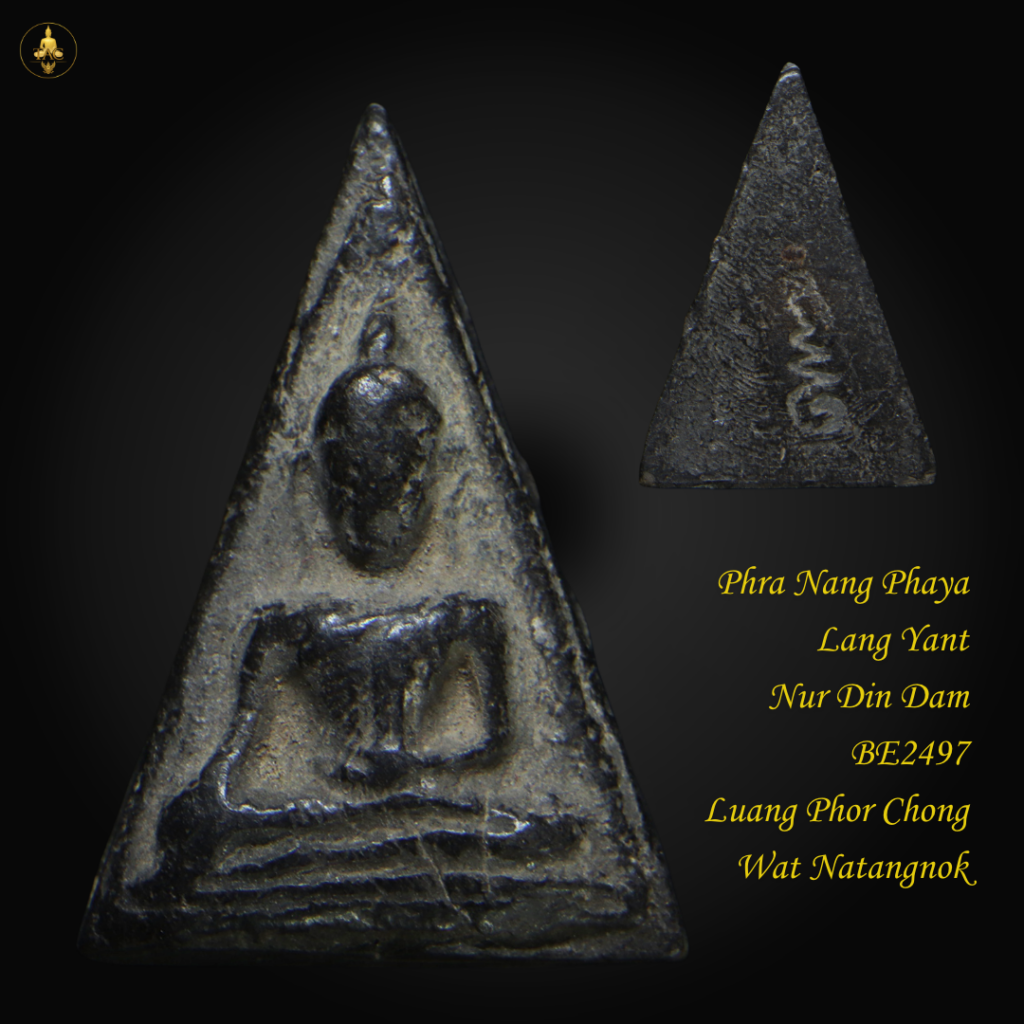
Phra Nang Phaya Lang Yant Nur Din Dam BE2497 Luang Phor Chong Wat Natangnok
| Type | Phra Nang Phaya Lang Yant |
| Monk | Luang Phor Chong of Wat Natangnok, Ayutthaya |
| Temple | Wat Natangnok |
| B.E. Year | 2497 |
| Material | Nur Din Dam |
| Condition | Good |
| SKU | TAC-PhraNangPhayaLangYant-LpChong-001 |
Authentic Phra Nang Phaya Lang Yant Luang Phor Chong, Wat Natangnok BE 2497. Nur Din Dam material. Revered for protection & metta. Singapore dealer.
What is the Phra Nang Phaya Lang Yant amulet by Luang Phor Chong?
The Phra Nang Phaya Lang Yant Luang Phor Chong is an authentic Thai amulet produced at Wat Natangnok in Buddhist Era 2497, crafted from Nur Din Dam — a sacred black earth compound — and distinguished by yantra inscriptions on the reverse face, consecrated under the guidance of the revered Luang Phor Chong.
The Phra Nang Phaya is one of the most celebrated amulet archetypes in the Thai Buddhist tradition, and the Lang Yant (reverse yantra) variant carries additional sacred geometric inscriptions believed to amplify its spiritual potency. This particular batch from BE 2497 represents a significant chapter in the devotional legacy of Wat Natangnok.
Luang Phor Chong was a respected monk whose dedication to Dhamma practice and mastery of sacred yantra inscriptions earned him deep reverence among devotees. His involvement in the creation and consecration of this amulet adds considerable spiritual and historical weight to the BE 2497 batch.
The Luang Phor Chong amulet series from this period is regarded by collectors as a genuine product of mid-twentieth-century Thai Buddhist craftsmanship. Each piece reflects the meticulous ritual standards upheld at Wat Natangnok during this era.
Phra Nang Phaya Lang Yant and Wat Natangnok Heritage
Wat Natangnok is the temple at the heart of this amulet’s provenance, and its association with the Phra Nang Phaya Lang Yant Wat Natangnok batch of BE 2497 places it within a distinguished lineage of Thai amulet production. The temple’s monks were known for upholding rigorous consecration ceremonies rooted in traditional Theravāda practice.
The production of sacred amulets at Thai temples has always been deeply intertwined with community devotion, royal patronage traditions, and the preservation of esoteric Buddhist knowledge. Collectors and scholars who study the Thai Buddhist amulet tradition recognise that provenance — the specific temple, monk, and ceremonial context — is a foundational factor in both spiritual and collectible value.
Wat Natangnok’s role in producing the Phra Nang Phaya Lang Yant BE 2497 batch cements its place in the broader history of Thai sacred art. The temple’s commitment to authenticity and ritual integrity during this period is well-regarded among serious collectors across Southeast Asia and Greater China.
Nur Din Dam Phra Nang Phaya Lang Yant — Composition and Craftsmanship
Nur Din Dam, translated as “black earth material,” is a sacred compound traditionally composed of consecrated soil, herbal powders, and ritual ingredients bound together under strict ceremonial conditions. The Nur Din Dam Phra Nang Phaya Lang Yant from Wat Natangnok exemplifies this ancient craft, with its dark, dense surface bearing the hallmarks of authentic mid-century Thai amulet production.
The reverse face of this amulet — the “Lang Yant” — features hand-inscribed or impressed yantra diagrams, sacred geometric patterns encoded with Pali script and symbolic figures. These inscriptions are integral to the amulet’s spiritual function and serve as a distinguishing feature that collectors use to verify authenticity.
The craftsmanship required to produce a Phra Nang Phaya Lang Yant Luang Phor Chong piece of this quality was painstaking. Each amulet was shaped, inscribed, and subjected to extended consecration rituals — processes that reflect the deep spiritual discipline upheld at Wat Natangnok under Luang Phor Chong’s era.
Spiritual Benefits of Phra Nang Phaya Lang Yant by Luang Phor Chong
The Phra Nang Phaya Lang Yant Luang Phor Chong is traditionally venerated for its association with metta (loving-kindness), maha sanaeh (attraction and charm), and protective qualities. Devotees across Thailand, Singapore, Malaysia, and the broader Thai amulet collector community regard this type as especially potent for personal well-being and harmonious relationships.
Collectors associate the Lang Yant reverse inscription with an additional layer of protective energy, with many devotees believing the yantra acts as a spiritual shield. The following are among the most commonly cited benefits within collector tradition:
- Metta and Maha Sanaeh: Regarded by devotees as promoting loving-kindness, personal charm, and favourable social relationships.
- Protection and Warding: Traditionally venerated for its association with spiritual protection against misfortune and negative influences.
- Prosperity and Fortune: Collectors associate this amulet with improved luck in business dealings and financial matters.
Phra Nang Phaya Lang Yant BE 2497 — Authentication and Collector Value
The Phra Nang Phaya Lang Yant BE 2497 from Wat Natangnok is considered a collectible-grade amulet due to its age, provenance, and the reputation of Luang Phor Chong. As a mid-twentieth-century piece, it falls within the “Golden Era” of Thai amulet production — a period highly prized by serious collectors in Singapore, Taiwan, Hong Kong, and mainland China.
Authenticating a piece of this age requires careful examination of the Nur Din Dam material’s texture, colour depth, and surface ageing, as well as the clarity and style of the Lang Yant inscription on the reverse. Collectors seeking an authentic Thai amulet from this period are advised to consult experienced dealers and, where available, supporting documentation or specialist appraisal.
At thaiamuletscollection.com, your trusted Thai amulet Singapore dealer, every piece is assessed for provenance integrity before listing. The BE 2497 batch attributed to Luang Phor Chong at Wat Natangnok represents a rare opportunity for collectors seeking a historically significant piece from this era.
Attributes reflect Thai Buddhist devotional tradition and are not measurable claims.
![[SOLD] Tarkut Tone Nur Thong Daeng BE2500 Luang Phor Jong Wat Natangnok](https://tac-media.sgp1.digitaloceanspaces.com/2026/03/tarkut-tone-nur-thong-daeng-be2500-luang-phor-jong-wat-natangnok-150x150.webp)

![[SOLD] Phra Nang Phaya Lang Yant Nur Din BE2497 Luang Phor Chong (Lp Chong / Lp Jong) Wat Natangnok, Ayutthaya](https://tac-media.sgp1.digitaloceanspaces.com/2026/03/phra-nang-phaya-lang-yant-nur-din-be2497-luang-phor-chong-lp-chong-lp-jong-wat-natangnok-ayutthaya-150x150.webp)