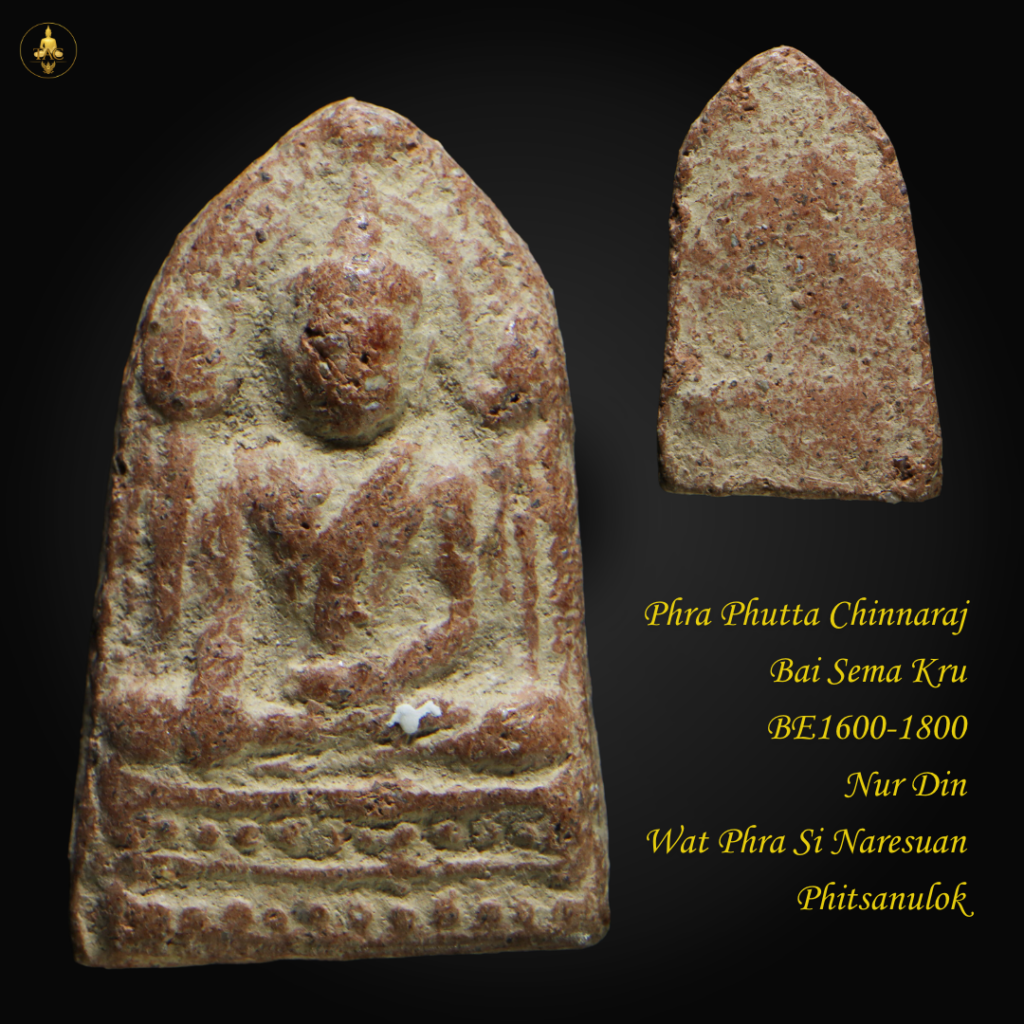
Phra Phutta Chinnaraj Bai Sema Kru BE1600-1800 Nur Din Wat Phra Si Naresuan Phitsanulok
| Type | Phra Phutta Chinnaraj Bai Sema Kru |
| Monk | TEMPLE TAG: Wat Phra Si Naresuan Phitsanulok |
| Temple | Wat Phra Si Naresuan Phitsanulok |
| B.E. Year | 1600 |
| Material | Nur Din |
| Condition | Good |
| SKU | TAC-PhraPhuttaChinnarajBaiSemaKru--001 |
Authentic Phra Phutta Chinnaraj Bai Sema Kru, Wat Phra Si Naresuan Phitsanulok, BE 1600–1800. Rare Nur Din earth amulet. Trusted Thai amulet Singapore dealer.
What is the Phra Phutta Chinnaraj Bai Sema Kru from Wat Phra Si Naresuan Phitsanulok?
The Phra Phutta Chinnaraj Bai Sema Kru is an ancient votive tablet produced at Wat Phra Si Naresuan Phitsanulok, dated between BE 1600 and BE 1800. Crafted from Nur Din (sacred earth clay), this amulet was excavated from a temple kru (underground chamber), making it one of the most historically significant and sought-after pieces from the Phitsanulok region.
Kru amulets are tablets discovered within sealed chambers beneath temple chedis or altar bases, preserved for centuries before being unearthed. The Phra Phutta Chinnaraj Bai Sema Kru derives its name from its distinctive Bai Sema (Sima leaf or boundary stone) shaped frame, which encases an image of the venerated Phra Phutta Chinnaraj Buddha. This leaf-shaped iconography is closely associated with the sacred boundary markers of Thai Buddhist temples.
Wat Phra Si Naresuan Phitsanulok is the custodian temple for this remarkable series of kru amulets. Collectors across Singapore, Malaysia, and Greater China regard these pieces as irreplaceable artefacts of early Thai Buddhist civilisation. Learn more about the temple’s amulet legacy on the Wat Phra Si Naresuan Phitsanulok page.
Phra Phutta Chinnaraj Bai Sema Kru and Wat Phra Si Naresuan Phitsanulok Heritage
Wat Phra Si Naresuan in Phitsanulok is a temple with deep historical roots in the northern-central Thai heartland, a region long revered as a cradle of Thai Buddhist art and sacred image creation. Phitsanulok itself is world-famous as the home of the Phra Phutta Chinnaraj, widely regarded as the most beautiful Buddha image in Thailand. The temple’s connection to this iconic imagery gives the Phra Phutta Chinnaraj Bai Sema Kru an exceptional spiritual and cultural pedigree.
The kru chamber tradition — burying sacred votive tablets beneath temple structures — was a widespread practice in Thailand from roughly the 10th century onwards, and continued actively through the period of BE 1600 to BE 1800. Tablets recovered from such chambers carry with them the accumulated merit and sacred energy of centuries of worship. The Phra Phutta Chinnaraj Bai Sema Kru belongs to this noble tradition of consecrated earth offerings.
For collectors seeking to understand the broader context of Thai votive tablet traditions, the Thai Buddhist amulet tradition on Wikipedia provides essential background on the history and classification of these sacred objects. The significance of Phitsanulok as a centre of sacred image production further elevates every authentic Thai amulet emerging from this province.
Nur Din Phra Phutta Chinnaraj Bai Sema Kru — Composition and Craftsmanship
Nur Din, meaning “earth material” or “clay material” in Thai, refers to votive tablets formed from sacred consecrated earth and clay compounds. This material was gathered from spiritually significant locations — including temple grounds, river confluences, and sacred sites — and then blended, pressed into moulds, and dried or lightly fired. The resulting tablets carry the intrinsic sacred energy of the earth itself.
The Nur Din Phra Phutta Chinnaraj Bai Sema Kru exhibits the characteristic aged surface texture, natural patina, and subtle mineral inclusions typical of genuine Nur Din kru tablets from this era. Over centuries of burial within the temple chamber, the clay absorbs the sacred atmosphere of the environment, developing a depth of colour and texture that is impossible to replicate artificially. This natural ageing process is one of the primary indicators experts use when authenticating pieces from the BE 1600–1800 period.
The moulded relief on an authentic Phra Phutta Chinnaraj Bai Sema Kru typically depicts the Phra Phutta Chinnaraj Buddha in the Maravijaya (subduing Mara) posture, set within the distinctive Bai Sema leaf-shaped border. Fine detail in the casting, combined with centuries of natural wear, gives genuine examples an unmistakable aged character that distinguishes them from later reproductions.
Spiritual Benefits of Phra Phutta Chinnaraj Bai Sema Kru
Devotees and collectors have long associated the Phra Phutta Chinnaraj Bai Sema Kru with the powerful blessings traditionally attributed to the Phra Phutta Chinnaraj Buddha image of Phitsanulok. This sacred image is traditionally venerated for its extraordinary potency in bestowing protection, good fortune, and spiritual merit upon sincere worshippers. Collectors across the Thai amulet Singapore community and throughout Greater China regard this amulet as among the most spiritually potent of all ancient Phitsanulok kru pieces.
The following are the key spiritual qualities that devotees traditionally associate with this amulet:
- Protection and safety: Regarded by devotees as a powerful guardian amulet, traditionally believed to shield the wearer from harm, danger, and misfortune.
- Merit and spiritual elevation: Collectors associate this piece with the accumulation of great spiritual merit, owing to its origins as a consecrated offering buried within a sacred temple chamber for centuries.
- Prosperity and good fortune: The Phra Phutta Chinnaraj Bai Sema Kru is traditionally venerated for drawing auspicious energy, supporting the wearer’s endeavours in business, career, and personal well-being.
Phra Phutta Chinnaraj Bai Sema Kru BE 1600–1800 — Authentication and Collector Value
The Phra Phutta Chinnaraj Bai Sema Kru BE 1600–1800 is classified as a rare ancient kru amulet, placing it among the most historically significant categories in Thai amulet collecting. Ancient kru tablets from verified temple excavations are finite in supply and cannot be reproduced, which means their collector value tends to appreciate over time. Serious collectors in Singapore, Malaysia, Taiwan, and Hong Kong actively seek authenticated examples of this type.
Authentication of the Phra Phutta Chinnaraj Bai Sema Kru relies on a combination of physical examination, material analysis, and provenance documentation. Key indicators include the Nur Din clay composition, the style and depth of the moulded relief, surface patina consistent with centuries of burial, and comparison against documented reference examples from temple records and established collector catalogues. Pieces with strong provenance documentation command the highest premiums in the collector market.
As an authentic Thai amulet from one of Thailand’s most historically significant temple sites, the Phra Phutta Chinnaraj Bai Sema Kru Wat Phra Si Naresuan Phitsanulok represents both a devotional object of great spiritual value and a tangible piece of Thai Buddhist heritage. Collectors are advised to source these pieces only from reputable dealers with verifiable expertise and transparent provenance records.
Attributes reflect Thai Buddhist devotional tradition and are not measurable claims.