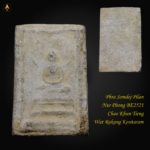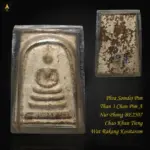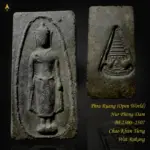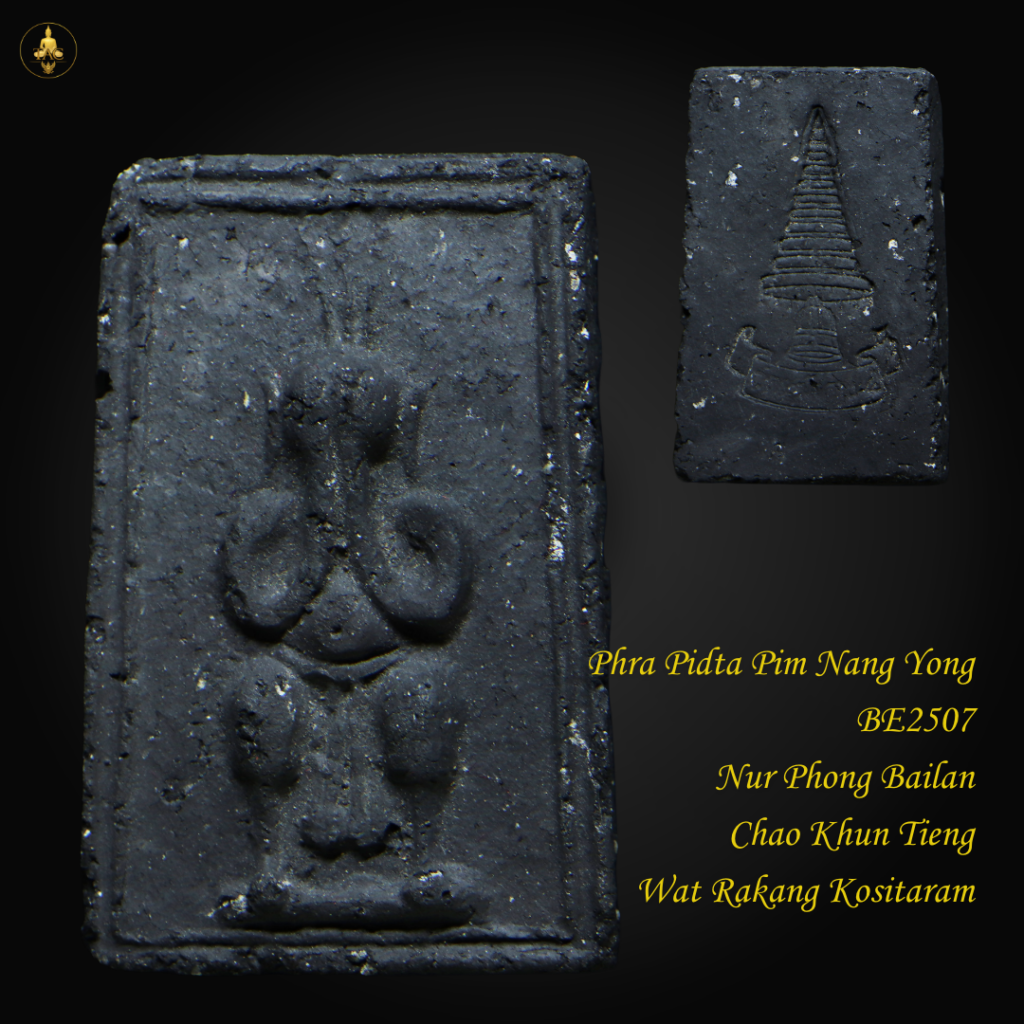
Phra Pidta Pim Nang Yong BE2507 Nur Phong Bailan Chao Khun Tieng Wat Rakang Kositaram
| Type | Phra Pidta Pim Nang Yong |
| Monk | Chao Khun Tieng (CK Tieng) (Phra Thammathirat Ratchamuni) Wat Rakang Kositaram |
| Temple | Wat Rakang |
| B.E. Year | 2507 |
| Material | Nur Phong Bailan |
| Condition | Good |
| SKU | TAC-PhraPidtaPimNangYong-ChaoKhunTieng-001 |
Authentic Phra Pidta Pim Nang Yong Chao Khun Tieng, Wat Rakang Kositaram BE 2507. Nur Phong Bailan. Rare & collectible. Singapore dealer.
What is the Phra Pidta Pim Nang Yong Chao Khun Tieng amulet?
The Phra Pidta Pim Nang Yong Chao Khun Tieng is an authentic Thai amulet produced at Wat Rakang Kositaram in Buddhist Era BE 2507, crafted from sacred Nur Phong Bailan — a highly revered powder-based material — and consecrated under the authority of the venerable Chao Khun Tieng, making it a deeply prized piece among serious collectors across Southeast Asia and Greater China.
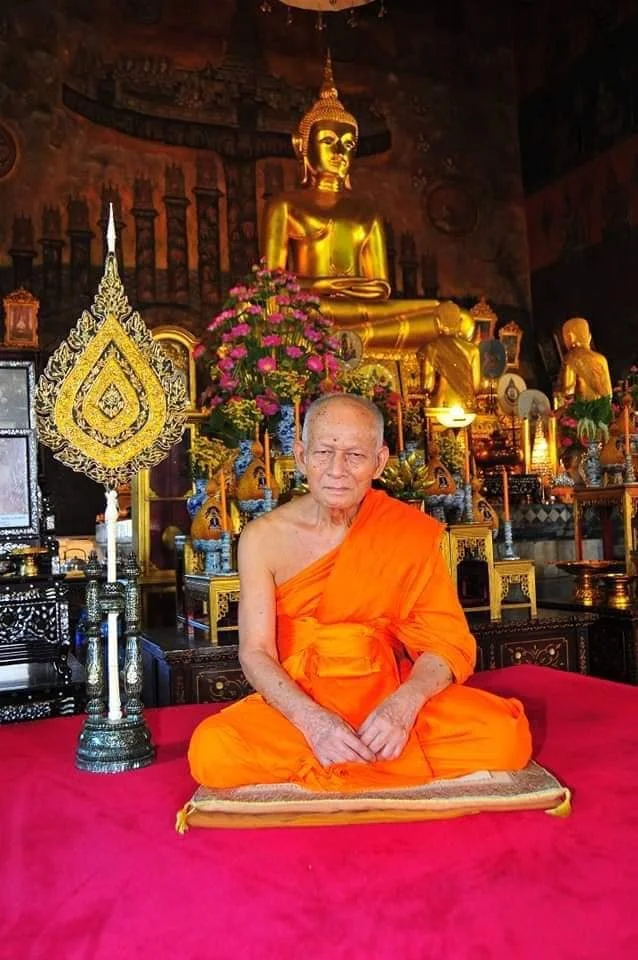
Chao Khun Tieng was a highly respected senior monk whose religious standing at Wat Rakang Kositaram lent extraordinary ecclesiastical authority to the amulets produced during his tenure. His involvement in the creation and consecration of this batch elevates the Phra Pidta Pim Nang Yong to a category regarded by collectors as spiritually potent and historically significant.
BE 2507 — corresponding to 1964 CE — represents a particularly meaningful period in Thai amulet history, when master monks at major Bangkok temples were actively producing amulets of exceptional quality and ritual integrity. The Chao Khun Tieng series from this era is recognised among connoisseurs as a benchmark of mid-20th century sacred craftsmanship.
For collectors seeking a Chao Khun Tieng amulet from this distinguished period, the Phra Pidta Pim Nang Yong stands as one of the most iconic and sought-after pieces associated with his legacy at Wat Rakang Kositaram.
Phra Pidta Pim Nang Yong Chao Khun Tieng and the Heritage of Wat Rakang Kositaram
Wat Rakang Kositaram, located along the Chao Phraya River in Bangkok’s Thonburi district, is one of Thailand’s most historically significant temples, with deep royal and religious ties stretching back to the early Rattanakosin period. Its long tradition of producing spiritually consecrated amulets has made it a cornerstone of the Thai Buddhist amulet tradition.
The temple’s amulet production history is closely associated with some of Thailand’s most revered monks, and the involvement of Chao Khun Tieng in the BE 2507 batch reflects the rigorous ritual standards maintained at Wat Rakang Kositaram. Amulets bearing this temple’s provenance are widely regarded by devotees and collectors alike as possessing deep sacred lineage.
The Phra Pidta Pim Nang Yong Wat Rakang Kositaram series from BE 2507 is particularly notable because it was produced within an institution that upholds strict Dhamma vinaya discipline, ensuring that every stage of the amulet’s creation — from material preparation to consecration — was carried out according to time-honoured Buddhist ritual protocols.
Nur Phong Bailan Phra Pidta Pim Nang Yong — Composition and Craftsmanship
Nur Phong Bailan refers to a sacred powder compound incorporating finely ground Bailan — ancient palm-leaf manuscripts inscribed with sacred Pali texts and Khom script — combined with other consecrated herbal and mineral components. This material is traditionally regarded by devotees as one of the most spiritually charged mediums used in Thai amulet production.
The inclusion of Bailan manuscript powder is considered highly auspicious because the texts inscribed on these ancient leaves carry centuries of accumulated Buddhist wisdom and blessing. When pressed into the Phra Pidta Pim Nang Yong form and consecrated by a senior monk of Chao Khun Tieng’s standing, the resulting amulet is venerated as a concentrated vessel of sacred energy.
The Nur Phong Bailan Phra Pidta Pim Nang Yong from BE 2507 displays the characteristic fine-grain texture, subtle earthy tones, and crisp mould detail that collectors use to authenticate genuine pieces from this production batch. The precision of the Nang Yong mould — a specific pressed form — is a key distinguishing feature that experts examine closely during appraisal.
Spiritual Benefits of Phra Pidta Pim Nang Yong by Chao Khun Tieng
The Phra Pidta Pim Nang Yong Chao Khun Tieng is traditionally venerated for its association with protection, fortune, and the closing off of misfortune. Devotees regard the Phra Pidta deity — depicted with hands covering the eyes — as a symbol of shielding oneself from harm, negative energies, and adverse circumstances.
Collectors and devotees across Singapore, Malaysia, and Greater China associate this amulet with a range of spiritual qualities rooted in longstanding Thai Buddhist belief:
- Protection from harm: The Phra Pidta form is regarded by devotees as a powerful shield against physical danger, malicious intent, and negative spiritual forces.
- Wealth and fortune attraction: Collectors traditionally associate this amulet with drawing prosperity, business success, and financial opportunity to the wearer.
- Obstacle removal: The Phra Pidta Pim Nang Yong BE 2507 is venerated by many as a facilitator of smooth passage through life’s challenges, particularly in matters of career and relationships.
Phra Pidta Pim Nang Yong BE 2507 — Authentication and Collector Value
Authenticating the Phra Pidta Pim Nang Yong Chao Khun Tieng requires careful examination of several physical characteristics specific to the BE 2507 production batch from Wat Rakang Kositaram. Key indicators include the quality and texture of the Nur Phong Bailan compound, the sharpness of the Nang Yong mould impression, and the natural ageing patina consistent with over six decades of provenance.
As a Thai amulet Singapore dealer with extensive experience in authenticated pieces, we recommend collectors consult established appraisal references and recognised expert communities when evaluating this amulet. The BE 2507 batch from Wat Rakang Kositaram is well documented in major Thai amulet reference catalogues, providing collectors with reliable benchmarks for comparison.
Due to its age, the credibility of Chao Khun Tieng’s ecclesiastical standing, and the sacred significance of Wat Rakang Kositaram, the Phra Pidta Pim Nang Yong BE 2507 is considered a rare and collectible piece. Demand among serious collectors in Singapore, Malaysia, Taiwan, Hong Kong, and mainland China continues to reflect strong appreciation for authenticated examples from this era.
Attributes reflect Thai Buddhist devotional tradition and are not measurable claims.