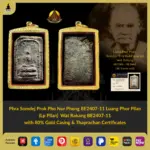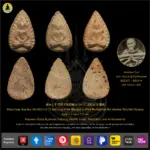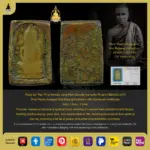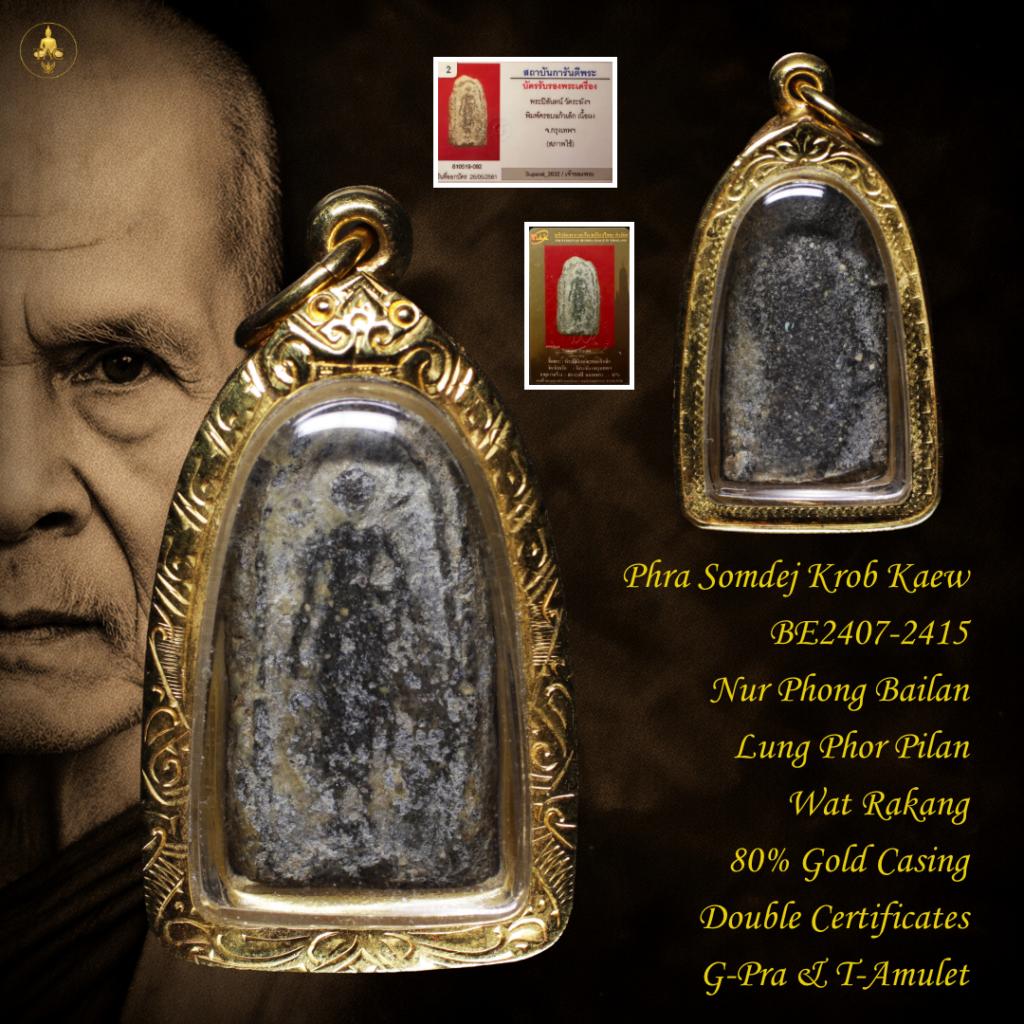
Phra Somdej Krob Kaew Nur Phong Bailan BE2407-15 Lung Phor Pilan Wat Rakang encased 80% Gold Casing Double Certificates G-Pra & T-Amulet
| Type | Phra Somdej Krob Kaew |
| Monk | Somdej Phra Phutthabat Pilan (Lp Pilan) Wat Rakang Kositaram |
| Temple | Wat Rakang |
| B.E. Year | 2407-2415 |
| Material | Nur Phong Bailan |
| Condition | Fair |
| Certificate | G-Phra |
| SKU | TAC-PhraSomdejKrobKaew-LungPhorPilan-001 |
Authentic Phra Somdej Krob Kaew Lung Phor Pilan, Wat Rakang BE 2407-2415. Nur Phong Bailan material. Certified G-Pra & T-Amulet. Singapore dealer.
What is the Phra Somdej Krob Kaew Lung Phor Pilan amulet?
The Phra Somdej Krob Kaew Lung Phor Pilan is an authentic Thai amulet produced at Wat Rakang between BE 2407 and BE 2415, crafted from sacred Nur Phong Bailan — a revered palm-leaf manuscript powder paste. Certified by both G-Pra and T-Amulet, it is regarded as one of the most collectible Phra Somdej amulets from the early Rattanakosin period.
The Phra Somdej Krob Kaew Lung Phor Pilan represents a historically significant chapter in Thai Buddhist amulet tradition. Produced across a consecration period spanning nearly a decade, these amulets reflect the sustained spiritual dedication and disciplined ritual practice of their creator. Their long production window is a key identifying marker for serious collectors.
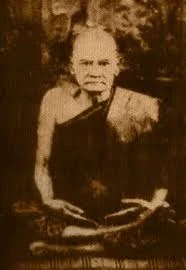
Lung Phor Pilan was a highly respected monk of the early Rattanakosin era, venerated for his mastery of Buddhist scriptural knowledge and meditative attainment. His deep connection to Wat Rakang and his rigorous approach to amulet consecration are central to the spiritual reputation of the Phra Somdej Krob Kaew Lung Phor Pilan. Collectors regard his amulets as among the finest expressions of 19th-century Thai Buddhist craftsmanship.
Phra Somdej Krob Kaew and Wat Rakang Heritage
Wat Rakang, also known as the Temple of the Bells, is one of the most historically significant temples in Bangkok and a cornerstone of Thai Buddhist amulet heritage. The temple has long been associated with the production of Phra Somdej amulets of the highest calibre, and its name carries immense weight among collectors across Southeast Asia and Greater China. Its sacred grounds have hosted generations of accomplished monks whose consecration practices continue to define standards in the field.
The Phra Somdej Krob Kaew Wat Rakang series occupies a distinguished place within this legacy. Amulets produced at Wat Rakang during the BE 2407–2415 period are especially prized for their historical proximity to the golden age of Thai amulet creation. For collectors seeking Thai amulet Singapore sources, pieces originating from Wat Rakang carry unmatched provenance and institutional prestige.
The broader context of Thai Buddhist amulet tradition — including the ritual frameworks within which Wat Rakang amulets were created — is well documented as part of Thailand’s living religious heritage. Collectors and scholars alike recognise the Thai Buddhist amulet tradition as a deeply layered cultural and spiritual practice rooted in centuries of Theravada Buddhist devotion.
Nur Phong Bailan Phra Somdej Krob Kaew — Composition and Craftsmanship
Nur Phong Bailan refers to a sacred paste base derived from the powdered residue of ancient palm-leaf manuscripts — known as Bailan — which were used to transcribe Pali Buddhist scriptures. This material is considered extraordinarily sacred because the manuscripts themselves were inscribed with holy texts, meaning the powder carries an inherent spiritual charge. The use of Nur Phong Bailan in the Phra Somdej Krob Kaew Lung Phor Pilan elevates its status well beyond ordinary amulet materials.
The paste composition of Nur Phong Bailan Phra Somdej Krob Kaew typically includes a blend of sacred powders, white clay, and binding agents mixed according to precise ritual formulations. Each ingredient was selected not only for its physical properties but for its symbolic and spiritual resonance within the Theravada tradition. The resulting material is dense, finely grained, and develops a distinctive aged surface patina that authenticators use to assess genuine examples.
Craftsmanship of the Krob Kaew — meaning “framed in glass” — style involves careful moulding, drying, and consecration of the amulet body before it is set within a protective framing. The precision required in this process speaks to the level of skilled artisanal and monastic collaboration at Wat Rakang during the BE 2407–2415 period. This craftsmanship is a defining quality that serious collectors of the Lung Phor Pilan amulet look for when evaluating examples.
Spiritual Benefits of Phra Somdej Krob Kaew by Lung Phor Pilan
The Phra Somdej Krob Kaew Lung Phor Pilan is traditionally venerated for a range of protective and auspicious qualities that devotees have associated with it across generations. Collectors regard it as a spiritually potent object rooted in the accumulated merit of its creator’s meditative practice and scriptural mastery. These associations form the core of its enduring appeal among devotees in Singapore, Malaysia, Thailand, Hong Kong, Taiwan, and China.
- Protection and safety: Devotees traditionally associate the Phra Somdej Krob Kaew Lung Phor Pilan with shielding the wearer from harm, misfortune, and malicious forces.
- Metta and goodwill: The amulet is regarded by collectors as a powerful generator of loving-kindness energy, believed to attract positive relationships and social harmony.
- Wealth and prosperity: Long-term devotees and collectors associate regular veneration of this amulet with improved fortune, auspicious opportunities, and material well-being.
Phra Somdej Krob Kaew BE 2407-2415 — Authentication and Collector Value
The Phra Somdej Krob Kaew BE 2407-2415 is authenticated by two of the most respected certification bodies in the Thai amulet world: G-Pra and T-Amulet. Both organisations employ rigorous physical examination, material analysis, and historical cross-referencing to verify the authenticity of submitted pieces. Certification from either body — and especially both — significantly enhances collector confidence and market value.
The rarity of the Phra Somdej Krob Kaew Lung Phor Pilan from the BE 2407–2415 period is a key driver of its collector value. As a 19th-century amulet produced over a defined and historically documented window, surviving examples in good condition are increasingly difficult to source. Demand from collectors across Southeast Asia and Greater China continues to outpace supply, particularly for dual-certified pieces.
For collectors seeking an authentic Thai amulet with documented provenance, dual certification by G-Pra and T-Amulet represents the highest available standard of verification. Buyers in Singapore and across the region are advised to request original certification documents and to verify certificate numbers directly with the issuing body before completing any acquisition.
Attributes reflect Thai Buddhist devotional tradition and are not measurable claims.